

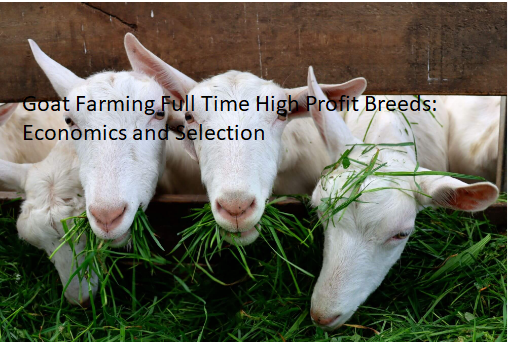
Transitioning to goat farming full time high profit breeds requires a shift from hobbyist thinking to rigorous agricultural management. Success in this sector hinges on selecting livestock that align with market demand for meat, milk, or fiber while maintaining strict control over feed and veterinary overheads. By focusing on specialized genetics and efficient land utilization, producers can generate consistent revenue streams that outperform traditional small-scale livestock operations.
This article examines the core financial drivers, breed selection criteria, and operational strategies necessary to establish a sustainable, income-generating goat enterprise. You will learn which animals provide the best return on investment and how to scale your infrastructure for long-term viability.
Financial Reality of Goat Farming
The most profitable path in commercial caprine production is typically meat goat farming, specifically targeting ethnic markets that demand high-quality, fresh carcasses. While dairy operations can be lucrative, they require expensive milking parlors, strict sanitary certifications, and cold-chain logistics that significantly increase capital expenditure. Meat production, conversely, is less infrastructure-intensive and benefits from a market that often pays a premium for specific weights and breeds.
Producers can expect to see profit margins vary significantly based on their proximity to urban centers and their ability to sell directly to consumers. A well-managed operation focusing on high-demand breeds can net between $100 and $200 per head annually after accounting for feed, vet bills, and land maintenance. To scale this into a full-time income, an operation usually requires a minimum of 150 to 200 breeding does, providing enough volume to offset fixed costs and seasonal price fluctuations.
Top Performing Meat Breeds
When evaluating goat farming full time high profit breeds, the Boer goat remains the industry standard for meat production. Developed in South Africa, these animals are known for rapid growth rates, heavy muscling, and excellent feed conversion ratios. A mature Boer buck can weigh up to 340 pounds, while does often reach 220 pounds, providing substantial carcass weight at harvest.
Kiko goats are another excellent choice, particularly for producers who prioritize hardiness and parasite resistance over sheer size. Originally from New Zealand, Kikos were bred for survival in rugged environments, which means they require fewer medical interventions than more delicate breeds. They are highly efficient foragers, allowing them to maintain body condition on pasture that would leave other breeds struggling to thrive.
Spanish goats are increasingly valued in the American South for their extreme resilience and adaptability to scrub-heavy landscapes. These animals are often crossbred with Boer genetics to combine the fast growth of the Boer with the survival instincts of the Spanish goat. This hybrid vigor results in offspring that are easier to finish on pasture while maintaining the weight requirements preferred by commercial buyers.
Profitability Comparison by Breed Type
| Breed Type | Primary Output | Market Demand | Growth Rate |
| :— | :— | :— | :— |
| Boer | Meat | Very High | Fast |
| Kiko | Meat/Hardiness | High | Moderate |
| Nubian | Milk | Moderate | Slow |
| Spanish | Meat/Forage | High | Moderate |
| Angora | Fiber | Niche | Slow |
Essential Operational Requirements
Scale is the primary factor that differentiates a part-time hobby from a full-time agricultural business. You need enough land to support rotational grazing, which is critical for parasite control and soil health. Experts at the USDA Agricultural Research Service emphasize that proper pasture management is the single most effective way to lower feed costs.
Fencing is your most significant upfront asset investment. High-tensile woven wire fencing is mandatory to keep predators out and goats in, as electric strands alone are rarely enough to stop determined coyotes or stray dogs. Expect to spend between $2.00 and $5.00 per linear foot for professional-grade fencing, depending on the terrain and the specific materials chosen.
Water infrastructure must be reliable and accessible in every paddock. Goats are highly sensitive to water quality and will refuse to drink from stagnant or dirty troughs, which negatively impacts their growth and milk production. Installing automated, frost-free waterers connected to a central well system is a necessary expense for anyone managing a herd of over one hundred head.
Marketing Strategies for Maximum Revenue
Direct-to-consumer sales provide the highest profit margins for full-time farmers. By bypassing the traditional auction house, you avoid commission fees and transportation costs while capturing the full retail price of the meat. Many producers find success by marketing to ethnic communities during specific religious holidays when demand for fresh goat meat peaks.
Building a brand around “pasture-raised” or “grass-fed” practices allows for premium pricing. Consumers are increasingly willing to pay more for livestock raised without prophylactic antibiotics or synthetic hormones. Transparency about your farming methods creates customer loyalty, turning one-time buyers into repeat clients who purchase whole or half carcasses annually.
Diversifying your income streams is a smart hedge against market volatility. While meat is the core product, consider these additional revenue sources:
-
- Sale of breeding stock to other producers
-
- Manure sales to local organic gardeners
-
- Agritourism or petting zoo events for school groups
-
- Fiber production from wool-bearing breeds
-
- Custom slaughter coordination services
Effective Herd Health Management
Parasite management is the biggest challenge for any full-time goat farmer. Barber pole worms, in particular, can decimate a herd in weeks if not monitored through fecal egg counts and FAMACHA scoring. Implementing a rotational grazing schedule where goats are moved every 3 to 5 days prevents them from grazing near the ground where worm larvae thrive.
Vaccination protocols must be tailored to your local environment. Most producers rely on a standard CD/T vaccine, which protects against Clostridium perfringens types C and D and Tetanus. Establishing a relationship with a large-animal veterinarian is vital, as they can provide guidance on specific regional diseases and assist with emergency health issues.
Nutrition is the foundation of herd immunity. A goat that is well-nourished is far more capable of fighting off internal parasites than a goat that is nutrient-deficient. Providing high-quality loose minerals, specifically formulated for goats, ensures they have the copper, selenium, and zinc levels required for optimal reproduction and growth.
Scaling Infrastructure for Growth
Expanding from a small herd to a commercial operation requires a move toward automation. As your numbers grow, manual labor tasks like feeding and watering become unsustainable. Investing in gravity-fed feeders and large-capacity hay racks reduces daily chores, allowing you to focus on breeding programs and marketing efforts.
Housing needs change as you scale, shifting from individual stalls to large, ventilated barns. These structures should prioritize airflow to prevent respiratory issues, which are common in crowded, damp conditions. A well-designed barn should also include a dedicated area for kidding, allowing you to monitor high-risk births closely without disturbing the rest of the herd.
Record keeping is the invisible backbone of a profitable operation. You must track every doe’s reproductive history, birth weights, and medical treatments to make informed culling decisions. A doe that produces small, slow-growing kids or has frequent health issues should be culled immediately, as she is consuming resources that could be allocated to a more productive animal.
Managing Seasonal Cycles
Goat farming is inherently seasonal, which dictates the timing of your cash flow. Most breeds are seasonal breeders, meaning they will only breed during the autumn months when daylight hours decrease. This results in a heavy concentration of births in the spring, followed by a surge in market-ready animals in the late summer and early fall.
To combat this, some farmers employ “off-season” breeding techniques or choose breeds that are less sensitive to daylight cycles. However, this often requires indoor lighting and hormonal regulation, which increases costs. Most successful full-time farmers lean into the natural cycle, using the winter months to focus on infrastructure maintenance, tax planning, and equipment repair.
Preparing for the busy spring kidding season is a full-time job in itself. You will need a supply of colostrum, bottles, and specialized tools for assisting difficult births. Being prepared for the 24/7 nature of kidding season is essential, as the loss of a single kid represents a significant hit to your annual profit margin.
Common Questions About Goat Profitability
What is the most profitable goat breed for beginners?
The Kiko is often recommended for beginners because of its exceptional hardiness and low medical requirements. While Boer goats offer higher growth rates, they are more susceptible to parasites and often require more intensive management that can overwhelm those new to the industry.
How many goats do I need to make a living?
To generate a full-time income, most operations require at least 150 to 200 productive breeding does. This volume allows you to bring a consistent supply of animals to market, which is necessary to negotiate better prices and maintain year-round cash flow.
Is it better to focus on meat or dairy production?
Meat production is generally more profitable for those starting with limited capital because it requires less specialized infrastructure than dairy. Dairy farming requires expensive milking equipment, daily labor, and strict compliance with food safety regulations that can make entry into the market difficult for small-scale operators.
How do I minimize feed costs?
The most effective way to reduce feed costs is through intensive rotational grazing. By moving goats frequently to fresh, high-quality forage, you reduce the need for expensive stored hay and supplemental grains, which are the largest variable costs in any livestock operation.
What are the biggest risks in this business?
The primary risks include high parasite loads, predator attacks, and market price fluctuations. Managing these through secure fencing, proactive health monitoring, and direct-to-consumer sales strategies can mitigate these risks and stabilize your annual revenue.
Sustainable Growth and Success
Building a career in goat farming full time high profit breeds requires patience and a commitment to data-driven decision-making. You must view your herd not just as animals, but as biological assets that require constant management and optimization. By selecting for high-performing genetics and maintaining a lean, efficient operation, you can carve out a profitable niche in the agricultural market.
Success is rarely instantaneous; it is the result of compounding small improvements in land management, breeding selection, and marketing. As you gain experience, you will learn to read your animals and your land, allowing you to make adjustments that further increase your margins. Stay focused on your long-term goals, keep your overhead low, and continue to refine your processes to ensure your operation remains resilient and lucrative for years to come.
