

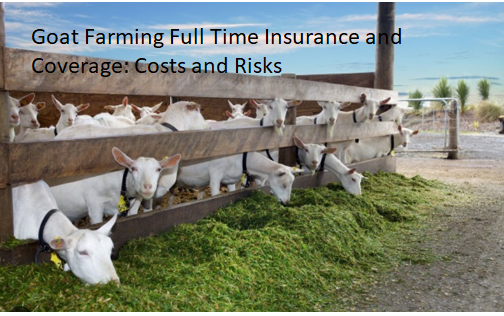
Managing the financial risks associated with goat farming full time insurance and coverage requires a deep understanding of agricultural liability and asset protection. Because livestock operations face unique hazards ranging from disease outbreaks to property damage, professional coverage is rarely optional for a commercial enterprise. Many full-time farmers find that standard homeowners’ policies provide virtually zero protection for commercial breeding or milk production activities.
Securing the right policy protects your capital investment and ensures the operation can survive an unexpected disaster. By focusing on specific risk factors, you can build a safety net that supports long-term growth and stability for your herd.
The baseline cost for a specialized farm policy usually ranges between $1,500 and $4,000 annually, depending on the scale of your operation and the value of your assets. This figure covers general liability, structures, and basic livestock mortality for a small to mid-sized herd. If you are operating at a commercial scale with high-value dairy goats or registered breeding stock, premiums will rise significantly.
You must account for these costs in your annual budget to avoid being underinsured during a crisis. Failing to secure the right coverage often results in total financial loss if a contagious disease or major storm strikes your farm.
Understanding Livestock Mortality Insurance
Livestock mortality insurance functions similarly to life insurance for your animals. It typically covers death resulting from accidents, injury, or disease, provided the loss is not caused by negligence.
Most policies require a veterinary certificate for high-value animals to establish their worth before the policy takes effect. Without this documentation, you may find it impossible to recover the true market value of a prize buck or a high-producing doe.
Many providers exclude deaths caused by pre-existing conditions or lack of basic care. If you fail to maintain proper fencing or follow recommended vaccination schedules, the insurer may deny a claim.
Documenting your herd health records is essential for proving that you met your contractual obligations. Keep detailed logs of all veterinary visits, medication administration, and herd management practices to support potential claims.
General Liability and Property Protection
General liability coverage is the cornerstone of any commercial farm insurance plan. It protects you if a customer, delivery person, or trespasser suffers an injury while on your property.
If a visitor trips on a loose board in your barn or is injured by a goat, you could be held legally responsible for their medical bills. Liability insurance pays for your legal defense and any resulting settlements or judgments.
Property coverage protects your barns, milking parlors, and equipment sheds from fire, wind, and theft. Many farmers make the mistake of assuming their house insurance covers outbuildings, but commercial farm structures often require a separate policy endorsement.
Ensure your policy includes a clause for equipment breakdown if you rely on automated milking systems or climate control units. Replacing a failed bulk tank or a damaged generator can cost thousands, which would cripple a cash-strapped operation.
Comparing Coverage Options
Choosing between different types of coverage requires weighing the likelihood of specific risks against the cost of the premiums. A small hobby farm has different needs than a large-scale commercial dairy operation. You should evaluate your exposure to environmental risks based on your geographic location.
| Coverage Type | Primary Benefit | Estimated Annual Cost |
|---|---|---|
| General Liability | Legal/Injury protection | $500 – $1,200 |
| Livestock Mortality | Animal death replacement | 2% – 5% of animal value |
| Property Insurance | Barn/Equipment loss | $800 – $2,500 |
| Business Interruption | Loss of income | $300 – $700 |
These figures are estimates and will vary based on your local market. Consult with a broker who specializes in United States Department of Agriculture guidelines to ensure you meet federal standards for farm safety. Always ask for a breakdown of what is excluded from the policy, as these “hidden” gaps are where most farmers encounter trouble.
Key Risks in Commercial Goat Farming
Managing risk involves more than just paying premiums; it requires proactive management of the environment. Disease outbreaks like Caprine Arthritis Encephalitis or Caseous Lymphadenitis can devastate a herd in weeks.
Insurance companies often look at your biosecurity protocols when determining your risk profile and premium costs. Implementing a strict quarantine procedure for new animals shows insurers that you are a low-risk operator.
Weather events also represent a significant threat to full-time farmers. Floods, heavy snow, or high winds can destroy infrastructure, leading to a total loss of production capacity.
If you live in an area prone to natural disasters, ensure your policy includes “loss of use” or “business interruption” coverage. This provides a cash cushion to cover your operating expenses while you rebuild your facilities.
Essential Components of a Farm Policy
When reviewing your policy, look for specific clauses that address the unique nature of goat farming. Standard agricultural policies often focus on cattle or row crops, which may leave gaps in your protection. You need coverage that specifically mentions livestock and, if applicable, the sale of dairy products or meat.
- General Liability: Covers accidents involving visitors or delivery personnel.
- Livestock Mortality: Replaces animals lost to injury, disease, or theft.
- Property Coverage: Protects barns, sheds, and equipment from fire or storm damage.
- Product Liability: Protects against claims arising from contaminated food products or cheese.
- Equipment Breakdown: Covers repair costs for specialized milking or refrigeration machinery.
Be wary of policies that have high deductibles for livestock losses. A low premium might seem attractive, but if you have to pay a $5,000 deductible before the insurance kicks in, you are essentially self-insuring for most minor incidents. Balance your monthly cash flow with your ability to absorb a sudden, out-of-pocket financial hit.
The Role of Biosecurity in Insurance
Insurers consider your biosecurity measures a proxy for your management ability. A farm with a clean, well-documented vaccination record is viewed as a safer bet than one with inconsistent practices.
If you can prove that your herd is certified disease-free, some insurers may offer discounts on mortality coverage. This is a powerful incentive to maintain high health standards across your operation.
Document everything, including the dates of deworming, hoof trimming, and routine health checks. If an outbreak occurs, having this information ready helps the insurance adjuster process your claim much faster.
Inadequate records are the number one reason for claim denials in the livestock industry. Treat your health logs as financial documents, because that is exactly what they become in the event of an audit or a claim.
Managing Business Interruption Risks
Business interruption insurance is often overlooked, yet it is vital for full-time farmers. If a fire destroys your milking equipment, you lose your ability to generate revenue immediately.
This type of coverage pays for your ongoing expenses, such as feed, utilities, and labor, while you repair the damage. Without it, you might be forced to sell off the herd just to cover your overhead costs during the downtime.
Consider the length of the indemnity period when choosing this coverage. A policy that only pays for 30 days of interruption might not be enough if you need months to replace custom-built infrastructure.
Aim for a coverage period that matches the time it would realistically take to rebuild your facility. This ensures you can return to full production without being forced into debt or liquidation.
Frequently Asked Questions
Is insurance mandatory for all goat farms?
While not legally required by the government for small operations, most lenders will insist on comprehensive coverage as a condition of your farm loan. If you operate as a legal business entity like an LLC, insurance is essential to protect your personal assets from business-related lawsuits.
Can I get coverage for just one high-value goat?
Yes, you can purchase individual mortality policies for high-value breeding bucks or does. These policies are usually priced based on a percentage of the animal’s appraised market value. You will typically need a veterinary statement and a bill of sale to prove the animal’s worth.
Does my homeowners insurance cover my goats?
Standard homeowners insurance almost never covers commercial farming activities. It is designed for personal property and domestic pets, not for livestock or agricultural equipment. Attempting to claim a farm loss under a homeowners policy will likely result in a denial and could even lead to your personal policy being cancelled.
How do I lower my goat farming insurance premiums?
You can lower your premiums by increasing your biosecurity, installing fire suppression systems in barns, and bundling your policies with one provider. Keeping a clean, organized, and well-maintained farm makes you a lower risk in the eyes of an underwriter. Regularly updating your inventory list and removing unused equipment from your policy also helps keep costs down.
What is the most common reason for insurance claims in goat farming?
Property damage from weather events and livestock accidents are the most frequent claims. Disease outbreaks also trigger significant claims, though these are often more complex to prove. Liability claims resulting from injuries to visitors or employees are less common but are often the most expensive to resolve.
Building a Sustainable Future
Securing goat farming full time insurance and coverage is a foundational step in building a resilient agricultural business. You cannot predict every accident or disease outbreak, but you can control how much financial damage those events cause.
By selecting the right combination of liability, property, and mortality insurance, you shift the burden of risk from your personal savings to the insurer. This allows you to focus your energy on breeding, production, and marketing, rather than worrying about the potential for financial ruin.
Evaluate your coverage needs annually as your herd grows and your assets increase in value. A policy that was sufficient for twenty goats will likely be inadequate when your herd reaches one hundred or more.
Work with an insurance agent who understands the specific needs of livestock producers to ensure your policy stays current. Taking these steps today provides the stability required to manage a successful, full-time farm for years to come.
