

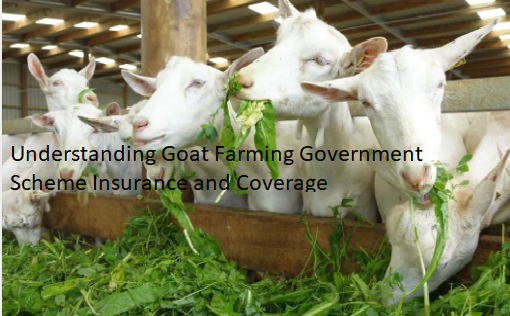
Securing the financial future of a livestock operation requires a clear understanding of goat farming government scheme insurance and coverage. Many small-scale farmers and commercial producers overlook these protections until a catastrophic event, such as a disease outbreak or extreme weather, threatens their entire herd.
By leveraging state-backed risk management tools, you can protect your capital investments against unforeseen mortality and market volatility. This article clarifies how these programs function, the specific risks they mitigate, and the practical steps you should take to qualify for assistance programs.
The primary mechanism for financial protection in the livestock sector is the Livestock Risk Protection (LRP) plan, which acts as a shield against price declines. Under this federal framework, producers can purchase coverage that pays out if the market price for their animals falls below a chosen target level.
While LRP is often associated with cattle, many jurisdictions have expanded eligibility to include goat production, provided specific documentation criteria are met. You are essentially buying an option that sets a floor price for your inventory, allowing you to lock in revenue even if local market conditions deteriorate rapidly.
Determining Your Eligibility
Eligibility for government-backed protection depends heavily on your location and your compliance with standard agricultural reporting requirements. Most national agencies require you to maintain a valid farm ID and report your herd inventory annually to the local agricultural office.
Without these records, you cannot prove the existence of your assets, making it impossible to trigger a payout in the event of a total loss. Always verify your status with your regional department of agriculture before the start of the fiscal year to ensure your documentation is current.
Types of Coverage Available
When researching goat farming government scheme insurance and coverage, you will encounter two distinct categories: mortality insurance and price protection. Mortality insurance is designed to cover the loss of animals due to specific perils like lightning, fire, or accidental death.
Price protection, as mentioned earlier, focuses on the economic side of the business by mitigating the risk of a market crash. It is common for commercial operations to layer these, using mortality insurance for asset protection and price coverage for income stability.
Comparing Livestock Risk Protection Methods
| Protection Type | Primary Risk Covered | Payout Trigger |
| :— | :— | :— |
| Mortality Insurance | Physical death of livestock | Verified animal death |
| Price Protection | Market value decline | Daily average price drop |
| Disaster Assistance | Extreme weather events | Federal declaration |
| Disease Indemnity | Mandatory culling/outbreak | Government order |
Navigating the Enrollment Process
Enrolling in these programs typically requires working through an approved insurance agent rather than applying directly to a federal office. These agents act as intermediaries who understand the complex actuarial tables used to calculate premiums based on your specific goat breed and regional risk profile.
You will need to provide your purchase receipts, veterinary health certificates, and a detailed inventory log. Be prepared to pay a portion of the premium upfront, as government subsidies usually cover only a percentage of the total cost, not the entire burden.
The Role of Disaster Assistance
Beyond standard insurance, many nations offer ad-hoc disaster assistance for farmers who suffer massive losses due to events like flooding or severe drought. These programs, such as the Livestock Indemnity Program (LIP), are designed to compensate you for a portion of the market value of livestock that died due to adverse weather.
Unlike private insurance, you do not pay into these funds annually; instead, they are triggered by federal disaster declarations. You must keep meticulous records of every deceased animal, including photos and veterinary reports, to successfully claim these funds.
Assessing Premium Costs and Subsidies
The cost of your coverage is calculated using a formula that accounts for your herd size, the current market price of goats, and the historical mortality rate in your county. Government subsidies are vital here, often covering between 30% and 50% of the premium cost to make the protection affordable for smallholders.
If you are operating a large-scale commercial farm, your premiums will be higher, but you benefit from economies of scale that reduce the cost per head. You can find detailed calculators and policy guides through the USDA Risk Management Agency to help estimate your specific exposure and potential out-of-pocket expenses.
Managing Herd Health Records
Insurance providers and government agencies require rigorous proof of herd health to validate any claim you might file. This includes keeping a comprehensive log of vaccinations, deworming schedules, and any medical treatments administered by a licensed veterinarian.
If a disease outbreak occurs, the government may order the culling of your herd to prevent further spread. In this scenario, having a well-documented health history is the only way to receive fair indemnity payments for your lost stock.
Common Pitfalls to Avoid
Many farmers fail to secure payouts because they rely on informal record-keeping systems that do not meet federal audit standards. Never rely on memory or simple notebook entries for your annual inventory counts; use digitized software that tracks individual ear tags and birth dates.
Another frequent error is failing to update your policy when your herd size changes significantly throughout the year. If you increase your flock size by 20% but forget to notify your insurer, you will be under-insured, and a claim could be denied on the grounds of inaccurate reporting.
Frequently Asked Questions
Is goat insurance mandatory for all farmers?
No, most government schemes are voluntary, though certain commercial loans may require you to carry minimum levels of insurance to protect the lender’s collateral. If you are operating independently, you must decide if the cost of premiums justifies the protection against a total herd loss.
How does a government payout get calculated?
Payouts for mortality are typically based on the current market value of the animal at the time of loss, adjusted for its age and production stage. Price protection payouts, however, are based on the difference between the target price you selected and the actual national market price on the expiration date of your contract.
Can I get coverage for loss of income due to illness?
Most standard policies cover direct mortality or market price drops, not lost income from a temporary drop in milk or meat production. If you want protection for business interruption, you usually need to look into private commercial policies that go beyond standard government-backed agricultural insurance.
What happens if I forget to report a herd increase?
If you under-report your inventory, you risk having your coverage invalidated or receiving a significantly lower payout than expected during a claim. It is essential to report any significant expansion of your herd to your insurance agent as soon as the animals are added to your property.
Are there tax breaks associated with livestock insurance?
In many jurisdictions, the premiums you pay for livestock insurance are considered a deductible business expense. Additionally, if you receive a payout for the loss of livestock, there may be specific tax treatments—such as deferring the gain—that prevent you from facing an immediate, large tax bill on the insurance proceeds.
Strategies for Long-Term Sustainability
Building a sustainable goat farming operation requires viewing insurance as a fixed cost of doing business, similar to feed or veterinary care. You should review your coverage levels every year during the winter months when the herd is stable and you have time to consult with your agents.
By aligning your insurance strategy with your expansion goals, you ensure that one bad season does not wipe out years of hard work. The goal of goat farming government scheme insurance and coverage is to provide a safety net that allows you to innovate, scale, and thrive despite the inherent volatility of the agricultural market.
Investing the time to understand these policies provides a significant advantage over competitors who remain exposed to avoidable risks. Start by identifying the specific federal programs available in your region and scheduling a consultation with an agent who specializes in livestock.
Maintain pristine records, update your inventory regularly, and treat your risk management strategy with the same seriousness as your breeding program. With these systems in place, you can focus on the growth of your business, knowing that you have protected your assets against the unpredictable nature of the industry.
