

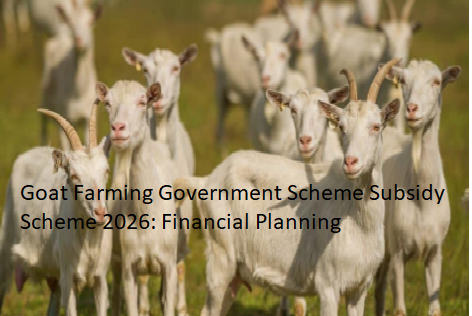
Navigating a goat farming government scheme subsidy scheme 2026 requires precise planning and an understanding of current agricultural policies. Many aspiring farmers seek these financial incentives to offset initial capital expenditure on infrastructure, breeding stock, and veterinary services.
By aligning your business model with the specific criteria set by state and central departments, you can significantly reduce your startup risk. This article provides the actionable details you need to evaluate eligibility, calculate potential returns, and successfully apply for support in the coming year.
The primary financial support for the sector is the National Livestock Mission (NLM), which offers a subsidy of up to 50% on capital costs for eligible projects. Under the NLM framework for 2026, the government targets an entrepreneur-driven model that prioritizes job creation and rural income stability.
Applicants typically receive these funds through a back-ended subsidy mechanism, meaning you must secure the initial loan from a participating bank before the government releases the grant portion. This structure ensures that only committed, bankable projects receive taxpayer support.
Eligibility Criteria for 2026 Applicants
Eligibility for a goat farming government scheme subsidy scheme 2026 depends on your legal status and the scale of your proposed operation. Individual farmers, self-help groups, Farmer Producer Organizations (FPOs), and private companies are generally eligible to apply.
You must demonstrate that you have access to sufficient land for both shed construction and fodder cultivation. The specific land requirement varies by state, but a general rule of thumb is 10 to 15 square feet of covered area per adult goat.
You must also possess a valid project report that has been appraised by a commercial bank or a regional rural bank. This report should detail your procurement strategy, feeding plan, and marketing channels for meat or milk.
Furthermore, the applicant must ensure they have not availed of similar subsidies for the same activity from other government departments. Proof of identity, land ownership documents, and a clean credit history are non-negotiable requirements for successful application processing.
Understanding the Financial Structure
The financial architecture of these schemes is designed to bridge the gap between small-scale subsistence farming and commercial-scale production. Most state-level iterations of the goat farming government scheme subsidy scheme 2026 follow the NABARD-recommended patterns. These patterns dictate that the subsidy is calculated on the total project cost, which includes the purchase of breeding bucks and does, construction of sheds, and the first cycle of feed costs.
It is vital to distinguish between the loan amount and the subsidy amount in your ledger. If your project is approved for 500,000 in financing, the bank might hold 250,000 as the potential subsidy, which is kept in a fixed deposit until the project meets specific milestones.
Once the veterinary officer verifies that the shed is built and the animals are purchased, the bank adjusts your interest burden accordingly. This mechanism protects the government’s investment while providing you with lower long-term debt.
Application Process and Documentation
Applying for financial assistance requires a methodical approach to paperwork and institutional communication. Start by visiting the official Department of Animal Husbandry and Dairying website to download the latest application forms relevant to your region.
Most states have digitized this process, allowing you to track your application status in real-time through a dedicated portal. You will need to provide a detailed technical feasibility report that justifies the number of animals you intend to keep.
Your documentation package should include a land deed or lease agreement, a certificate of training in goat rearing, and a detailed budget breakdown. If you are applying as a member of an FPO or a cooperative, you must also provide the registration certificate of the entity.
Once submitted, the local veterinary assistant surgeon or the district animal husbandry officer will perform a site inspection. Ensure your shed is ready and your water sources are functional before this inspection occurs.
Key Operational Requirements
Operating a commercial farm under a government-backed scheme implies strict adherence to biosecurity and animal welfare standards. You are expected to maintain a daily logbook that tracks vaccination schedules, weight gain, and mortality rates.
The government expects these farms to act as models for other farmers in the region, so maintaining clean, disease-free facilities is a condition of the subsidy. You will likely be required to vaccinate your herd against PPR, enterotoxaemia, and goat pox.
You also need a reliable supply chain for fodder and supplemental feed. Many schemes require you to demonstrate that you have allocated a portion of your land for green fodder cultivation, such as maize, oats, or lucerne.
Providing high-quality nutrition is not just about animal health; it is a prerequisite for reaching the slaughter weight or milk production targets outlined in your project proposal. Failure to maintain these standards can lead to a clawback of the subsidy funds.
Financial Projections and Profitability
Building a profitable goat farm requires balancing capital expenditure against recurring operational costs. The initial investment is heavily influenced by the breed of goat you select, such as Osmanabadi, Sirohi, or Barbari, depending on your local climate.
While the subsidy reduces your debt load, your operational efficiency determines your actual net profit. Labor, medicine, and feed costs typically account for 70% of your annual expenditure.
The following table illustrates a standard cost-benefit breakdown for a medium-scale unit.
| Expense Category | Estimated Annual Cost (INR) | Contribution to Total |
|---|---|---|
| Breeding Stock Purchase | 200,000 | 35% |
| Shed Construction | 150,000 | 26% |
| Feed and Nutrition | 120,000 | 21% |
| Veterinary and Medicine | 50,000 | 9% |
| Labor and Utilities | 50,000 | 9% |
Common Pitfalls for New Farmers
Many applicants struggle because they overestimate the speed at which they can reach full production. A common mistake is failing to account for the gestation and weaning periods, which can lead to cash flow gaps in the first eighteen months.
You should ensure that your financial plan includes a reserve fund to cover at least six months of feed and labor costs without relying on sales revenue. Another frequent issue is poor shed design, which can lead to high mortality rates due to improper ventilation or drainage.
Avoid over-investing in expensive, non-essential equipment during the initial phase. Focus your capital on the quality of your foundation herd and the robustness of your fencing.
Many farmers find that they can save significant capital by using locally sourced materials for shed construction, provided they meet the technical specifications mandated by the scheme. Always consult with a local veterinarian before finalizing your breeding strategy to ensure the selected breed is well-adapted to your specific environment.
Essential Milestones for Success
To maintain your standing under a goat farming government scheme subsidy scheme 2026, you must hit specific operational milestones. These goals keep your business on track and ensure you remain compliant with the terms of your financial support.
- Completion of shed construction within six months of loan disbursement.
- Successful procurement of the first batch of healthy, vaccinated breeding stock.
- Establishment of a reliable record-keeping system for birth, death, and weight gain.
- Regular engagement with regional veterinary services for mandatory health checkups.
- Implementation of a waste management system that complies with environmental regulations.
- Development of a marketing plan that connects your output to local meat markets or milk buyers.
Frequently Asked Questions
What is the typical subsidy percentage for individual farmers?
Most state and central schemes offer a subsidy ranging from 25% to 50% of the total project cost, depending on the applicant’s category and the specific state policy. Scheduled Caste, Scheduled Tribe, and women entrepreneurs often qualify for the higher end of this range.
Can I apply for the subsidy if I am already running a farm?
Generally, you can apply for an expansion project if you meet the new investment criteria. However, you cannot claim a subsidy for assets that have already been funded by a previous government scheme. You must provide clear documentation separating the new, expanded unit from your existing operations.
Is insurance mandatory for subsidized goat farms?
Yes, insurance for your livestock is almost always a mandatory condition of the subsidy. It protects both the farmer and the lending bank against the risk of mass mortality due to disease or natural disasters. You must ensure that your policy is active and premiums are paid on time to remain eligible for the full subsidy benefit.
How long does the approval process take?
The timeline varies significantly by state, but you should expect a duration of three to six months from the date of application submission. Delays often occur during the site inspection phase or due to incomplete documentation. Keeping your records organized and responding promptly to queries from the district office will speed up the process.
What happens if I sell the farm before the subsidy lock-in period ends?
Most schemes impose a lock-in period, often five years, during which you cannot sell or repurpose the unit. If you sell the farm within this timeframe, you may be required to refund the subsidy amount in full, often with interest. Always review the specific terms and conditions of your sanction letter to understand the exit clauses.
Strategic Outlook
The future of goat farming in the country is increasingly tied to technology-driven management and formal market integration. As you look toward 2026, consider how you can use digital tools to track your herd’s health and market prices.
The government’s continued investment in the sector suggests that small-ruminant production will remain a priority for rural development. By treating your farm as a professional business rather than a hobby, you position yourself to maximize the benefits of any goat farming government scheme subsidy scheme 2026.
Focus your energy on consistent, incremental growth rather than rapid, high-risk scaling. Build relationships with local processors and retailers to ensure your products have a reliable path to market. Keep your financial records transparent and your health protocols rigorous to ensure long-term sustainability.
If you approach this with a clear plan and a commitment to animal welfare, you will be well-placed to build a profitable and resilient agricultural enterprise. Your next step is to prepare your project report and consult with your local bank branch to assess your financial readiness.
