

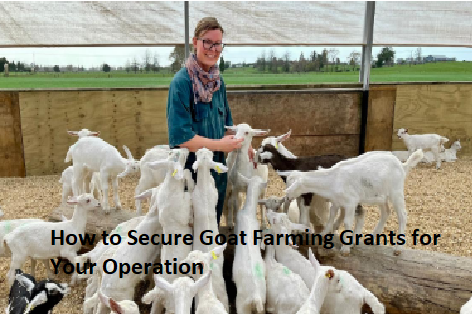
Accessing goat farming grants is a strategic way for producers to offset initial capital requirements, expand their herds, or implement sustainable infrastructure. While no single “free money” program exists for every applicant, government agencies and private foundations provide targeted financial aid to those who meet specific criteria. Understanding where these funds originate and how to qualify is the first step toward securing support for your agricultural business.
Understanding Grant Funding Sources
Most funding for agricultural operations comes from federal, state, or private entities rather than a single universal pot. The United States Department of Agriculture (USDA) remains the primary source for agricultural financial assistance in the country.
They offer various programs that support beginning farmers, veteran producers, and those focusing on conservation. You can find detailed program requirements on the official USDA website.
State-level departments of agriculture often supplement federal programs with their own localized initiatives. These state grants are frequently smaller in scale but can be easier to access because there is less national competition.
They may focus on specific goals like soil health, water conservation, or local food security. You should contact your local county extension office to learn about specific opportunities available in your state.
Private foundations and non-profit organizations also play a significant role in supporting small-scale livestock operations. These groups often prioritize sustainable farming practices, organic production, or supporting underrepresented groups in agriculture. Unlike government grants, these awards may have fewer bureaucratic requirements, but they are often highly competitive due to limited annual funding.
Federal Programs for Beginning Farmers
The USDA’s Beginning Farmer and Rancher Development Program is a cornerstone for those entering the industry. This program provides education, mentoring, and technical assistance rather than just direct cash payments.
It is designed to help new goat farmers build a sustainable business model from the ground up. By participating in these programs, you gain the expertise needed to qualify for other financial assistance.
The Farm Service Agency (FSA) offers microloans that are often treated as stepping stones to larger grant opportunities. While these are loans, they feature lower interest rates and more flexible repayment terms than traditional commercial lending.
Many farmers use these funds to purchase their first herd or necessary equipment. Successfully managing an FSA loan can demonstrate the fiscal responsibility required for future grant applications.
Conservation-focused programs, such as the Environmental Quality Incentives Program (EQIP), offer financial assistance for infrastructure that benefits the land. If your goat farm requires fencing to protect riparian areas or specialized waste management systems, you may qualify for cost-sharing. These grants are not for buying goats, but they free up your own capital by covering significant infrastructure costs.
Eligibility and Application Requirements
Eligibility for goat farming grants typically hinges on your legal status and the scale of your operation. Most grantors require applicants to have a registered business entity, such as an LLC or a sole proprietorship.
You will likely need a Tax Identification Number (TIN) or an Employer Identification Number (EIN) to process any payments. Being organized as a legitimate business shows grant committees that you are serious about long-term viability.
A written business plan is the most critical document in your application package. It must detail your production methods, your target market, and how you intend to use the grant money to grow.
If you cannot explain how the funds will increase your farm’s productivity or sustainability, your application will likely be rejected. Most committees look for clear, measurable objectives rather than vague ideas for expansion.
Financial transparency is equally important, as you will need to provide records of your current farm income and expenses. If you are a startup, you must provide projected financials based on industry standards for your region. Grantors want to see that you have “skin in the game” and that their investment will produce a tangible return for the community or the environment.
Common Financial Support Comparisons
Understanding the difference between various types of financial aid is essential for planning your budget. Grants do not require repayment, but they come with strict reporting requirements.
Loans must be repaid but allow for more autonomy in how you spend the capital. The following table illustrates the typical characteristics of these different funding pathways.
| Funding Type | Repayment Required | Reporting Burden | Primary Purpose |
|---|---|---|---|
| Federal Grant | No | High | Public Benefit |
| Commercial Loan | Yes | Low | Profit Growth |
| Private Foundation | No | Medium | Mission Alignment |
| FSA Microloan | Yes | Medium | Start-up Costs |
Targeting Grants for Specific Demographics
Many grant programs are specifically designed to support demographic groups that have historically faced barriers to entry. If you identify as a female farmer, a veteran, or a socially disadvantaged producer, you may qualify for exclusive funding pools.
The USDA defines socially disadvantaged groups to include specific racial and ethnic minorities. These programs are designed to level the playing field and ensure diverse representation in the agricultural sector.
Veterans transitioning into agriculture can access special training and financial support through the Farmer Veteran Coalition. This organization often helps members navigate the complex world of federal grants and private funding opportunities.
Many of these programs offer “seed money” that can be used for livestock purchases, fencing, or barn repairs. Being part of such a community often provides networking benefits that lead to additional private funding leads.
Women in agriculture also have access to resources like the American Agri-Women or state-specific women’s farming networks. These groups often maintain databases of grants that are not widely advertised to the general public.
Building a relationship with these organizations can provide you with a competitive advantage. You will often find mentorship opportunities that help you refine your grant writing skills.
Essential Steps for a Winning Application
Writing a successful grant application is a skill that requires patience and attention to detail. Start by identifying the specific priorities of the grantor and mirroring their language in your proposal.
If a grant focuses on “soil health,” your application must emphasize how your goat farming practices contribute to that goal. Avoid generic applications that try to be everything to everyone, as they rarely succeed.
Gather all your supporting documents well before the deadline. This includes your business plan, tax returns, land ownership or lease agreements, and letters of support from community members.
A letter of support from a local agricultural extension agent can carry significant weight. It validates your project and proves that you have an established network of professional support.
Review your budget multiple times to ensure the numbers are realistic and directly tied to your stated goals. Grant committees are experts at spotting inflated costs or poorly researched estimates.
If you request funding for equipment, provide quotes from at least two different suppliers. This transparency shows that you have done your due diligence and are acting as a responsible steward of the funds.
Managing Grant Funds Responsibly
Once you are awarded a grant, your work is far from over. You must maintain meticulous records of how every dollar is spent, as most grantors require detailed financial reporting.
Keep separate bank accounts for grant funds to prevent commingling with your personal or general business finances. Failure to provide accurate receipts can lead to the revocation of the grant or disqualification from future opportunities.
Adhere strictly to the timeline you proposed in your application. If you fall behind schedule, communicate with the grant administrator immediately rather than waiting until the final report is due.
Most organizations are willing to work with you if they see that you are making a good-faith effort to meet your milestones. Transparency during the life of the grant is the best way to secure future funding.
Consider the tax implications of receiving a grant, as these payments are often treated as taxable income. Consult with a professional accountant who specializes in agricultural tax law to understand your obligations.
Paying your taxes correctly is not just a legal requirement; it is also a way to maintain the credibility of your business. A clean audit trail will make it much easier to apply for subsequent grants in the future.
Common Questions About Agricultural Funding
How much money can I realistically get for a goat farm?
Most small-scale grants range from $5,000 to $25,000 for individual producers. Larger grants exist for collaborative projects or research-based farming, but these are rare for individual hobby or small-commercial operations.
Does the government pay you to start a farm?
The government does not provide “startup grants” to pay for your living expenses or basic lifestyle costs. They provide funds to help with specific agricultural infrastructure, equipment, or conservation efforts that serve a public interest.
How much land do I need to qualify for grants?
There is no universal minimum, but grantors generally look for a sustainable operation that demonstrates long-term viability. A farm with 5 to 10 acres is often the starting point for many conservation-based grant programs.
Can I get a grant if I have no experience?
Most grant programs require at least some demonstrated experience or a mentorship arrangement. If you are brand new, focus on applying for beginner training programs and educational grants first to build your credentials.
Are there grants for female goat farmers?
Yes, several organizations specifically target women in agriculture, including the USDA’s Women in Agriculture initiatives. These programs often provide both direct financial support and networking opportunities.
Strategic Outlook for Goat Farmers
Securing financial support for your operation requires a professional approach to business development and documentation. While goat farming grants are not a substitute for a profitable business model, they are excellent tools for scaling your infrastructure and enhancing your land management practices. Focus on building a clear, data-backed plan that aligns with the specific mission of the agencies you approach.
Your ability to articulate the value of your farm—whether through sustainable practices or community impact—will determine your success in the competitive world of grant funding. Keep your records organized, stay active in your local agricultural community, and remain persistent in your search for new opportunities. With a disciplined mindset, you can leverage these resources to build a resilient and thriving goat farm that stands the test of time.
