

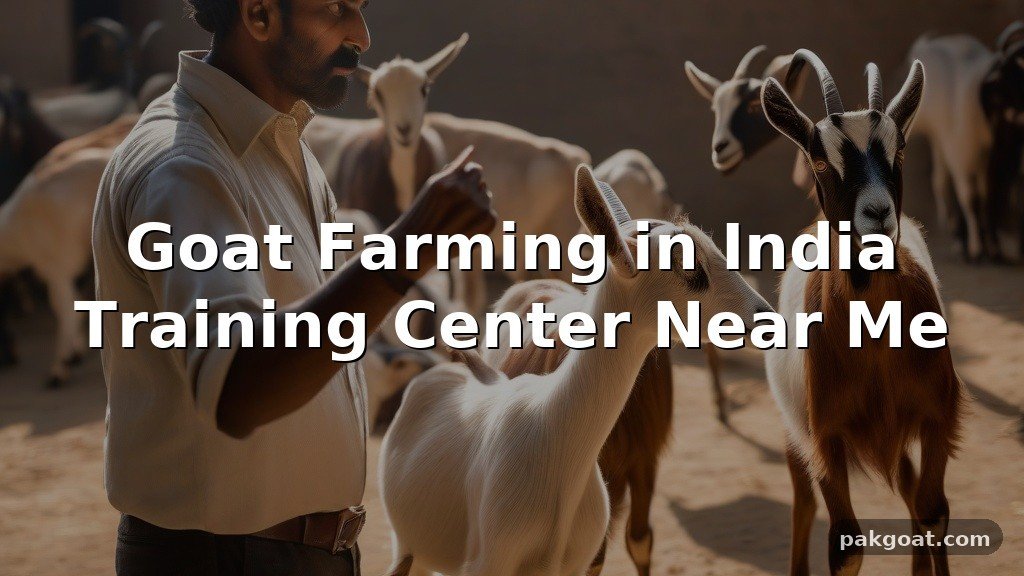
Locating a goat farming in India training center near me is the first logical step for any aspiring entrepreneur looking to enter the livestock sector. Official government institutes and agricultural universities provide the most reliable technical knowledge, ensuring you avoid common pitfalls in herd management.
By connecting with these local hubs, you gain access to proven methodologies that increase survival rates and overall productivity. This article outlines how to identify legitimate training providers and what you should expect from their curriculum.
Finding Legitimate Training Centers
The most credible resources for goat farming training are the Krishi Vigyan Kendras (KVKs) located in nearly every district. These centers operate under the Indian Council of Agricultural Research (ICAR) and offer highly subsidised programs for local farmers. You can find a nearby center by visiting the official ICAR-KVK portal and selecting your state and district.
Government vs Private Providers
When searching for a goat farming in India training center near me, prioritize government-run institutions over private consultancy firms. Government programs are designed for skill development and typically cost between ₹500 and ₹2,000 for a multi-day course. Private consultants may charge significantly more, often ranging from ₹5,000 to ₹15,000 for similar content.
- Krishi Vigyan Kendras (KVKs) for regional expertise.
- Central Institute for Research on Goats (CIRG) for advanced scientific training.
- State Agricultural Universities (SAUs) for comprehensive livestock management courses.
- District Veterinary Offices for local breed-specific guidance.
Core Curriculum Expectations
A high-quality course should move beyond basic animal husbandry to cover the commercial side of the industry. You need to understand how to manage a herd’s health, nutrition, and market integration before investing your capital. The following table illustrates the typical breakdown of topics covered in a standard professional workshop.
| Module | Focus Area |
|---|---|
| Breed Selection | Identifying high-yield breeds like Barbari or Jamunapari. |
| Health Management | Vaccination schedules and common disease prevention. |
| Financial Planning | Calculating feed costs versus market sale prices. |
| Infrastructure | Designing cost-effective housing and ventilation systems. |
Frequently Asked Questions
Is government-sponsored training free?
Most KVKs charge a nominal registration fee to cover administrative costs and study materials. While not entirely free, these programs are significantly cheaper than private training and often include field visits.
How long does the training last?
Courses generally span from 3 to 7 days for intensive workshops. Some institutes offer longer, certificate-based programs that can last up to 15 days for those looking to manage large-scale commercial units.
Do these centers provide financial aid?
Training centers themselves do not provide loans, but they are the best place to get a project report signed. Banks typically require a certificate of training before approving a loan for commercial goat farming.
Which breed should I start with?
Your choice of breed should be based on your local climate and feed availability. Trainers at a reputable institute will guide you toward breeds that thrive in your specific district’s environmental conditions.
Starting Your Journey
Identifying a qualified goat farming in India training center near me is the foundational step toward building a sustainable agricultural business. Once you complete your training, focus on starting with a small batch of 10 to 20 goats to understand the daily labor requirements. Always maintain detailed logs of your expenses, including fodder, medicine, and labor, to track your profitability.
Engaging with local agricultural departments will keep you updated on new government subsidies and insurance schemes for livestock. If you are serious about this venture, reach out to your nearest KVK this week to check their upcoming course schedule and secure your spot.
