

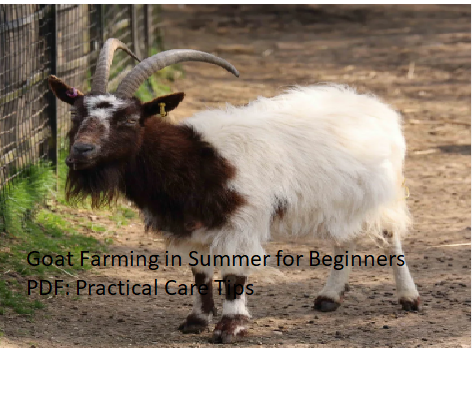
Managing a herd through high temperatures requires specific strategies, and many new owners look for a goat farming in summer for beginners pdf to guide them through heat stress prevention. The core requirement for summer success is ensuring constant access to cool, clean water and providing structural shade that allows for maximum airflow. When temperatures exceed 85 degrees Fahrenheit, goats begin to show signs of heat exhaustion, including rapid panting and reduced feed intake.
By focusing on hydration, ventilation, and parasite management, you can keep your animals productive throughout the hottest months of the year. This article provides the essential data and technical guidance you need to thrive during the summer season without relying on external documents.
Hydration Strategies for Heat Management
Water is the most critical asset in your summer management plan. A mature, lactating goat can consume between 2 to 4 gallons of water daily, and this requirement increases significantly as the ambient temperature rises.
You must ensure that water troughs are scrubbed clean at least twice a week to prevent the buildup of algae and bacteria. Stagnant, warm water discourages drinking, which quickly leads to dehydration and decreased milk production in dairy breeds.
Positioning water sources in the shade is mandatory for effective heat regulation. If your trough is located in direct sunlight, the water temperature will rise, making it unappealing to the herd.
Consider adding a small amount of ice to the water during peak heat waves if you have a small enough operation to make this practical. Always provide multiple water points if your grazing area is large to ensure that even lower-ranking goats in the herd hierarchy can drink without being bullied away by dominant individuals.
The Science of Effective Shelter
Goats do not sweat efficiently, meaning they rely heavily on convection and shade to shed body heat. Your summer shelter should prioritize airflow over total enclosure.
Avoid using solid walls on all sides, as these trap hot air and create a stifling microclimate. Instead, utilize open-sided structures with high ceilings that allow hot air to rise and escape through ridge vents or gable ends.
Roof materials significantly impact the interior temperature of your barn. Metal roofing is common, but it conducts heat rapidly unless it is properly insulated or painted a reflective color like white or silver.
Installing a radiant barrier or simply ensuring that there is at least a 6-foot clearance above the goats’ heads helps move air across their bodies. If you notice goats huddling in corners during the afternoon, your ventilation is likely insufficient, and you may need to install industrial-grade box fans to force air circulation.
Managing Dietary Adjustments
High-fiber diets, such as dry hay, produce significant internal body heat during the fermentation process in the rumen. During extreme summer heat, you should shift the bulk of your feeding schedule to the early morning and late evening hours.
This strategy prevents the goats from generating peak metabolic heat during the hottest part of the afternoon. You can also offer high-quality forage or browse that is easier to digest, which reduces the heat load on their digestive system.
Supplementing with electrolytes during heat waves can prevent mineral imbalances caused by heavy sweating and rapid breathing. While many commercial goat farming in summer for beginners pdf resources suggest complex additives, simple salt blocks and loose minerals are often sufficient for most herds.
Ensure that your mineral licks are protected from rain, as moisture will cause them to clump and become unpalatable. If you are using a commercial mineral mix, check that it contains adequate levels of selenium and copper, which are essential for immune function regardless of the season.
Parasite Control in Warm Weather
Warmer temperatures create the perfect environment for internal parasites like Haemonchus contortus, commonly known as the barber’s pole worm. These parasites thrive in humid, warm conditions and can devastate a herd in a matter of weeks.
You must adopt a proactive approach by rotating your pastures frequently to break the life cycle of these worms. Moving goats to fresh grazing every 7 to 10 days prevents them from consuming larvae that have migrated up the blades of grass.
Monitoring for signs of anemia is a daily task during the summer months. Use the FAMACHA system to check the color of the mucous membranes inside the lower eyelid.
A pale or white color indicates severe anemia, requiring immediate veterinary intervention or deworming. Do not wait for goats to show physical signs of illness like bottle jaw or scours, as these are often late-stage indicators of a parasite infestation that is already compromising the animal’s health.
Data Comparison of Heat Stress Levels
Understanding the relationship between temperature and humidity is vital for beginner farmers. High humidity prevents the evaporation of moisture from the animal’s lungs, which is their primary method of cooling down. Use the following table to gauge the level of risk for your herd based on common environmental conditions.
| Temperature (°F) | Humidity (%) | Risk Level |
|---|---|---|
| 75 – 80 | Below 50% | Low |
| 85 – 90 | 50% – 70% | Moderate |
| 90 – 95 | 70% – 85% | High |
| Above 95 | Above 85% | Critical |
Pasture Management and Vegetation
Summer grazing requires careful planning to prevent overgrazing, which leaves the soil exposed and increases the temperature of the ground surface. Keep your grass length at least 3 to 4 inches high to provide a cooling effect on the soil.
If you have limited acreage, consider implementing a “sacrifice lot” where you can feed hay during the hottest part of the day to protect your primary pastures from being stripped bare. Providing access to brushy areas or tree lines offers natural shade that is far superior to artificial structures.
You should also be aware of toxic plants that may appear during the summer growth phase. Many weeds thrive in heat, and goats may eat them if they are bored or if the forage quality in the pasture declines.
Regularly inspect your fence lines and perimeter for invasive species that could harm your animals. For official guidance on plant toxicity and forage management, you can consult the eXtension Foundation, which provides research-based information for small-scale livestock producers.
Herd Health and Routine Inspections
A consistent routine is the hallmark of a successful goat farmer. During the summer, spend time observing the herd during the early morning hours when they are most active.
This is the ideal time to spot injuries, limping, or abnormal behavior that might be masked later in the day when the goats are resting due to heat. Perform regular hoof trimming, as long hooves can trap moisture and debris, leading to foot rot in humid summer conditions.
Keep a comprehensive medical kit on hand that includes supplies for treating minor wounds and dehydration. Your kit should contain antiseptic sprays, sterile gauze, electrolytes, a digital thermometer, and a drenching syringe.
Maintaining accurate records of your deworming schedule and any health interventions is essential for long-term success. If you are struggling to keep track of these tasks, a simple digital spreadsheet or a physical logbook can serve as your personal version of a goat farming in summer for beginners pdf.
Frequently Asked Questions
What is the most effective way to cool down a goat during a heat wave?
The most effective method is providing a shaded, well-ventilated area with constant access to cool, fresh water. If a goat is showing signs of extreme heat stress, you can gently mist its legs and belly with water, but avoid soaking the entire animal, as this can trap heat if there is no breeze.
How many goats should a beginner start with?
It is recommended that beginners start with at least three goats. Goats are social herd animals and will experience significant stress and poor health if kept alone. Starting with a small number allows you to learn the nuances of herd management without being overwhelmed by the labor requirements of a large operation.
How many acres do I need to raise 100 goats?
The acreage requirement depends entirely on your soil quality and forage management. In a managed rotational grazing system, you might need anywhere from 10 to 30 acres, but if you rely on supplemental hay, you could support the same number on much less land. It is best to start small and scale up as you understand your land’s carrying capacity.
How many months does it take for a goat to reach maturity?
Most goats reach physical maturity between 12 and 18 months of age. While they may reach sexual maturity much earlier, around 4 to 6 months, breeding too early can lead to health complications and developmental issues. It is standard practice to wait until a doe is at least 8 to 10 months old or reaches 70% of her adult body weight before breeding.
Can goats tolerate high humidity?
Goats generally struggle with high humidity because it hinders their ability to cool down through respiration. While they can survive in humid climates, they require extra attention to parasite control, as moisture encourages the survival of worm larvae in the pasture. Ensure your housing is exceptionally well-ventilated to mitigate the effects of stagnant, humid air.
Conclusion
Successfully managing a herd during the summer months requires a combination of vigilance, proper infrastructure, and a deep understanding of your animals’ physiological limits. By focusing on hydration, ventilation, and proactive parasite management, you can ensure your goats remain healthy even during the most challenging heat waves. Remember that the best tools for your success are your own observations and the consistent application of these best practices, which serve as the foundation of any reliable goat farming in summer for beginners pdf.
As you gain experience, you will learn to adjust your routines to fit your specific climate and land conditions. Start with these basics, keep your records organized, and your herd will continue to thrive throughout the year.
