

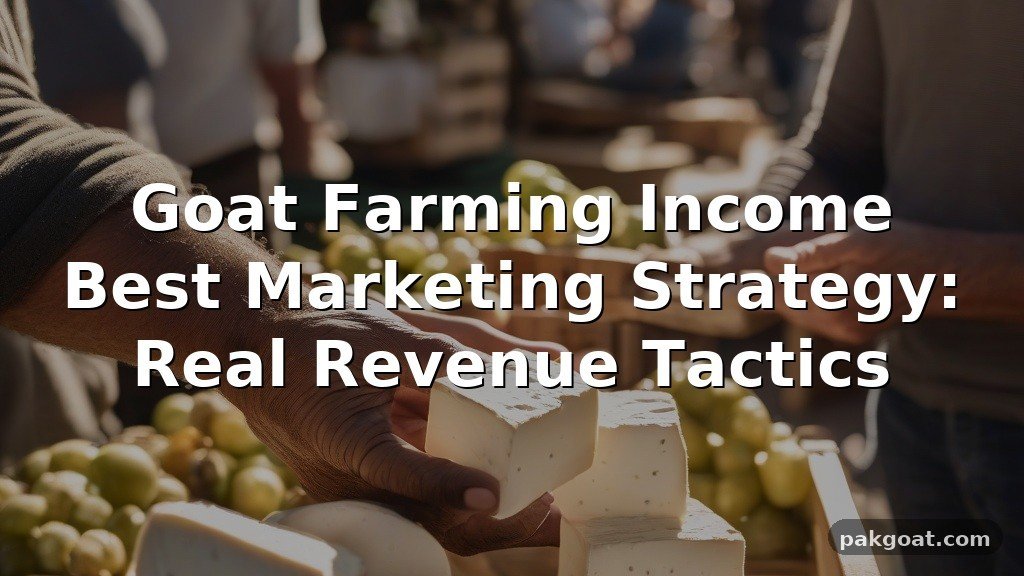
Maximizing your goat farming income requires a best marketing strategy that moves beyond local livestock auctions and focuses on direct-to-consumer sales. While many farmers view their herd as a commodity, the most profitable operations treat their goats as high-value assets by diversifying products and targeting specific culinary or hobbyist niches.
You will increase your bottom line by shifting from bulk sales to branded, value-added goods that command premium prices in competitive markets. By understanding the specific needs of your local demographic, you can transform a standard agricultural operation into a reliable source of secondary or primary revenue.
Direct Sales and Value-Added Revenue
The most effective way to improve your profit margin is to eliminate the middleman by selling directly to consumers or specialized retailers. When you bypass traditional livestock auctions, you retain the full retail value of your meat, milk, or fiber products.
Data from small-scale agricultural reports indicate that direct-to-consumer goat meat sales can yield a 20% to 40% higher return compared to wholesale auction prices. You should focus on building a consistent customer base through local farmers’ markets, farm-gate sales, and partnerships with high-end ethnic restaurants that specifically source goat meat.
Revenue Potential by Product Category
Different products carry varying profit margins depending on your location and processing capabilities. The following table illustrates estimated revenue streams for a small-to-medium-sized herd:
| Product Category | Revenue Potential | Market Demand |
|---|---|---|
| Goat Meat (Chevon) | High | Steady/Rising |
| Raw or Processed Milk | Moderate | Niche/High-end |
| Fiber (Cashmere/Mohair) | Moderate | Specialized |
| Breeding Stock | Very High | Low Volume |
Core Components of a Successful Marketing Plan
Developing a robust plan involves more than just finding buyers; it requires consistent branding and quality control. You must ensure your products meet the specific expectations of your target audience, whether they are home cooks or artisanal cheese makers. A successful approach typically incorporates the following elements:
- Maintaining a clean, professional social media presence to showcase farm health and animal welfare.
- Securing necessary health certifications to build trust with high-end culinary buyers.
- Developing a seasonal calendar to align your breeding cycles with periods of high demand, such as cultural holidays.
- Creating a customer mailing list to announce product availability, especially for high-demand meat cuts.
Managing Costs to Protect Income
A goat farming income best marketing strategy is only effective if your operating expenses remain under control. Feed costs typically represent the largest portion of your budget, often accounting for 50% to 60% of total expenditure.
You should prioritize rotational grazing systems to reduce reliance on expensive supplemental grain and hay. By managing your pastures effectively, you improve both animal health and your profit margins simultaneously.
Frequently Asked Questions
What is the most profitable product to sell from a goat farm?
For most small-scale producers, breeding stock consistently provides the highest profit margin per animal. However, if you prefer high-volume sales, direct-to-consumer meat production often provides a more reliable and recurring income stream.
How do I find buyers for goat meat?
You should start by identifying local ethnic communities that traditionally include goat in their diet. Contacting independent butcher shops and farm-to-table restaurants in your region is often more productive than listing animals on general classified sites.
Is goat milk more profitable than meat?
Goat milk can be highly lucrative, but it comes with strict regulatory requirements and high processing costs. Unless you are prepared to invest in pasteurization equipment and dairy licensing, meat production is generally easier to scale for beginners.
How often should I market my goats?
Marketing should be a year-round activity rather than a seasonal task. You should use social media to document your herd’s growth, which builds anticipation and trust with your customer base before your products are even ready for sale.
Optimizing Your Farm Business
The path to financial success in this industry relies on your ability to adapt to changing consumer preferences while keeping overhead low. By diversifying your offerings and focusing on direct sales, you create a buffer against the price volatility often found at wholesale auctions. Implementing a goat farming income best marketing strategy requires patience and consistent effort, but it ultimately provides a much higher return on your labor and investment.
Start by identifying one specific niche product you can supply to your local community, then scale your operations as your customer base grows. If you remain disciplined with your feed management and customer outreach, you will see your farm’s profitability increase steadily over time.
