

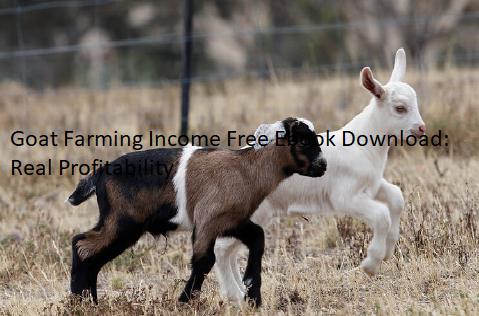
Finding a reliable goat farming income free ebook download is the first step for many aspiring livestock owners who want to understand the economics of the industry without paying for expensive consulting. While digital guides provide foundational knowledge, true profitability relies on understanding stocking rates, feed conversion ratios, and local market demand for meat or dairy.
This article cuts through the theory to provide the hard numbers you need to assess whether your plot of land can sustain a profitable herd. You will learn how to calculate potential returns and avoid common financial pitfalls.
Understanding Realistic Profit Margins
Goat farming is often marketed as a low-entry-cost business, but your net income depends heavily on your production model. Most small-scale operations expect a net profit margin of 15% to 25% once the herd reaches a mature, self-sustaining size. If you are starting from scratch, your first two years will likely show a net loss due to infrastructure costs like fencing, housing, and veterinary startup fees.
You should aim for a kidding rate of at least 1.5 kids per doe per year to maintain a viable income stream. If your mortality rate exceeds 10%, your potential profit margin will vanish quickly. Managing input costs, specifically supplemental feed and parasite control, is the primary lever you have to influence your bottom line.
Key Financial Metrics for Goat Herds
To determine if your operation will be profitable, you must track your cost per head against the market price for live weight. A single doe typically requires $150 to $250 in annual maintenance, covering feed, medicine, and basic shelter depreciation. If you sell a market kid at 60 to 80 pounds, you need to ensure that the sale price covers both the doe’s maintenance and the kid’s specific rearing costs.
Many farmers find that direct-to-consumer sales, such as selling to ethnic markets or for holiday festivals, yield 20% to 30% higher prices than selling at a standard livestock auction. Auctions often charge commission fees ranging from 3% to 7%, which further erodes your thin profit margins. Always calculate your “breakeven weight” before choosing a sales channel.
Land Requirements and Stocking Density
The number of goats you can keep on your land is the most common constraint for new farmers. A general rule of thumb is that you can support 6 to 8 adult goats per acre on well-managed pasture. If you rely on intensive rotational grazing, you might push this to 10 goats per acre, but you increase the risk of overgrazing and parasite buildup.
If you are looking for a goat farming income free ebook download, ensure it covers “carrying capacity” based on your local climate. In arid regions, your land might only support 2 to 3 goats per acre without significant supplemental hay. Overestimating your land’s capacity is the fastest way to increase your veterinary bills and decrease your animal weight gain.
Comparing Revenue Streams
Your income strategy will change depending on whether you focus on meat, dairy, or fiber production. Meat goats, particularly Boer or Kiko breeds, are generally lower maintenance and require less daily labor than dairy goats. Dairy operations require a significant investment in milking equipment and refrigeration, but they offer a daily cash flow.
| Revenue Source | Initial Setup Cost | Labor Intensity | Revenue Frequency |
| :— | :— | :— | :— |
| Meat Goats | Low | Moderate | Seasonal/Batch |
| Dairy Goats | High | Very High | Daily |
| Breeding Stock | Moderate | Moderate | Annual |
| Brush Clearing | Low | Low | Per Project |
The Role of Supplemental Feed
Pasture should provide the bulk of your herd’s diet, but supplemental feed is often necessary for high-growth kids or lactating does. Grain is the most expensive input, often accounting for 40% of total operating costs if used improperly. You should aim to keep grain supplementation below 1 pound per head per day for meat herds to maintain profitability.
Using high-quality hay during winter months is non-negotiable for keeping the herd healthy. If you do not have enough stored forage, your winter feed costs can easily exceed your annual profit. Research the United States Department of Agriculture guidelines on livestock nutrition to ensure your feeding program matches the physiological needs of your specific breed.
Infrastructure and Equipment Costs
Fencing is your single largest capital expenditure, and it is a recurring maintenance cost. A high-tensile woven wire fence is the industry standard, costing between $3,000 and $5,000 per acre to install professionally. Cheap electric netting is a popular alternative for small flocks, but it requires daily monitoring to ensure it hasn’t shorted out.
Housing does not need to be elaborate, but it must be dry and draft-free. A simple three-sided shed is sufficient for most climates, provided it offers enough square footage for the goats to lie down without crowding. You should budget roughly 10 to 15 square feet per goat for indoor shelter to prevent respiratory issues.
Managing Herd Health Expenses
Veterinary bills can quickly turn a profitable year into a deficit if you are not proactive. The most common economic drain is the cost of anthelmintics, or dewormers, as parasites develop resistance to standard treatments. Implementing a FAMACHA scoring system allows you to treat only the animals that need it, saving money and slowing parasite resistance.
* Vaccinations: Annual CD&T shots are essential and cost pennies per head.
* Hoof Trimming: Regular maintenance prevents rot and lameness that stunts growth.
* Mineral Supplements: Goats have specific copper and selenium requirements that vary by region.
* Record Keeping: Tracking health history helps you identify and cull unproductive or sickly animals.
Common Questions About Goat Farming
How many goats do you need to make a profit?
Most experts suggest a herd of at least 30 to 50 breeding does to generate a meaningful supplemental income. A herd smaller than this often functions as a hobby rather than a commercial enterprise.
How many acres do you need to raise 100 goats?
You generally need between 12 and 15 acres of high-quality, well-managed pasture to support 100 goats. If you have poor-quality land, you may need up to 30 acres or a heavy reliance on supplemental hay.
Is dairy or meat goat farming more profitable?
Dairy farming offers higher gross revenue but requires significantly more labor and infrastructure investment. Meat goat farming is generally more scalable and easier to manage for beginners with limited time.
How much does it cost to start a 50-goat operation?
Excluding land purchase, you should budget between $15,000 and $25,000 for initial stock, fencing, housing, and basic equipment. This assumes you are building some infrastructure yourself rather than hiring contractors.
How often should you rotate pastures to save money?
Rotating your goats every 3 to 7 days is optimal for parasite management and forage recovery. This keeps your animals healthier and reduces the need for expensive chemical dewormers.
Conclusion
Successfully building a business in this sector requires more than just reading a goat farming income free ebook download; it requires rigorous attention to your overhead and marketing. Focus on keeping your stocking density within the limits of your land and prioritizing animal health to keep veterinary costs low. By tracking your expenses against specific revenue targets, you can determine if your farm is a viable operation or a costly hobby.
Start small, verify your local market demand, and scale only when your profit margins are stable and predictable. If you follow these financial principles, you will be well-positioned to turn a small herd into a sustainable source of income.
