

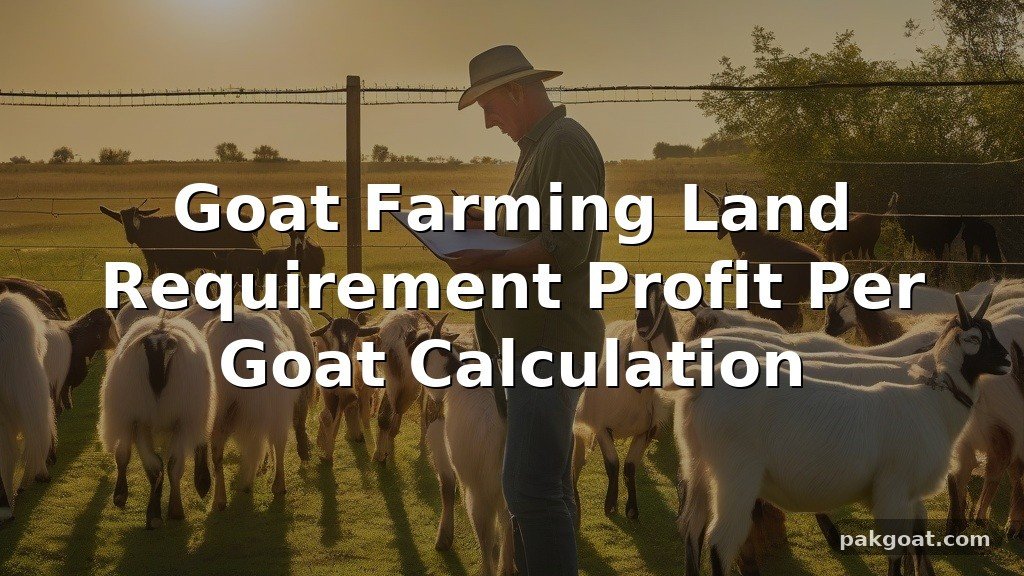
Understanding the goat farming land requirement profit per goat calculation is essential for any aspiring producer looking to build a sustainable operation. While variables like regional feed costs and market demand shift the bottom line, a well-managed herd typically generates a net profit of $50 to $150 per head annually.
Achieving these margins requires balancing your land footprint with efficient grazing strategies and high-value product sales. This article breaks down the numbers, helping you determine how to structure your farm for long-term viability without relying on guesswork.
Determining Your Land Needs
The amount of space you need depends heavily on your management style. Intensive grazing, which involves rotating goats through small, subdivided paddocks, allows for a much higher density than continuous grazing.
Space per animal
For most breeds, a standard recommendation is 10 to 15 goats per acre if you are using intensive rotational grazing. If you rely on permanent pasture without rotation, you should limit the density to 4 to 6 goats per acre to prevent overgrazing and parasite buildup. These figures assume the land is productive and capable of supporting consistent forage growth throughout the season.
Calculating Profitability
A reliable goat farming land requirement profit per goat calculation depends on your primary revenue stream. Whether you focus on meat, milk, or breeding stock, your margins will fluctuate based on input costs like supplemental feed and veterinary care.
Revenue and cost breakdown
The following table provides a rough estimate of annual financial performance for a single meat goat under standard management conditions.
| Category | Estimated Value (USD) |
|---|---|
| Gross Revenue (per goat) | $250 – $350 |
| Annual Feed Costs | $80 – $120 |
| Vet and Medical Supplies | $20 – $40 |
| Miscellaneous (Fencing/Utilities) | $30 – $50 |
| Net Profit | $50 – $150 |
Key Drivers of Farm Success
Profitability isn’t just about the number of animals; it’s about how you manage your resources. Efficient farmers focus on these core areas to keep their margins healthy.
- Feed Management: Grazing is cheaper than buying hay, so maximize pasture quality to reduce supplemental feed bills.
- Marketing Strategy: Direct-to-consumer sales, such as selling meat locally or providing breeding stock to 4-H clubs, fetch significantly higher prices than auction houses.
- Health Protocols: A preventative parasite management plan saves money on emergency vet visits and reduces mortality rates.
- Herd Genetics: Choosing breeds that thrive in your specific climate reduces the need for expensive climate-controlled housing.
Frequently Asked Questions
How many goats do I need to make a full-time income?
A herd of 100 to 200 does is generally the starting point for a self-sustaining commercial operation. At an average profit of $100 per head, you would need a large, highly efficient herd to replace a full-time salary.
Does milk production change the profit calculation?
Yes, dairy operations often have higher gross revenue per goat because milk and cheese command premium prices. However, they also require significantly higher labor and infrastructure investment compared to meat-focused herds.
What is the biggest hidden cost in goat farming?
Fencing is often the most overlooked expense. Goats are notorious for escaping, and high-quality, woven-wire fencing is a non-negotiable requirement for keeping your herd safe and your crops secure.
Can I start with just two or three goats?
Starting small is an excellent way to learn husbandry without high financial risk. While you won’t see significant profit, you will gain the experience needed to scale up your operation later.
Final Thoughts on Farm Viability
Making a goat farming land requirement profit per goat calculation work requires consistent data tracking and a clear focus on local market needs. By keeping your land usage efficient and your overhead costs low, you can build a profitable enterprise that sustains itself over time. Start small, prioritize high-quality forage, and look for direct sales channels to maximize your returns.
As you scale, continue refining your strategy based on your specific farm’s performance data. Reach out to local agricultural extension offices to find resources tailored to your region’s climate and market conditions.
