

Planning a goat farming land requirement setup at home begins with understanding the specific space needs of your herd versus the constraints of your property. While many backyard enthusiasts assume goats require vast acreage, the reality is that high-density management strategies allow for successful production on much smaller plots. Balancing animal welfare with local zoning regulations is essential for long-term viability.
By focusing on vertical space, rotational grazing, and specialized housing, you can create a productive system that fits into a residential or small-scale rural environment. This article provides the actionable data needed to calculate your footprint and build a sustainable setup.
Calculating Space Requirements for Backyard Goats
For a standard small-scale operation, you should budget for roughly 10 to 15 square feet of indoor shelter space per mature goat. This ensures the animals have enough room to move, lay down comfortably, and avoid bullying from more dominant herd members.
When considering outdoor space, the requirements shift based on whether you intend to use the land for grazing or just as an exercise yard. If you are relying on the land for forage, you will need significantly more area than a dry-lot system.
A dry-lot setup—where goats are kept in a pen and fed hay—requires about 200 to 300 square feet per animal for exercise and movement. This prevents the mud accumulation that leads to hoof rot and other parasitic infections common in cramped conditions.
If you plan to rotate goats through pasture, you can support roughly 6 to 8 goats per acre depending on your local climate and soil quality. However, this figure is highly variable based on annual rainfall and vegetation growth rates.
Beginners often underestimate the impact of waste management on space. A small herd of five goats will produce a significant amount of manure, which requires dedicated space for composting or storage.
If your land is too small to handle the waste load without creating runoff issues, you are likely overstocked. Always prioritize the health of the soil, as degraded land will eventually force you to spend more on supplemental feed and veterinary care.
Zoning and Local Legal Considerations
Before you sink money into fencing or shelters, verify your local municipal codes regarding livestock. Many suburban areas classify goats as “livestock” rather than pets, which often triggers specific acreage minimums.
You might find that your property is zoned for small animals but restricts the number of head you can keep. Check with your local planning department or county extension office for current ordinances.
Some jurisdictions require a minimum of 0.5 to 1 acre to keep any livestock, even if you only intend to keep two goats. Others may allow them on smaller lots provided you have a permit or a “conditional use” variance.
You should also investigate setback requirements, which dictate how far your goat shed must be from neighboring property lines. Failing to meet these distances can lead to forced removal of your animals and heavy fines.
If you are renting or living in an HOA-governed community, review your covenants carefully. Most HOAs explicitly forbid livestock, even if the city ordinance allows it.
Always get your approval in writing before purchasing your first animal. Engaging with your neighbors early can also mitigate potential complaints about noise or odor, which are common triggers for animal control inspections.
Designing the Ideal Shelter
Your goat farming land requirement setup at home must include a draft-free, dry, and well-ventilated structure. Goats are notoriously sensitive to moisture and wind, making them prone to respiratory issues if their housing is inadequate.
A simple three-sided shed is often sufficient in mild climates, but it must face away from prevailing winds. In colder regions, a fully enclosed structure with proper airflow at the roofline is necessary to prevent condensation buildup.
Flooring is a critical component of your shelter design. Dirt floors are common but can become breeding grounds for bacteria if they don’t drain well.
Many successful small-scale farmers opt for a raised floor made of wooden pallets or concrete, covered with thick, absorbent bedding like wheat straw or wood shavings. This keeps the animals off the cold ground and makes cleaning significantly easier.
The internal layout should include designated areas for feeding and sleeping. Goats are picky eaters and will waste expensive hay if it is left on the ground where it can be soiled.
Use elevated hay feeders that keep the feed at shoulder height to prevent contamination. You should also incorporate a “creep” area if you plan to breed, which allows kids to access extra nutrition while keeping larger adults out.
Fencing and Security Strategy
Containment is the single most expensive and labor-intensive part of your land setup. Goats are expert escape artists, capable of climbing, jumping, and squeezing through gaps that seem impossibly small.
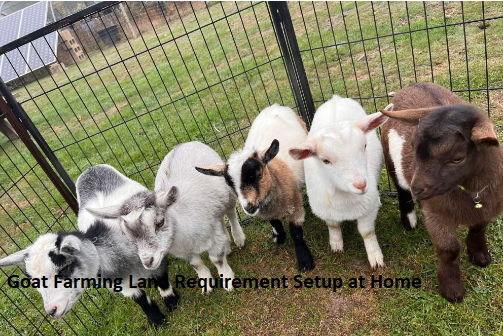
Woven wire fencing, often called “no-climb” fencing, is the gold standard for goat containment. It features small openings that prevent the goats from getting their heads stuck while providing enough structural integrity to withstand leaning or pushing.
Avoid using standard barbed wire or electric strands alone, as these are often ineffective against determined goats. A high-tensile electric fence can be used as a secondary deterrent, but it should never be the primary barrier for young or small goats.
If you have predators in your area, such as coyotes or stray dogs, you may need to increase your fence height to at least 48 to 52 inches. Adding a “hot” wire at the top and bottom of your woven wire fence is an excellent deterrent against both escape and predation.
Investing in quality gate latches is equally important. Goats can quickly learn how to nudge simple slide bolts open, especially if they are motivated by food on the other side.
Use locking carabiners or spring-loaded clips to ensure that every gate remains secure. Regularly walk your fence line to check for downed branches or areas where the ground has eroded, creating a gap underneath.
Watering and Nutritional Infrastructure
Access to clean, fresh water is the most important factor in your goat’s daily health. A single goat can drink anywhere from 1 to 3 gallons of water per day depending on the temperature and their stage of lactation.
You need a reliable source that is easy to refill and, more importantly, easy to scrub. Algae and debris build up quickly in troughs, and goats will often refuse to drink dirty water, which leads to dehydration and urinary issues.
If your setup is at home, proximity to a water spigot will save you hundreds of hours of labor over the life of your farm. If you must haul water, consider installing a gravity-fed rain barrel system or a dedicated hose run to your pasture.
In winter, you will need a way to keep the water from freezing. Heated buckets or submersible tank heaters are essential in climates where temperatures drop below freezing for extended periods.
Mineral supplementation is another area that requires specific infrastructure. Goats require loose minerals rather than pressed blocks, as their tongues are not designed to lick hard surfaces effectively.
Place your mineral feeder in a covered, dry location to prevent the minerals from clumping due to humidity. Providing free-choice access to high-quality minerals is the best way to prevent common deficiencies that lead to reproductive failure or poor coat condition.
Managing Land and Forage
The goal of any home-based goat setup is to maximize the utility of the available land. Rotational grazing is the most effective way to manage a small plot, as it prevents overgrazing and disrupts the life cycle of intestinal parasites.
Divide your available land into smaller paddocks using temporary electric netting or portable fencing. Move your goats to a new section every few days, allowing the previous section to rest and recover.
This recovery period is vital for soil health and parasite control. By the time the goats return to the first paddock, most of the parasite larvae will have died off because they lack a host.
You can find detailed resources on parasite management through the American Consortium for Small Ruminant Parasite Control, which offers science-backed guidelines for small-scale producers. Monitoring the height of your forage is key; never let the goats graze below 3 to 4 inches, as this is where the highest concentration of parasite eggs lives.
If your home lot is too small to provide significant forage, focus on “cut and carry” feeding. This involves harvesting branches, weeds, or hay and bringing it to the goats in their dry lot.
This method allows you to utilize land that wouldn’t be safe for goats to roam, such as areas near busy roads or ornamental gardens. It also gives you total control over exactly what the animals are consuming, which can improve milk quality and growth rates.
Comparing Production Systems
To understand the scale of your operation, look at how different setups compare in terms of inputs and outputs. The table below outlines the basic resource requirements for different herd sizes in a home environment.
| Herd Size | Min. Land Area | Daily Water Requirement | Primary Feed Type |
|---|---|---|---|
| 2 Goats | 0.25 Acres | 2-6 Gallons | Hay + Browse |
| 5 Goats | 0.50 Acres | 5-15 Gallons | Rotational Pasture |
| 10 Goats | 1.00+ Acres | 10-30 Gallons | Intensive Grazing |
These figures serve as a baseline for planning your budget and infrastructure. As you scale up, the labor requirements grow exponentially, particularly regarding manure management and daily monitoring.
If you are operating on less than half an acre, you should stick to a smaller herd to ensure that your land remains productive rather than becoming a dirt lot. The health of your goats is directly tied to the health of the land they occupy.
Common Mistakes in Backyard Setups
One of the most frequent errors is failing to provide adequate drainage in the exercise yard. If your goat pen turns into a swamp during the rainy season, you will deal with constant hoof issues and a very unhappy herd.
Before you build your shelter, ensure the ground is sloped away from the structure and that you have a plan for directing runoff. Adding a layer of crushed rock or gravel near the entrance of the barn can prevent mud from becoming a permanent fixture.
Another common mistake is neglecting the social nature of goats. They are herd animals and will become stressed and prone to illness if kept alone. Always plan for at least two goats, even if you only have the space for a small operation.
You also need to consider what happens if a goat gets sick; having a “hospital pen” or a way to isolate an individual animal is crucial. This doesn’t have to be a permanent structure, but it should be a plan you have ready before an emergency arises.
Finally, underestimate the power of a goat’s curiosity at your own peril. They will test every inch of your fencing, chew on electrical cords, and strip the bark off your ornamental trees.
If you have expensive landscaping, you must protect it with physical barriers or keep the goats away from it entirely. A goat-proof setup is one that assumes the animal will try to dismantle everything it can reach.
Frequently Asked Questions
How much land do I need for 100 goats?
Keeping 100 goats is generally not considered a “home” or backyard operation. You would need at least 15 to 20 acres of high-quality, well-managed pasture to support a herd of that size sustainably.
Can I raise goats in a suburban backyard?
It depends entirely on your local city ordinances. Many municipalities prohibit livestock within city limits due to noise and waste concerns, so you must check your local zoning laws before acquiring any animals.
What is the most important part of a goat setup?
The most important elements are secure, climb-proof fencing and dry, draft-free shelter. Without these two components, you will face constant struggles with escapees and sick, stressed animals.
How do I stop my goats from escaping?
Use high-quality woven wire fencing with a height of at least 48 inches. Ensure your gate latches are locking, and regularly inspect the perimeter for holes, loose wire, or areas where the goats could dig underneath.
Do goats need a lot of space to run?
Goats are browsers rather than grazers, meaning they prefer to spend their time picking at leaves and shrubs rather than running across large open fields. They need enough space to move and exercise, but their primary requirement is variety in their environment.
Conclusion
Establishing a successful goat farming land requirement setup at home requires careful planning, adherence to local regulations, and a focus on animal welfare. By respecting the specific needs of your herd—including their preference for dry, secure shelter and high-quality mineral intake—you can build a sustainable operation even on a limited footprint. Remember that the health of your goats is inextricably linked to the quality of their environment and the diligence of your management.
Start small, monitor your land’s health, and scale only when your infrastructure can support the increased demand. If you approach this with a focus on preparation and consistent care, you will find that managing goats at home is a rewarding way to engage with agriculture. We encourage you to reach out to local agricultural extension agents to get specific advice tailored to your region’s soil and climate conditions.
