

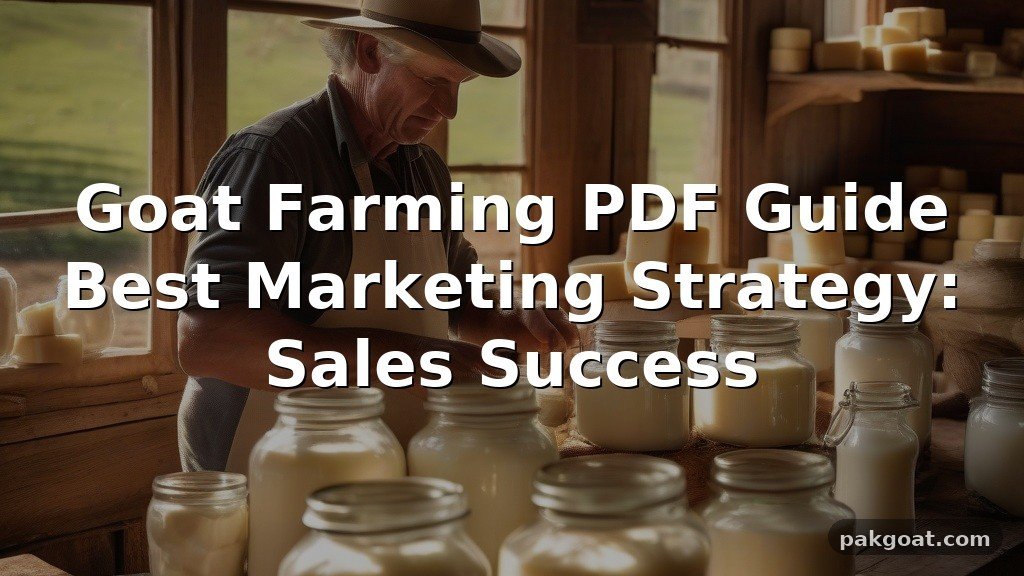
Finding the right goat farming pdf guide best marketing strategy is essential for turning a small herd into a profitable business. Most beginners focus entirely on animal husbandry, yet the financial viability of a goat farm depends heavily on how you connect with your target market.
By identifying your primary revenue stream early, you can tailor your operations toward high-demand products like premium goat milk, specialty meat, or high-quality fiber. This article breaks down the practical steps to build a brand that resonates with local consumers and ensures your agricultural venture remains sustainable in a competitive regional landscape.
Direct Sales and Value-Added Products
The most effective approach for a small-scale operation is to bypass intermediaries and sell directly to the end consumer. Selling raw milk is often restricted by state regulations, so focusing on value-added items like aged goat cheese, yogurt, or artisanal soaps can increase your profit margins significantly. These products allow you to capture more of the retail value rather than settling for wholesale commodity prices.
Defining Your Product Niche
* Dairy: Focus on fresh chèvre or aged feta for local farmers’ markets.
* Meat: Target ethnic markets or health-conscious consumers looking for lean, pasture-raised chevon.
* Fiber: Sell raw cashmere or mohair to local spinning guilds and fiber artists.
* Agritourism: Host farm tours or “goat yoga” sessions to diversify your income streams.
Strategic Pricing and Market Positioning
Successful operations rely on a clear pricing structure that reflects both your production costs and the perceived value of your goods. You should track every expense, including feed, veterinary care, and labor, to ensure your retail price covers your overhead while remaining competitive. A well-constructed financial plan will help you determine the break-even point for each product line.
| Product Type | Primary Target Market | Estimated Margin |
|---|---|---|
| Artisanal Cheese | Gourmet Grocery Stores | 40% – 60% |
| Pasture-Raised Meat | Direct-to-Consumer/CSAs | 25% – 35% |
| Goat Milk Soap | Local Craft Fairs | 50% – 70% |
Building a Local Brand Presence
Marketing your farm effectively requires a consistent visual identity across all platforms. Use social media to showcase the transparency of your goat farming practices, as modern consumers prioritize animal welfare and local sourcing. High-quality photos of your herd and your clean production facility build instant trust with potential buyers.
Establishing a presence at regional events provides a direct line to your community. Offering samples at farmers’ markets converts casual passersby into loyal, recurring customers. You should also maintain a simple website that lists your farm location, product availability, and contact information for bulk orders.
Frequently Asked Questions
What is the most profitable goat product to sell?
Value-added items like artisanal cheese or goat milk skincare typically offer the highest profit margins because they differentiate your farm from generic commodity producers.
How do I find my target market?
Start by researching local demographics at farmers’ markets and identifying which local restaurants or specialty grocers prioritize sourcing ingredients from a nearby goat farm.
Should I use a template for my business plan?
Using a structured template is helpful for organizing your financial projections, but ensure you customize it to reflect your specific regional market conditions and production capacity.
How often should I update my marketing approach?
Review your sales data quarterly to see which products move the fastest and adjust your production schedule to meet that demand while phasing out low-performing items.
Long-term Sustainability
Focusing on quality and community connection ensures that your business grows alongside your herd. Whether you are selling dairy, fiber, or meat, the core of a successful enterprise remains the relationship you build with your customers. Regularly evaluating your costs and refining your outreach will keep your farm resilient against market fluctuations.
By applying the principles found in a professional goat farming pdf guide best marketing strategy, you can transition from a hobbyist to a serious producer. Start small, track your results diligently, and keep your focus on the products that your community values most.
