

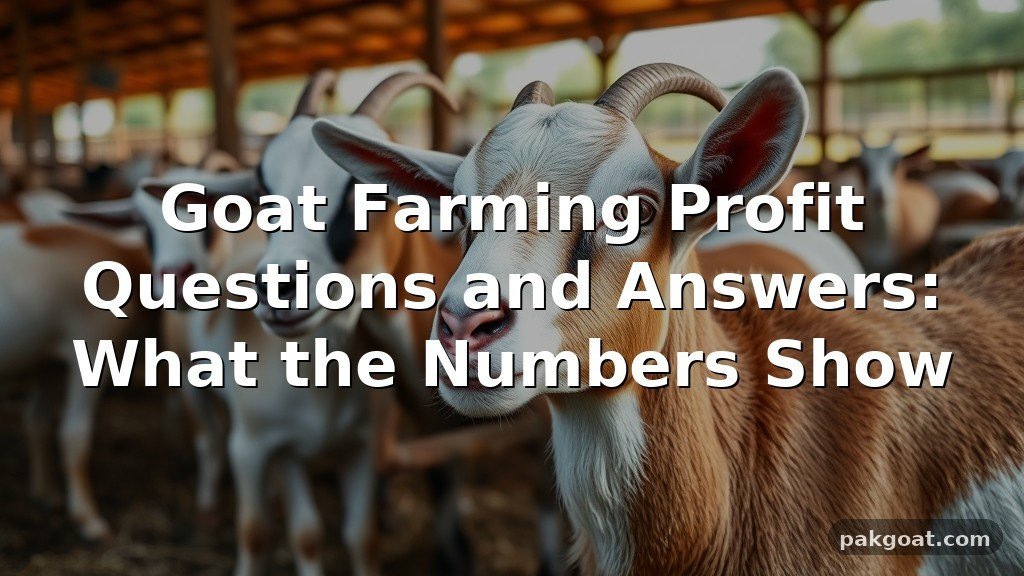
Navigating the complexities of goat farming profit questions and answers requires a clear look at the actual economics behind small ruminant production. Many new producers enter the industry with high hopes, but success depends on understanding specific margins, labor inputs, and market access.
By evaluating real-world cost structures and revenue streams, you can determine if this agricultural venture aligns with your financial goals. This analysis breaks down the essential performance indicators that define whether a goat operation remains a hobby or evolves into a sustainable, income-generating business.
Direct Profitability and Financial Expectations
The most common inquiry regarding goat farming profit questions and answers involves the actual dollar amount a farmer can expect to clear annually. A small-scale operation with 20 to 30 breeding does typically yields a net profit margin between 15% and 25% after accounting for all operating expenses.
If you manage your feed costs effectively, you might see a net return of $100 to $150 per doe annually. These figures depend heavily on whether you are selling kids for meat, breeding stock, or producing dairy products.
Operating costs represent the primary barrier to profitability for most beginners. Feed often accounts for 60% to 70% of your total variable expenses if you are not utilizing managed rotational grazing.
To maximize your returns, you must minimize purchased inputs by prioritizing high-quality pasture management. Producers who rely solely on store-bought grain rarely achieve the margins necessary to sustain a full-time livelihood.
The Most Profitable Breeds for Your Market
Selecting the right breed is a foundational step in addressing goat farming profit questions and answers for your specific region. Meat breeds like the Boer are highly popular due to their rapid growth rates and heavy muscling.
These animals generally reach market weight between 60 and 90 pounds in under six months. This quick turnaround time is essential for maintaining consistent cash flow throughout the year.
Dairy breeds such as Nubians or Alpines offer a different financial profile based on high-value end products. While the initial investment in milking equipment and dairy certification is significant, the profit per unit of milk is much higher than that of a meat animal.
You must evaluate whether your local market demands raw milk, artisanal cheeses, or specialty soaps. The following table illustrates the general differences in production focus:
| Production Type | Primary Revenue Source | Turnaround Time |
|---|---|---|
| Meat Production | Live weight sales at auction | 4-6 months |
| Dairy Production | Milk, cheese, yogurt | Daily/Weekly |
| Breeding Stock | Registered pedigree sales | 12-18 months |
| Fiber Production | Cashmere or Mohair | Annual shearing |
Managing Land Requirements and Herd Density
A common misconception is that goat farming requires massive acreage to be profitable. In reality, you can maintain a productive herd on as little as 2 to 5 acres if you implement intensive rotational grazing.
The rule of thumb for sustainable management is roughly 6 to 8 adult goats per acre of high-quality forage. Overstocking leads to parasite buildup and soil degradation, which quickly erodes your profit margins through increased veterinary costs.
You should divide your available land into small paddocks to control where the animals graze. This practice, known as mob grazing, forces the goats to consume a wider variety of plants, including brush and weeds.
By moving the herd every two to three days, you break the life cycle of common internal parasites. This reduction in chemical dewormer usage is a direct boost to your bottom line.
Operational Costs and Input Analysis
Understanding your break-even point is critical when exploring goat farming profit questions and answers. You must track every expenditure, including mineral supplements, vaccinations, fencing repairs, and transportation costs.
Many farmers underestimate the cost of high-quality hay during the winter months, which can easily wipe out a season’s worth of gains. If you live in a climate with long winters, your reliance on stored forage will be the single largest factor affecting your survival.
* Fixed Costs: Fencing, housing infrastructure, and breeding equipment.
* Variable Costs: Feed, hay, minerals, veterinary services, and marketing.
* Hidden Costs: Predator control measures, water system maintenance, and land taxes.
* Labor Inputs: Time spent on daily chores, birthing assistance, and record-keeping.
You can find more information on best practices for small ruminant health through the United States Department of Agriculture Agricultural Research Service portal. Reliable data on herd health and nutritional requirements helps you avoid the common mistakes that lead to unnecessary financial losses.
The Reality of Scaling Your Herd
Scaling from a few hobby animals to a commercial herd requires a fundamental shift in business strategy. You need a minimum of 50 to 100 breeding does to generate a consistent, full-time income that supports a household.
At this scale, the economies of scale begin to work in your favor regarding bulk feed purchases and medical supplies. However, the complexity of management increases exponentially as herd size grows.
You must invest in labor-saving technology, such as automated waterers and efficient handling chutes, to keep your costs down. Without these systems, you will find yourself spending more on labor or personal time than the operation can afford to pay. Efficiency is the difference between a farm that breaks even and one that provides a genuine return on investment.
Marketing Strategies for Higher Returns
Selling your goats at the local community auction house is the easiest way to dispose of stock, but it rarely yields the highest profit. Auctions prioritize volume over quality, often resulting in lower prices during peak supply seasons.
To capture better value, you must develop direct-to-consumer relationships. This could involve selling meat directly to families or supplying high-end restaurants with specialized cuts.
Branding your product as locally raised, grass-fed, or breed-specific allows you to command a premium price. Consumers are increasingly willing to pay more when they understand the ethics and quality behind their food. Building a customer base through social media or farmers’ markets requires time, but it effectively removes the middleman from your profit chain.
Risk Mitigation and Disease Control
Profitability in goat farming is often decided by your ability to prevent catastrophic losses. Diseases like Caseous Lymphadenitis (CL) or Caprine Arthritis Encephalitis (CAE) can decimate a herd’s productivity and value.
You must implement a strict biosecurity plan, which includes quarantining all new arrivals for at least 30 days. Testing your herd regularly for these conditions is an investment that protects your long-term assets.
Predator management is another major risk factor that impacts your bottom line. Depending on your location, coyotes, stray dogs, or even birds of prey can cause significant losses of kids.
Investing in livestock guardian dogs or reinforced electric fencing is not optional in many regions. Losing even one or two kids a year can represent a significant percentage of your total potential profit.
Long-term Sustainability and Financial Planning
True success in this industry is measured over years, not months. You must view your farm as a business entity that requires a proper budget and a long-term financial plan.
Reinvesting your early profits into better breeding stock or improved infrastructure will pay dividends in the future. Avoid the temptation to withdraw all earnings during the first few years of operation.
Documenting your production cycles and financial results allows you to identify which animals are actually making you money. Some does may be beautiful to look at but fail to produce enough milk or raise healthy kids efficiently.
Culling underperforming animals is a tough but necessary decision for any serious farmer. By keeping only the most productive individuals, you steadily improve the overall profitability of your herd.
Conclusion
Evaluating goat farming profit questions and answers leads to the realization that success is rarely accidental. It requires a combination of disciplined financial management, efficient land use, and a proactive approach to animal health. While the potential for profit exists, it is tightly linked to your ability to control input costs and target high-value markets.
Those who treat the operation as a professional enterprise, rather than a casual pursuit, are far more likely to see a positive return on their labor and capital. As you begin or expand your venture, prioritize data-driven decisions and continuous learning to ensure your farm remains viable.
If you approach this with a clear plan and realistic expectations, you can build a sustainable, profitable future in the goat industry. Feel free to reach out to local agricultural extension offices for specific regional advice as you continue your journey.
