

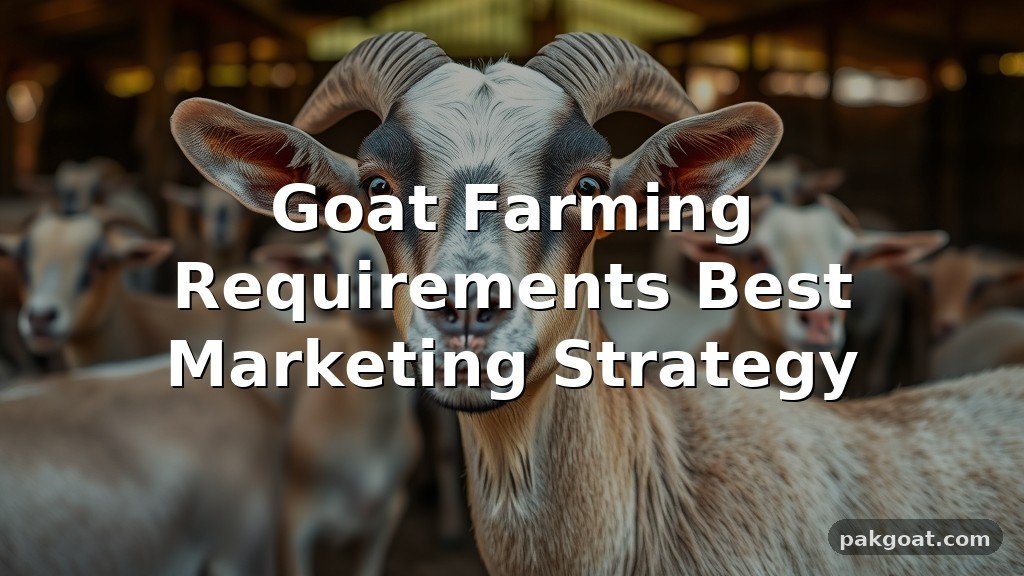
Understanding goat farming requirements best marketing strategy entails balancing animal welfare with the cold realities of regional supply chains. You need a minimum of 0.5 to 1 acre of land per 10 to 15 goats to maintain healthy pasture rotation and prevent overgrazing. Profitability hinges on identifying your niche, whether that is meat production, milk processing, or fiber harvesting.
This article provides the foundational metrics and commercial pathways necessary to transition from a small-scale hobbyist to a sustainable agricultural producer. By focusing on local demand cycles and direct-to-consumer sales, you can reduce middleman costs and capture significantly higher margins than traditional auction house models allow.
Essential Infrastructure and Land Needs
The foundational goat farming requirements best marketing strategy starts with your physical infrastructure. You must provide a clean, dry shelter that offers at least 15 square feet per animal to ensure proper ventilation and disease control.
Goats are notorious for their curiosity and climbing ability, meaning your perimeter fencing must be robust. High-tensile woven wire fencing, at least 48 inches high, is the industry standard for keeping predators out and livestock in.
Water access is the most critical daily requirement for any herd. A single lactating doe can consume up to 3 to 4 gallons of water per day during peak summer heat.
You should install automated water troughs that are easy to clean and sanitize weekly. If your water source is a well, ensure you have a backup generator, as a disruption in supply can lead to rapid dehydration and decreased milk production within 24 hours.
Feeding infrastructure requires a balance between waste reduction and health. Elevated hay feeders prevent goats from trampling their feed, which significantly lowers the risk of internal parasites.
You should allocate at least 12 to 18 inches of feeder space per goat to prevent dominant animals from pushing others away during feeding times. Always maintain a separate area for mineral blocks, as goats have specific copper and selenium needs that differ significantly from sheep or cattle.
Financial Benchmarks for Commercial Success
When calculating the budget for your operation, you must account for the initial acquisition of breeding stock. A high-quality, registered doe can cost anywhere from $300 to $800, depending on her breed and production history.
You should also budget for veterinary start-up costs, including vaccinations for enterotoxemia and tetanus, which typically run $15 to $25 per animal. These preventative measures are non-negotiable for maintaining a healthy herd.
Operational costs will fluctuate based on your local climate and access to pasture. Supplemental grain is often the largest recurring expense, accounting for roughly 40% of total maintenance costs in regions with poor winter grazing.
You need to track your cost-per-pound of gain or cost-per-liter of milk to determine if your operation is actually profitable. If your feed costs exceed 60% of your total revenue, you are likely over-relying on expensive inputs rather than optimizing your pasture management.
| Expense Category | Estimated Annual Cost (per head) | Frequency |
|---|---|---|
| Vaccinations/Deworming | $30 – $50 | Bi-annual |
| Supplemental Feed | $150 – $250 | Daily/Seasonal |
| Infrastructure Maintenance | $50 – $100 | Annual |
| Marketing/Sales Costs | $20 – $40 | Per Transaction |
Direct-to-Consumer Sales Channels
The most effective goat farming requirements best marketing strategy focuses on cutting out the middleman. Selling your product directly to the end-user allows you to charge retail prices rather than wholesale auction rates.
Farmers’ markets are excellent venues for building brand recognition and gathering immediate feedback on your goat cheese, soap, or meat cuts. You can often command a 20% to 30% premium by positioning your products as locally sourced and ethically raised.
Social media presence serves as your digital storefront in the modern agricultural landscape. Regularly posting high-quality images of your herd management practices builds trust with urban consumers who prioritize animal welfare.
You should utilize platforms like Instagram or Facebook to announce seasonal availability, which helps manage customer expectations and prevents waste. Building an email list of repeat customers is even more valuable, as it allows you to send direct updates without relying on unpredictable social media algorithms.
Targeting the Niche Meat Market
Meat production offers some of the highest potential returns if you understand your target demographics. Many goat breeds, such as the Boer, are specifically raised for their growth rates and meat quality.
You should time your breeding cycles to coincide with major cultural holidays when demand for goat meat spikes significantly. Researching the specific weight preferences of your local ethnic markets can help you avoid the common mistake of raising animals that are either too large or too small for the preferred cuts.
Processing is a significant hurdle that requires careful planning. You must partner with a USDA-inspected facility if you intend to sell meat across state lines or through retail stores.
These facilities often have long waiting lists, so you must schedule your slaughter dates months in advance. The National Institute of Food and Agriculture provides resources on small-scale meat processing regulations that every producer should review before investing in livestock.
Product Diversification Strategies
Diversification is a key element of any long-term goat farming requirements best marketing strategy. Relying on a single revenue stream, such as meat sales, leaves your business vulnerable to market price fluctuations.
Many successful farms incorporate value-added products like goat milk soap, lotions, or artisanal cheeses to stabilize cash flow. These items have a much longer shelf life than fresh meat or milk, allowing you to sell them year-round.
* Goat Milk Soap: High profit margins and easy to ship via e-commerce.
* Artisanal Cheese: Requires significant licensing but commands luxury prices.
* Fiber/Mohair: A niche market that benefits from the growing demand for natural textiles.
* Breeding Stock: Selling registered kids to other breeders provides high, one-time revenue.
* Farm Tours/Agritourism: Monetizing the “farm experience” for families and schools.
Herd Management and Productivity
Maintaining a high-performing herd depends on rigorous record-keeping. You should record the birth date, growth rate, and medical history of every single animal on your farm.
This data allows you to identify your most productive does and cull those that consistently underperform or require excessive vet care. A herd with a high kidding percentage and low mortality rate is the single most important asset for your profitability.
Nutrition management is a year-round commitment that dictates your overall yield. During the breeding season, you must provide high-quality forage to ensure optimal conception rates.
In the winter, you must account for the increased caloric needs of pregnant does to prevent pregnancy toxemia. Implementing a rotational grazing system not only improves the nutritional value of your pasture but also breaks the life cycle of common gastrointestinal parasites.
Regulatory and Legal Compliance
Operating a commercial farm requires strict adherence to local zoning laws and agricultural regulations. You must verify that your property is zoned for livestock before you purchase your first goat.
Depending on your state, you may also need specific permits for processing dairy products or operating a commercial kitchen for soap making. Failing to secure these permits can lead to heavy fines and the potential seizure of your products.
Liability insurance is an essential, yet often overlooked, cost of doing business. If you invite the public onto your farm for tours or sales, you are exposed to significant legal risks.
Your insurance policy should cover both property damage and personal injury claims. Consult with an agricultural insurance specialist to ensure your policy specifically covers livestock operations, as standard homeowner policies rarely offer sufficient protection for commercial farm activities.
Future-Proofing Your Farm Business
The agricultural sector is constantly evolving, and your strategy must remain flexible to survive. Monitor regional trends in consumer preferences, such as the rising demand for hormone-free and pasture-raised products.
As your farm matures, consider investing in automation, such as automatic milkers or solar-powered fencing, to reduce your labor costs. Scaling efficiently is the difference between a farm that breaks even and one that builds genuine wealth.
Never underestimate the value of networking with other local producers. Joining a regional goat farmers’ association can provide access to shared resources, such as bulk feed purchasing or cooperative marketing efforts.
These groups also serve as an invaluable source of mentorship, helping you avoid common mistakes that have cost others thousands of dollars. By staying connected and informed, you ensure your farm remains a viable enterprise for years to come.
Understanding the goat farming requirements best marketing strategy is a journey that balances animal husbandry with business acumen. Your success will not happen overnight, but through careful planning, consistent record-keeping, and a focus on direct-to-consumer sales, you can build a profitable operation. Remember that your herd is your primary asset, and the quality of your care will directly reflect in the price you can command for your products.
Start small, track every expense, and refine your approach based on the specific feedback you receive from your customers. If you remain disciplined and adapt to market changes, your farm can become a sustainable source of income and a pillar of your local agricultural community. Reach out to local agricultural extension offices to find specific resources for your region and begin your path toward a successful livestock business today.
