

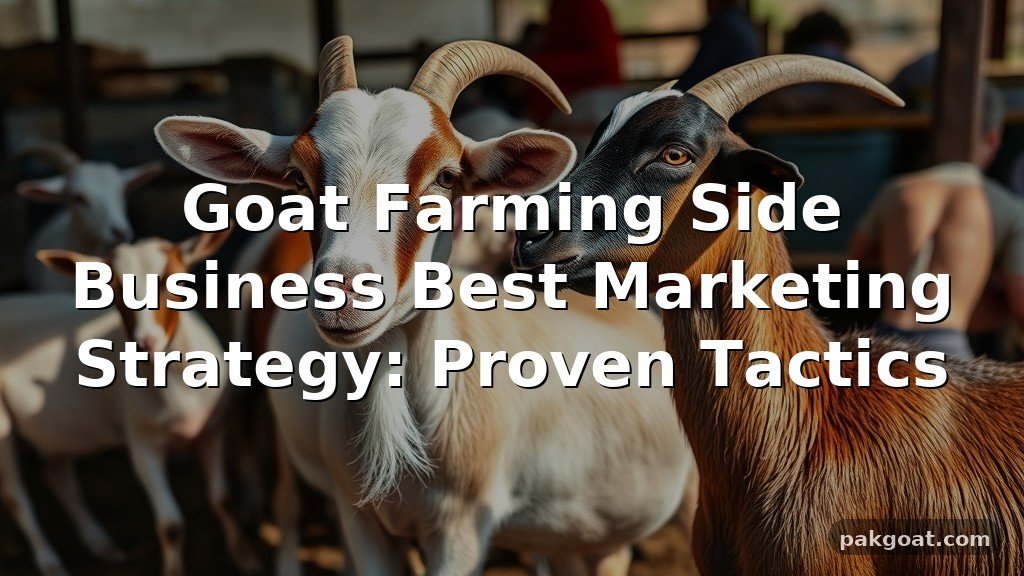
Finding the right goat farming side business best marketing strategy starts with a clear focus on local demand and direct-to-consumer sales. The most effective approach involves building a brand around transparency, quality, and community trust rather than relying on volatile commodity auctions. By targeting niche markets like artisanal cheese makers, specialty meat consumers, or farm-to-table restaurants, you can command higher prices than those dictated by standard livestock markets.
Most profitable small-scale operations generate revenue through a mix of product sales and agritourism. Focusing on high-margin items like goat milk soap, registered breeding stock, or specialty meat cuts usually yields better returns than selling live kids at general auctions. A successful strategy requires consistent digital engagement and a physical presence at local farmers’ markets to build a loyal customer base.
Direct Sales and Farmers’ Markets
The most reliable goat farming side business best marketing strategy relies on face-to-face interaction at local markets. Consumers who meet the producer are significantly more likely to pay a premium for products like raw milk or specialty cheeses. You gain immediate feedback on what your customers prefer, allowing you to adjust your herd management or product line in real time.
Setting up a booth requires more than just displaying your goods. Use high-quality signage that highlights your farming practices, such as pasture-raised or non-GMO status.
Offering small samples of products like goat cheese or yogurt can convert hesitant shoppers into repeat buyers. Ensure your packaging is professional and includes your contact information, social media handles, and website.
Consistency is the secret to building a long-term clientele. If you are only at the market once a month, customers will forget your brand.
Aim for a weekly presence during the peak season to ensure you stay top-of-mind. Track which products sell out fastest so you can adjust your production schedule for the following month.
Digital Presence and Social Media
Social media acts as a digital storefront for your farm. Platforms like Instagram and Facebook are ideal for showcasing the visual appeal of your animals and the cleanliness of your facility.
People love seeing behind-the-scenes content, such as kidding season updates or the daily milking routine. This transparency builds trust and justifies the higher price point of your products.
Don’t just post pictures of goats. Share educational content about the nutritional benefits of goat milk or the specific care you provide for your animals.
Use local hashtags to reach people in your immediate geographic area who are interested in sustainable agriculture. Engaging with followers by answering their questions establishes you as an authority in your field.
Consider creating a simple website to handle pre-orders or subscriptions. A recurring revenue model, such as a monthly milk or soap share, provides cash flow stability during slower times. Keep your site updated with your current inventory and clear instructions on how customers can purchase your goods.
Product Differentiation and Niche Markets
You cannot compete on volume with large industrial farms, so you must compete on quality. Focus on developing a signature product that sets your operation apart from other local producers. Whether it is a specific flavor of goat cheese, a unique soap scent, or high-quality fiber from cashmere goats, a specialty item builds brand recognition.
Consider the specific dietary trends in your area. If there is a high demand for organic or grass-fed products, highlight your commitment to those standards in your marketing materials.
Providing detailed information about the diet and health of your goats can serve as a powerful selling point. The USDA Agricultural Marketing Service provides resources that can help you understand market trends and pricing for various livestock products.
Think about how you can bundle your products to increase the average transaction size. A gift set featuring handmade soap, a small bottle of lotion, and a gift card for a farm tour can be a high-margin holiday item. These bundles encourage customers to try products they might not have purchased individually.
Understanding Profitability Metrics
To master a goat farming side business best marketing strategy, you must track your numbers closely. Many producers fail because they do not account for the true cost of production, including feed, veterinary care, and labor. You should maintain a ledger that tracks every expense against every dollar of revenue to identify your most profitable channels.
Key Profitability Indicators
| Revenue Stream | Typical Margin | Effort Level |
|---|---|---|
| Live Kid Sales | Low-Medium | Low |
| Artisanal Cheese | High | Very High |
| Soap/Lotions | High | Medium |
| Breeding Stock | High | High |
The table above illustrates why many small-scale farmers pivot toward value-added products. While selling live kids is easy, it offers the lowest return on investment. Value-added items require more time and regulatory compliance, but they offer significantly higher profit margins per unit.
Agritourism and Educational Workshops
Agritourism turns your farm into a destination. Offering “goat yoga” classes, farm tours for families, or cheese-making workshops creates additional income streams that do not depend on animal production. These events introduce new people to your brand and often lead to direct sales of your farm products.
Focus on creating an experience that people want to share on social media. A well-maintained barn, clean animals, and a friendly atmosphere are essential for positive reviews.
Encourage visitors to take photos and tag your farm in their posts. This user-generated content acts as free advertising and provides social proof to potential customers.
Charge a fair price for these experiences to ensure they are worth your time. You are selling your expertise and your space, not just a commodity. Keep your group sizes manageable to maintain the quality of the experience and the safety of your animals.
Building Strategic Partnerships
Collaboration is a powerful, often overlooked, aspect of a goat farming side business best marketing strategy. Partnering with local restaurants, boutique grocers, or coffee shops can get your products in front of a wider audience. A local cafe using your goat milk for their lattes can serve as a high-visibility endorsement of your brand.
When approaching a restaurant or shop, come prepared with samples and a professional pitch. Explain why your product is superior to mass-produced alternatives and how it adds value to their menu.
Be clear about your production capacity and your ability to deliver consistently. Reliability is just as important as the quality of your product in these business-to-business relationships.
Look for non-competing businesses that share your target demographic. For example, a local bakery might be interested in featuring your goat cheese on their artisanal bread. Cross-promoting each other’s products can double your reach without increasing your marketing spend.
Regulatory Compliance and Branding
Marketing is effective only when you are legally permitted to sell what you produce. Each state has different regulations regarding the sale of raw milk, meat, and dairy products. Ensure you have the necessary licenses and inspections before you start aggressively marketing your goods.
Your branding should reflect the quality of your products and the ethics of your farming. A consistent logo, color scheme, and tone of voice across all your platforms make your brand memorable. Use professional-grade labels for your jars and packages, as these are the first things a customer sees.
Consider these essential steps for building a reputable brand:
-
- Register your farm name and secure social media handles immediately.
-
- Create a professional logo that looks good on both product labels and signage.
-
- Develop a consistent story about your farm’s history and mission.
-
- Use high-resolution photography for all promotional materials and social media posts.
-
- Invest in high-quality, food-safe packaging that keeps your products fresh.
Managing Seasonal Demand
Goat farming is inherently seasonal, which presents a unique marketing challenge. During the peak of kidding season, you will have more milk and products than at other times. You need a strategy to manage this fluctuation, such as freezing excess milk or converting it into shelf-stable items like soap or hard cheese.
Offer seasonal specials to keep customers engaged during the “dry” months. A holiday gift box or a winter subscription program can keep revenue flowing when production slows down. Use your mailing list to keep customers informed about when they can expect their favorite products to return.
Plan your marketing calendar around your production cycle. If you know you will have an abundance of milk in the spring, start promoting your cheese-making workshops or pre-orders in late winter. Proactive communication helps you manage customer expectations and prevents the frustration of out-of-stock notices.
Optimizing Your Future Growth
A successful goat farming side business best marketing strategy is not static. As your operation grows, you should review your sales data to determine which products to keep and which to cut. Stop wasting time and resources on items that have low margins or low demand, and double down on what works.
Always look for ways to improve efficiency without sacrificing quality. Perhaps a new piece of equipment could speed up your milking process or your soap-making time. Reinvesting your profits back into the farm is the fastest way to scale your operations.
Maintaining the health and happiness of your goats remains the foundation of your success. If the animals are well-cared for, your products will be of higher quality, which is the most effective marketing tool you have.
Continue to refine your approach, listen to your customers, and adjust your strategy as your farm evolves. By staying focused on high-margin products and building a strong local brand, you can turn your goat farm into a sustainable and profitable venture.
