

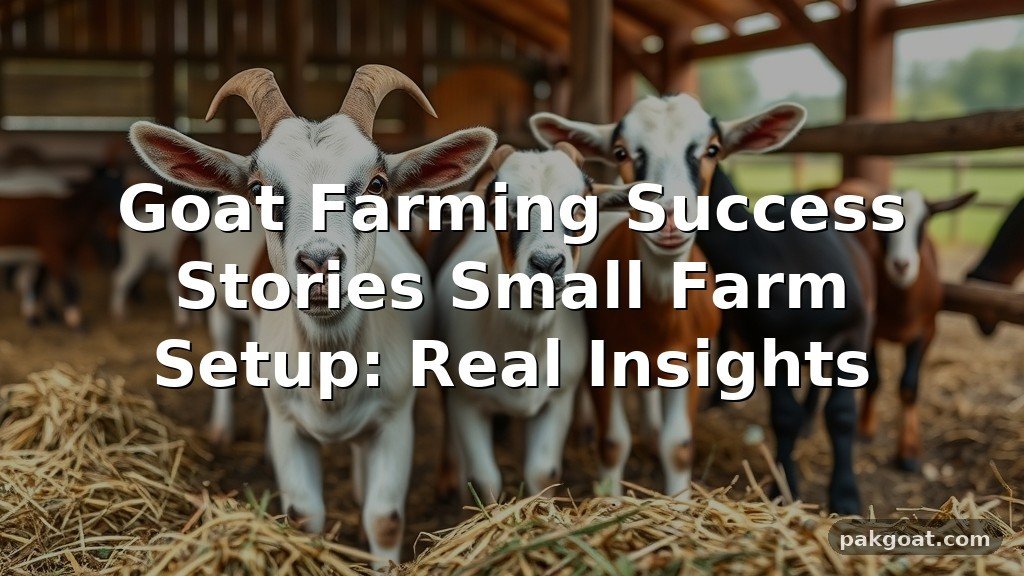
Analyzing goat farming success stories small farm setup requires looking at the specific metrics that turn a hobby into a viable business. Many small-scale operators find that profitability hinges on niche markets like artisanal cheese, registered breeding stock, or sustainable brush management services.
By moving away from commodity meat production, these farmers capture higher margins on smaller volumes. This article examines the operational realities, financial benchmarks, and strategic choices that define a successful boutique goat enterprise today.
Profitability Metrics for Small Operations
The core question of whether a small goat farm is profitable usually lands on a specific answer: yes, provided the farmer focuses on high-value outputs. A small farm with 10 to 20 does can generate a net profit of $5,000 to $15,000 annually when selling direct-to-consumer dairy products or registered breeding stock.
Commodity meat farming rarely yields these returns on small acreage due to the scale required for thin margins. Instead, successful owners emphasize value-added processing and direct marketing.
Profitability is heavily influenced by the decision to process milk into cheese or yogurt. Raw milk sales are often restricted by state regulations, but aged cheeses provide a shelf-stable product with significant price premiums.
A pound of artisanal goat cheese can sell for $18 to $25 per pound at local farmers’ markets. This valuation significantly outperforms the sale of live market kids, which fluctuate based on seasonal demand and feed costs.
Operational efficiency remains the primary driver of these success stories. Farmers who minimize reliance on expensive commercial concentrates by utilizing intensive rotational grazing see lower overheads.
By moving goats frequently to fresh paddocks, the farm reduces internal parasite loads and lowers veterinary costs. This management style effectively turns the goat herd into a landscape maintenance tool while simultaneously producing a high-value product.
Land Requirements and Herd Management
Determining how many acres you need depends entirely on your soil quality and vegetation density. A common rule of thumb for sustainable management is one acre per 6 to 10 goats, assuming a rotational grazing schedule.
Overstocking leads to soil compaction and rapid depletion of forage, which increases the need for supplemental hay. Proper land management ensures that the farm remains productive year after year without expensive inputs.
Clearing land is another potential revenue stream often overlooked in startup plans. A herd of 10 goats can clear roughly one-quarter to one-half acre of thick brush in about a week, depending on the density of the vegetation.
Entrepreneurs often charge landowners a service fee for this clearing, creating a secondary income stream that requires no additional feed costs. This dual-purpose model is a cornerstone of many goat farming success stories small farm setup.
Infrastructure requirements for a small herd are surprisingly modest compared to bovine operations. You need a dry, well-ventilated shelter to protect against wind and rain, as goats are notoriously sensitive to cold drafts.
Fencing is the most significant upfront investment, requiring woven wire or high-tensile electric systems to contain the animals and deter predators. Investing in a 48-inch woven wire fence prevents most escapes and provides a secure perimeter for your investment.
Financial Comparison of Revenue Streams
| Revenue Source | Average Margin | Scalability | Complexity |
| :— | :— | :— | :— |
| Registered Breeding Stock | High | Low | High |
| Artisanal Dairy Products | High | Medium | High |
| Meat (Direct-to-Consumer) | Medium | Medium | Medium |
| Brush Clearing Services | Low | Low | Low |
The choice of breed significantly dictates your path toward profitability. Dairy breeds like Nubians or Alpines are essential if you intend to pursue the cheese market.
Meat-focused breeds like Kikos or Boers require less hands-on milking labor but demand a different marketing strategy. Successful farmers often choose one primary focus rather than attempting to balance both dairy and meat production simultaneously.
Regulatory Hurdles and Licensing
Navigating the legal landscape is the biggest barrier for new entrants in the dairy sector. Selling processed milk products usually requires a state-inspected facility, which involves significant capital expenditure for stainless steel equipment and sanitary surfaces.
Many small-scale producers start by selling soap or skincare products made from goat milk. These items generally fall under different, less stringent regulatory categories than food products.
Local zoning laws often dictate where you can operate your farm and how many animals you can keep. Before purchasing property, check the specific agricultural exemptions for your county.
Some areas have strict rules regarding the distance of livestock pens from neighboring houses or water sources. Building good relationships with your neighbors early on can prevent future disputes that might threaten your business operations.
It is vital to consult the United States Department of Agriculture resources regarding livestock movement and health standards. Even small farms must comply with scrapie eradication programs and identification requirements.
Keeping meticulous records of animal health, vaccinations, and movements is not just a regulatory requirement; it is a fundamental practice for tracking farm performance. Professionalism in these administrative tasks separates sustainable businesses from casual hobby farms.
The Role of Direct-to-Consumer Marketing
The most successful small farms bypass wholesale distributors entirely. Farmers’ markets, Community Supported Agriculture (CSA) subscriptions, and farm-gate sales provide the highest possible prices for your goods.
By cutting out the middleman, you retain the full retail value of your cheese, meat, or fiber. This strategy requires strong communication skills and a consistent presence in your local community.
Building a brand identity helps justify premium pricing. Customers are often willing to pay more for products when they know the farmer and understand the animal welfare practices used on the farm.
Use social media to document the daily life of your herd and share the behind-the-scenes reality of your operation. Transparency is a powerful marketing tool that builds trust and repeat business in the local food movement.
Diversification is a common thread among those who have found long-term viability. A successful farm might sell goat milk soap in the summer, holiday-themed gift baskets in the winter, and brush-clearing services during the spring.
This seasonal rotation of products levels out cash flow throughout the year. It ensures that the farm remains solvent even when one specific product line faces a slow season.
Essential Equipment for a Small Herd
Setting up a small farm requires a specific set of tools to ensure animal health and labor efficiency. You will need a reliable scale to monitor growth rates and administer medications accurately.
Overdosing or underdosing livestock is a common error that can lead to expensive health complications. Investing in a high-quality digital scale is a non-negotiable expense for any serious producer.
Medical kits should be assembled before the first animal arrives on the property. Common supplies include:
-
- Hoof trimmers for regular maintenance
-
- Injectable vitamins and mineral supplements
-
- Antiseptic sprays for wound management
-
- Digital thermometers for monitoring fever
-
- Probiotic pastes for digestive health
-
- Identification tags for individual tracking
Water management is another area where small farms often struggle. Goats are picky drinkers and will refuse to touch water that has been contaminated with debris or manure.
Automatic waterers or daily cleaning of troughs is essential to prevent disease. Providing fresh, clean water consistently leads to better milk production and faster weight gain in kids.
Managing Feed and Nutrition Costs
Feed costs often account for 60% to 70% of a farm’s total operating expenses. Minimizing this requires a deep understanding of your local forage availability.
Testing your soil and forage helps determine if you need to add specific minerals to the goats’ diet. Selenium and copper deficiencies are common in many regions and can devastate a herd if left unaddressed.
Buying hay in bulk during the off-season can save significant money compared to purchasing small batches in the winter. If you have the storage space, securing a year’s worth of high-quality hay at harvest time acts as a hedge against price spikes.
Always store hay in a dry, rodent-proof area to prevent mold and nutrient loss. Moldy hay is a major cause of respiratory issues and can be toxic to goats.
Rotational grazing is the ultimate method for reducing feed costs. By dividing your pasture into smaller sections, you allow the grass to recover while keeping the goats on fresh, high-protein feed.
This mimics the natural browsing behavior of goats and limits the amount of stored feed you need to purchase. It is the single most effective way to improve the financial health of a small-scale goat operation.
Scaling and Future Planning
Scaling a small farm is a delicate balancing act between growth and quality. Many farmers make the mistake of expanding the herd too quickly, which leads to a decline in individual animal care and increased labor demands.
A controlled growth strategy focuses on improving the genetics of the existing herd before adding new numbers. Keeping only the best does for breeding ensures that the herd improves over time.
Consider the labor capacity of your household before planning an expansion. Milking ten goats is a manageable chore for one person, but fifty goats require a completely different labor model.
Once you cross the threshold of twenty animals, you may need to invest in mechanized milking equipment to save your time. Evaluate your goals periodically to determine if you want to remain a boutique operation or transition into a larger commercial enterprise.
Networking with other goat farmers provides invaluable support and shared knowledge. Joining local agricultural cooperatives or national breed associations gives you access to mentors and resources that aren’t available online.
Learning from the mistakes of others in the industry is the fastest way to avoid costly errors in your own setup. Success in this field is rarely a solo endeavor; it thrives on community and shared experience.
Sustainable Growth and Long-Term Success
Building a lasting operation requires a commitment to both animal welfare and financial discipline. The most successful farmers treat their setup as a business, not a hobby, by keeping accurate books and planning for long-term capital investments.
They understand that the health of the land and the health of the herd are intrinsically linked. By prioritizing these two elements, they create a stable foundation for the future.
The journey toward a sustainable goat farm is filled with daily challenges, from managing parasite resistance to meeting market demand. Success is found in the ability to adapt to these challenges while staying true to the initial business model.
Whether you focus on dairy, meat, or land management, the principles of efficient, small-scale production remain the same. Start small, focus on quality, and slowly build your brand.
As you look toward the future of your small farm, remember that consistency is the key to building a loyal customer base. Whether it is the quality of your cheese or the reliability of your brush-clearing service, excellence will set you apart in a crowded marketplace.
By applying these strategies, you can turn your vision into a productive and profitable reality. We encourage you to reach out to local agricultural extension offices to find specific resources tailored to your region’s climate and market conditions.
