

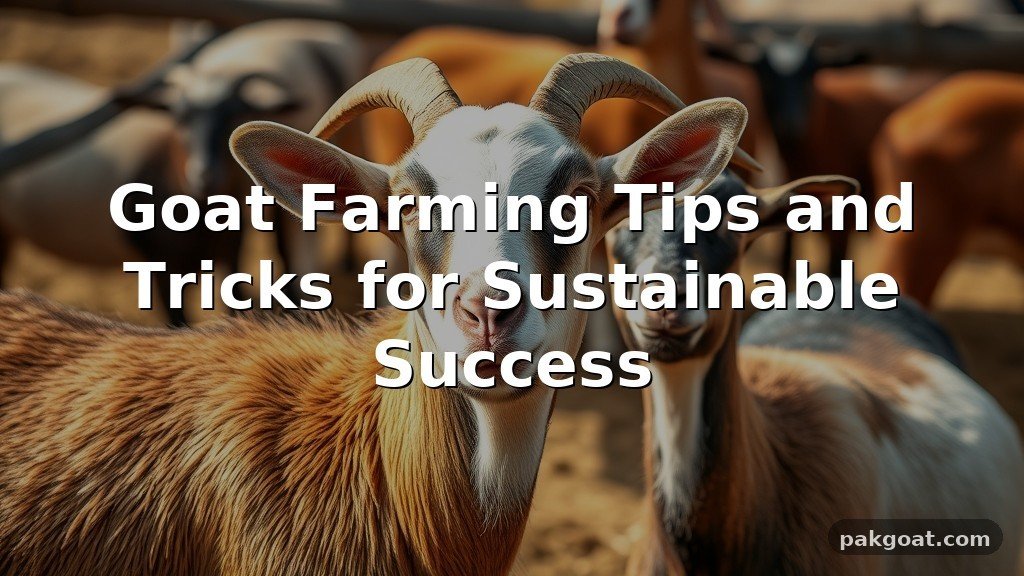
Mastering goat farming tips and tricks requires a blend of practical animal husbandry and careful financial planning. Many beginners enter the industry expecting low-maintenance livestock, only to find that goats are highly intelligent and occasionally demanding animals.
By focusing on proper nutrition, secure fencing, and proactive health management, you can build a profitable operation. This article provides the foundational knowledge you need to manage your herd effectively while avoiding common pitfalls that plague new farmers.
The most critical question for prospective farmers is how much land they actually need to manage a herd. For a standard meat goat operation, you should allocate roughly 1/8 to 1/4 of an acre per goat depending on the quality of your forage. If you are planning to run 100 goats, you will need approximately 15 to 25 acres to ensure they have enough rotational grazing space.
Overstocking is the fastest way to invite parasites, which are the primary killer of goats in humid climates. Always prioritize quality pasture management over high stocking density to keep your veterinary costs low.
Selecting the Right Breed for Your Goals
Before you purchase your first animal, identify whether your primary goal is milk, meat, or fiber production. Dairy goats like the Alpine or Nubian breeds require significantly more daily attention and high-quality feed than meat breeds.
Conversely, Boer goats are the industry standard for meat production due to their fast growth rates and heavy muscling. If you are looking for a low-maintenance option, consider Kiko goats, which are renowned for their parasite resistance and hardiness.
Your geographic location should dictate your breed choice as much as your business goals. A breed that thrives in the arid climate of the American Southwest may struggle with hoof rot in the damp pastures of the Pacific Northwest.
Speak with local breeders to see which genetics have performed well in your specific microclimate. Avoid buying from livestock auctions for your foundation stock, as these animals often carry hidden health issues that will cost you more in the long run.
Essential Nutrition and Forage Management
Goats are browsers, not grazers, meaning they prefer to eat leaves, shrubs, and weeds over short grass. This behavior makes them excellent for clearing brush, but it also means they need a diverse diet to remain healthy.
You must provide access to high-quality hay during the winter months when pasture growth stalls. Always maintain a 1:2 calcium-to-phosphorus ratio in their mineral supplements to prevent urinary calculi in bucks and wethers.
Water quality is another often overlooked aspect of goat nutrition. Goats are notoriously picky and will refuse to drink water that has been contaminated by their own waste or algae. Clean your water troughs at least twice a week to encourage consistent hydration.
If your goats aren’t drinking enough, they become prone to digestive blockages and decreased milk production. Consider installing automatic waterers that keep fresh, clean water available at all times.
Implementing Secure Fencing Strategies
Fencing is the most expensive and important infrastructure investment you will make on your farm. Goats are escape artists that will test every weak point in your perimeter.
Use woven wire fencing at least 48 inches high to keep them contained and predators out. Avoid using barbed wire, as goats can easily get their coats tangled or injure their udders on the sharp barbs.
You should supplement your physical fence with a single strand of electric wire mounted on the inside. Place the wire about 10 inches off the ground to prevent the goats from rubbing against the main fence.
This simple addition significantly extends the life of your woven wire by keeping the animals from pushing on it. Always check your fence line after heavy storms, as downed branches can create instant gaps that your herd will find within minutes.
Proactive Health and Parasite Control
Parasites, particularly the barber pole worm, represent the greatest threat to your herd’s productivity. You must adopt a FAMACHA scoring system to check the color of the goat’s lower eyelid membrane regularly.
A pale eyelid indicates anemia, which is a tell-tale sign of a heavy parasite load. Learn more about managing these internal threats through the American Consortium for Small Ruminant Parasite Control.
Develop a relationship with a local large-animal veterinarian before an emergency occurs. Many rural vets are hesitant to take on new goat clients, so finding one early is vital.
Keep a basic medical kit on hand that includes electrolytes, a drenching syringe, antiseptic spray, and a thermometer. Early intervention is the difference between a minor recovery and a total loss of a high-value animal.
Managing Reproductive Cycles
Successful breeding programs rely on careful record-keeping and timing. A goat’s gestation period is roughly 150 days, meaning you can plan your kidding season to align with market demand.
If you sell meat goats, timing your kidding season to coincide with major holidays like Easter or Ramadan can significantly increase your profit margins. Keep detailed records of breeding dates to ensure you have adequate labor available during the kidding window.
During the late stages of pregnancy, ensure your does receive extra protein and energy. This prevents pregnancy toxemia, a metabolic condition that can be fatal if ignored.
Provide a clean, dry, and draft-free kidding stall for each doe to reduce the risk of hypothermia for newborns. Always have colostrum replacer on hand just in case a mother rejects her kid or fails to produce enough milk.
Understanding the Economics of Goat Farming
Profitability in this sector rarely comes from selling a few animals here and there. You must scale your operation to a point where your fixed costs, such as fencing and equipment, are spread over a larger number of head.
Meat goat prices fluctuate based on weight and demand, so monitor your local auction reports. Direct-to-consumer sales, such as selling freezer meat or registered breeding stock, typically offer much higher margins than selling at the sale barn.
| Expense Category | Estimated Annual Cost per Head |
| :— | :— |
| Supplemental Feed | $80 – $120 |
| Mineral/Supplements | $15 – $25 |
| Veterinary/Vaccines | $20 – $40 |
| Fencing Maintenance | $10 – $20 |
| Total Base Cost | $125 – $205 |
Common Pitfalls for Beginners
Many beginners fail because they treat goats like small cows or large sheep. Goats have different physiological needs, especially regarding copper requirements and parasite susceptibility.
Do not try to “wing it” with your feeding program; goats require specific trace minerals to thrive. If you ignore these specialized needs, you will find your herd struggling with poor coats, slow growth, and reproductive failure.
Another common mistake is failing to have a clear marketing plan. Producing high-quality goats is only half the battle; you must also be able to sell them at a price that covers your time and investment.
Build relationships with local butchers or ethnic markets if you are in the meat business. If you are selling dairy products, ensure you understand your state’s specific raw milk or pasteurization regulations before you make your first sale.
Scaling Your Operation Safely
Once you have mastered the basics, you might consider expanding your herd size. Do not rush this process, as doubling your herd size often quadruples your management headaches.
Focus on improving your existing pasture quality before adding more animals to the land. Use rotational grazing to keep the forage fresh and the parasite cycle broken.
* Establish a regular culling program to remove unproductive or aggressive animals.
* Keep detailed financial records to identify which goats are actually making you money.
* Prioritize biosecurity by quarantining any new animals for at least 30 days.
* Invest in labor-saving equipment like headgates or automated feeders as you grow.
Scaling is about efficiency, not just volume. If you can produce more pounds of meat or gallons of milk with fewer inputs, your profit margin will naturally expand.
Always look for ways to reduce your dependency on purchased hay by improving your year-round grazing capacity. A well-managed farm is one that minimizes waste and maximizes the natural behavior of the animals.
Summary of Best Practices
Applying these goat farming tips and tricks requires consistent attention to detail and a willingness to learn from your mistakes. Start small, focus on building secure infrastructure, and prioritize the health of your soil and pastures. Your success will depend on your ability to manage the herd’s nutrition and parasite levels throughout the changing seasons.
Keep accurate records, stay connected with other producers, and remain patient as you build your operation. By treating your farm as a business, you set yourself up for long-term viability and growth in this rewarding agricultural sector.
Start by evaluating your land’s carrying capacity and choosing the right breed for your specific climate. Reach out to local agricultural extension offices for additional resources tailored to your region.
