

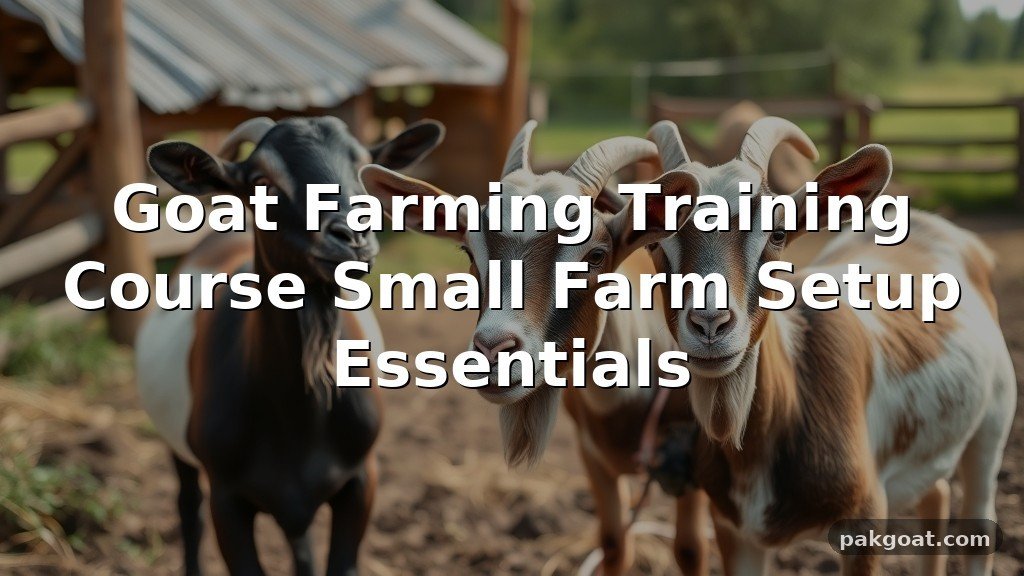
Starting a goat farming training course small farm setup requires a clear understanding of infrastructure, animal husbandry, and financial planning. Prospective farmers often ask if they can start with as little as two to five acres of land, and the answer is yes, provided the intensive management practices are sound. Successful small-scale operations rely on rotational grazing and strict health protocols rather than vast acreage.
This article covers the essential steps for beginners to build a sustainable goat business from the ground up. You will learn how to structure your farm, manage your herd, and avoid common startup pitfalls that catch new farmers off guard.
Assessing Your Land and Infrastructure
Before purchasing a single goat, you must evaluate the carrying capacity of your property. For a small farm setup, experts generally recommend a stocking density of six to eight goats per acre if you are using intensive rotational grazing. You need to divide your land into smaller paddocks to ensure fresh forage and manage parasite loads effectively.
Fencing is arguably the most critical investment for your farm. Goats are notorious escape artists that test the integrity of every barrier they encounter. A woven-wire fence at least 48 inches high, equipped with a top electrified strand, is the industry standard for predator control and containment.
Your housing requirements are relatively simple but non-negotiable. Goats require a dry, draft-free shelter that protects them from cold wind and heavy rain.
You do not need expensive barns; a three-sided shed oriented away from the prevailing wind is often sufficient. Ensure the shelter provides at least 12 to 15 square feet of space per doe to prevent overcrowding and stress.
Selecting the Right Breed
The choice of breed should dictate your farm’s primary product, whether that is meat, milk, or fiber. For beginners, the Kiko or Boer are popular choices for meat production due to their hardiness and growth rates. If your goal is dairy, the Nubian or Alpine breeds are well-regarded for their milk volume and butterfat content.
Consider your local climate when selecting genetics. Some breeds are more resistant to internal parasites, which can be a significant economic drain on small farms. Always source your initial herd from reputable breeders who provide health records and vaccination histories.
Avoid buying goats from livestock auctions if you are a beginner. Animals sold at auction often come with unknown health issues or potential carrier diseases like Caseous Lymphadenitis (CL). Purchasing directly from a farm allows you to observe the herd’s environment and temperament before committing your capital.
Managing Herd Health and Nutrition
Nutrition accounts for the majority of your daily operational costs. While goats are browsers, not just grazers, they require high-quality forage and access to clean, fresh water at all times. Supplementing with a balanced mineral mix is essential, specifically one designed for goats to prevent deficiencies like copper or selenium.
Parasite management is the most significant challenge in small-scale goat farming. Use the FAMACHA scoring system to monitor the anemia levels in your herd by checking the color of their lower eyelid membranes. This practice helps you identify which goats need treatment, preventing the over-use of dewormers that leads to drug-resistant parasites.
Establish a relationship with a local large-animal veterinarian before you bring your animals home. Many rural vets have limited experience with goats, so finding one who understands small ruminant medicine is a priority. Keep a basic medical kit on hand containing items like thermometers, antiseptic, and sterile needles for emergencies.
Financial Planning for Small Farms
A realistic budget is the backbone of any goat farming training course small farm setup effort. Startup costs include land preparation, fencing, shelter construction, and the purchase of breeding stock. You should also set aside a contingency fund of at least 20% of your total budget for unexpected veterinary bills or feed price spikes.
Revenue streams for small goat farms are diverse but require active marketing. Many farmers sell their meat directly to consumers, local butchers, or ethnic markets that prioritize fresh, humanely raised products. Dairy farmers often find success in producing value-added products like goat cheese, soaps, or lotions to increase their profit margins.
| Expense Category | Estimated Startup Cost | Recurring Annual Cost |
|---|---|---|
| Fencing (Per Acre) | $1,500 – $3,000 | $100 (Maintenance) |
| Shelter Construction | $1,000 – $5,000 | $50 (Repairs) |
| Breeding Stock (Per Doe) | $250 – $600 | N/A |
| Feed & Minerals | $200 | $300 – $500 |
Legal and Zoning Considerations
Zoning laws vary significantly between rural, suburban, and urban environments. Before investing in infrastructure, visit your local municipal office to confirm that livestock is permitted on your property. Some areas have strict rules regarding the number of animals per acre or the distance between shelters and residential dwellings.
Registering your farm with the appropriate agricultural department is often a requirement for selling products. You may need a Premises Identification Number, which helps track livestock movement for disease control purposes. This is especially important if you plan to transport your goats across state or provincial lines.
If you intend to sell dairy products, the regulatory environment becomes much more stringent. Most jurisdictions require a dedicated milking parlor that meets specific sanitation standards. Research your regional raw milk laws, as many areas prohibit the sale of unpasteurized dairy, forcing farmers to invest in pasteurization and bottling equipment.
Rotational Grazing Strategies
Rotational grazing is the practice of moving goats between different paddocks to allow grass to recover and reduce parasite exposure. By moving your herd every three to five days, you break the life cycle of common internal parasites. This method also ensures that your pastures remain productive throughout the growing season.
You can use temporary electric netting to create flexible grazing zones. This allows you to target specific areas of your property that need clearing, such as brush or invasive weeds. Goats are excellent at clearing land, which can be marketed as a secondary service to neighbors.
Successful grazing depends on watching the height of your forage. Do not allow your goats to graze vegetation lower than three to four inches, as this is where parasite larvae thrive. If the grass gets too short, move the herd immediately and provide supplemental hay to allow the field to rest.
Essential Equipment Checklist
A well-equipped farm makes daily chores efficient and reduces stress for both the farmer and the animals. You do not need top-of-the-line machinery, but specific tools are indispensable for basic care. Having the right gear ready before the goats arrive will save you from frantic last-minute shopping trips.
* Hoof trimmers: Specialized shears for regular maintenance every 6–8 weeks.
* Kid-rearing supplies: Bottles, nipples, and high-quality milk replacer for rejected kids.
* Weighing scale: A portable livestock scale to monitor growth rates and dosage for medications.
* Grooming tools: Stiff brushes to remove loose hair and check for skin issues.
* Restraint stand: A milking or grooming stand that keeps the goat stationary during treatments.
You can find more detailed information on biosecurity and herd management through the United States Department of Agriculture Animal and Plant Health Inspection Service. They provide guidelines that help prevent the introduction of foreign diseases into your local herd. Always prioritize biosecurity when visiting other farms or attending livestock events.
The Importance of Record Keeping
Data-driven decisions are what separate successful farmers from those who struggle. You should maintain detailed records for every goat, including birth dates, parentage, medical treatments, and breeding outcomes. This information is vital for culling unproductive animals and selecting the best offspring for future breeding.
Use a simple notebook or a digital spreadsheet to track your expenses and income. By knowing exactly how much you spend on feed per pound of meat produced, you can identify which animals are actually profitable. Cull goats that are consistently sick or have poor reproductive performance to maintain a healthy, efficient herd.
Consistency in record-keeping also builds your reputation as a breeder. If you decide to sell breeding stock, buyers will pay a premium for animals with documented health histories and production records. Trust is a valuable currency in the agricultural community, and documentation is the fastest way to earn it.
Sustainable Growth and Future Scaling
Scaling your operations should only happen once you have mastered the basics of animal husbandry and financial management. Expanding too quickly is a common reason for failure in small-scale farming. Aim to increase your herd size gradually, perhaps adding one or two new animals per year to ensure you can handle the increased workload.
Consider diversifying your farm’s output as you grow. If you currently focus on meat, adding a small dairy component or starting a composting business with goat manure can create new revenue streams. Always test the market demand for a product before investing heavily in the infrastructure required to produce it at scale.
Networking with local agricultural groups is an excellent way to learn about regional market trends. Attend field days and workshops to share experiences with other farmers. A goat farming training course small farm setup is only the beginning of your journey, and ongoing education is necessary to thrive in the ever-changing agricultural landscape.
The success of your endeavor depends on your dedication to daily care and your ability to adapt to the specific needs of your herd. Start with a manageable number of animals, prioritize the health of your land, and keep a strict eye on your operating costs. By following these principles, you establish a solid foundation for a productive and rewarding farm.
Remember that even the most successful operations began with a single, well-planned step. Use the resources provided here as a starting point, but continue to seek out hands-on mentorship and local expertise to refine your goat farming training course small farm setup plans. Your commitment to these fundamentals will ultimately determine the long-term viability of your farm.
