

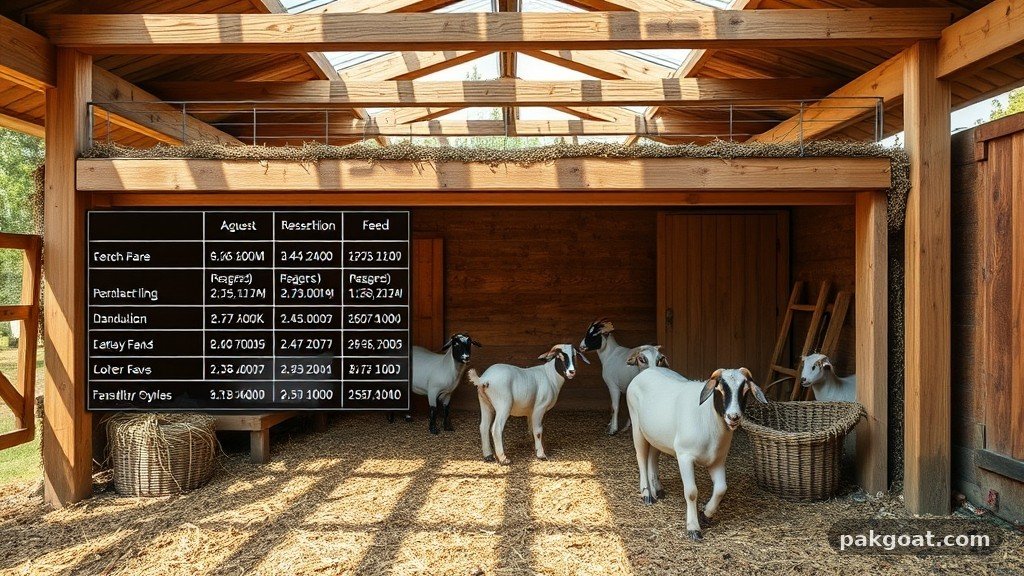
Understanding a proper goat house design complete feed chart is the foundation of a healthy, productive herd. You need to balance structural integrity with precise nutritional management to ensure your animals thrive year-round. This guide provides the specific metrics required to build efficient housing and implement a feeding regimen that maximizes growth and milk production.
Essential Housing Requirements
A functional goat shelter must prioritize ventilation over insulation in most climates.
Goats are highly susceptible to respiratory issues caused by ammonia buildup and stagnant, moist air. Aim for at least 15 to 20 square feet of floor space per adult goat in a communal pen. If you are keeping bucks separately, provide at least 30 square feet to accommodate their larger size and territorial nature.
Elevation is a critical design feature for both the floor and the structure itself. Constructing your goat house on a slight incline prevents water from pooling around the foundation during heavy rain. The interior floor should be raised at least 4 to 6 inches off the ground using wooden pallets or a concrete slab.
This simple step keeps bedding dry and prevents the hooves from sitting in damp, unsanitary conditions.
Feeding Space and Trough Placement
Strategic placement of feeders is just as important as the structure of the house itself. You must allocate 12 to 18 inches of linear feeder space per goat to prevent dominant animals from pushing others away.
If you feed the herd in a single large trough, ensure it is long enough that every goat can eat simultaneously. This reduces stress and prevents the development of aggressive behavior during meal times.
Mount your hay feeders at a height where the goats can eat comfortably without climbing into the rack. A height of 24 to 30 inches from the floor is generally ideal for standard breeds. Always include a catch-tray underneath the rack to minimize waste, as goats are notoriously picky and will pull hay onto the ground.
Wasted hay quickly becomes soiled, leading to parasite transmission and unnecessary feed costs.
Nutritional Breakdown for Daily Rations
A goat house design complete feed chart relies on consistent daily intake ratios based on the animal’s life stage. Dry does, pregnant does, and lactating does have vastly different caloric and mineral requirements. Use the following table as a baseline for your daily feeding strategy per head.
| Goat Life Stage | Hay/Forage Intake | Grain/Concentrate | Key Supplement |
|---|---|---|---|
| Dry Doe | 2-3 lbs | 0 lbs | Loose Minerals |
| Late Pregnancy | 3-4 lbs | 0.5-1 lb | Calcium/Phosphorus |
| Lactating Doe | 4-5 lbs | 1.5-2 lbs | High Protein Mix |
| Growing Kid | 1-2 lbs | 0.5 lb | Starter Pellets |
Managing Mineral Supplementation
Minerals are the most overlooked aspect of a goat house design complete feed chart. Goats require a specific balance of copper, selenium, and zinc that is often absent in standard pasture grasses. Provide a loose mineral mix specifically formulated for goats, rather than a sheep block, as sheep are sensitive to copper. Ensure the mineral station is located in a dry area of the shelter to prevent clumping.
Place the mineral feeder at a height of 20 inches to keep it clean and away from urine or manure. Check the consumption rates weekly; if they aren’t eating the minerals, you may need to add a small amount of molasses to increase palatability. Consistent intake is vital for strong hooves, healthy coats, and proper reproductive function.
Never rely on salt blocks alone, as goats often struggle to get enough volume from them.
Water Access and Hydration
Water is the most important nutrient in your goat house design complete feed chart. A lactating doe can drink up to 3 to 5 gallons of water daily depending on the temperature and her milk output.
Ensure that water troughs are scrubbed clean at least twice a week to prevent the growth of algae. Locate the water source away from the hay feeder to keep the area around the feed dry.
In colder climates, you must account for freezing temperatures to ensure constant hydration. Use heated buckets or trough heaters to keep the water temperature between 45 and 55 degrees Fahrenheit. If your goats are forced to drink ice-cold water, they will consume less, which directly impacts their digestion and milk volume.
You can find detailed technical specifications for livestock water requirements at the Purdue University Extension resources.
Structural Materials and Safety
When building your shelter, choose materials that can withstand chewing and rubbing. Goats have strong teeth and will test the durability of wood, wire, and plastic.
Use pressure-treated lumber for the frame, but ensure the interior walls are covered with smooth plywood or metal sheeting. This prevents the goats from getting splinters or catching their fur on rough surfaces.
Avoid using chicken wire for fencing or partitions inside the house. Goats can easily pull the wire loose or get their horns caught in the mesh, leading to severe injury. Instead, use high-tensile cattle panels or heavy-duty welded wire fencing with small openings.
Ensure all hinges and latches are on the outside of the pen, as goats are clever enough to manipulate simple gate latches.
Cleaning and Sanitation Protocols
A clean house is the best defense against coccidiosis and other common caprine ailments. Implement a weekly cleaning schedule where you remove wet bedding and replace it with fresh straw or wood shavings.
Deep-litter composting can work in larger barns, but it requires careful management to prevent ammonia buildup. Always keep a dry, absorbent layer of bedding at least 3 inches deep to protect the goats’ knees and udders.
* Remove all spoiled hay from the feeding area daily.
* Sanitize water troughs with a weak vinegar solution once a week.
* Inspect corners and rafters for cobwebs and dust accumulation.
* Monitor manure consistency to catch digestive issues early.
* Maintain a dry floor surface to prevent hoof rot.
Seasonal Adaptation Strategies
Your goat house design complete feed chart must adjust based on the changing seasons. During the summer, focus on airflow by installing hinged panels that allow for cross-ventilation.
You may need to provide shade cloth if the structure gets too much direct afternoon sun. In the winter, focus on closing off drafts while keeping the roof ridge vent open to allow moisture to escape.
Winter feeding requires an increase in caloric intake to help the goats maintain body heat. Increase the hay portion of the diet by 10 to 15 percent during extreme cold snaps. Monitor body condition scores closely, as a goat that loses weight in the winter will be harder to breed in the spring.
If you notice a drop in milk production or energy, re-evaluate the protein percentage in your grain concentrate.
Troubleshooting Common Design Failures
Many owners fail by building shelters that are too enclosed, which traps moisture and ammonia. If your goats are coughing or have runny noses, your first step should be adding more ventilation near the roofline.
Another common mistake is providing too little space, which leads to bullying and injury. If you notice one goat is consistently thin, it is likely being kept away from the feed by a dominant herd member.
Poor drainage is a silent killer that leads to foot scald and rot. If the interior of your house is constantly damp, you likely have a grading issue that needs to be corrected with gravel or a French drain. Never hesitate to modify your structure if you observe these warning signs.
A flexible design that allows for modular changes will serve your herd much better than a rigid, permanent setup.
Conclusion
Building a successful operation requires a firm grasp of both structural logistics and nutritional science. By following the metrics outlined in your goat house design complete feed chart, you create a stable environment that supports long-term health and productivity. Remember that the best design is one that keeps your animals dry, well-ventilated, and properly fed according to their specific life stage.
Start by auditing your current shelter space and comparing it to the recommended square footage per animal. From there, adjust your feeding racks and water points to ensure every goat has stress-free access to resources.
Consistent monitoring of your herd’s health and body condition will allow you to fine-tune these numbers over time. Reach out to local agricultural extension offices if you need help calculating specific forage requirements for your region.
