

Determining the right goat pen size requires balancing animal welfare, land management, and your specific breed requirements. Providing too little space leads to increased disease transmission and behavioral stress, while excessive space can make routine health checks and predator control significantly more difficult.
By understanding the minimum square footage necessary for indoor housing and the recommended acreage for outdoor browsing, you can create a sustainable environment for your animals. This article provides the essential data you need to calculate your specific space requirements and build a functional, safe enclosure for your herd.
Minimum Space Requirements
For indoor housing, a standard rule of thumb is to provide at least 10 to 15 square feet per standard-sized goat. If you are housing miniature breeds, such as Nigerian Dwarfs, you can often get away with 6 to 8 square feet per animal. These figures represent the absolute minimum for sleeping and shelter areas where the goats are protected from the elements.
Overcrowding is the primary cause of respiratory issues and internal parasite buildup in confined settings. If your goats are forced to sleep in close proximity, they generate excessive humidity, which encourages the growth of pneumonia-causing bacteria. Always aim for the higher end of these estimates if your climate is prone to long, wet winters where goats spend extended periods indoors.
Outdoor space needs are vastly different from indoor shelter requirements. While goats do not need vast pastures to survive, they require enough room to exhibit natural behaviors like browsing and jumping. A common recommendation for a small, managed herd is to provide at least 200 to 300 square feet of outdoor exercise area per goat.
Outdoor Browsing and Acreage
When managing goats on a larger scale, you must consider the carrying capacity of your land. A general guideline is that you can support 6 to 8 goats per acre if the land is well-managed and high-quality pasture. If the area is mostly brush or rocky terrain, that number drops significantly, often requiring more space to prevent overgrazing.
Overgrazing is a significant risk when you underestimate the necessary goat pen size for outdoor rotation. Once the vegetation is stripped to the dirt, the ground becomes a breeding ground for parasitic larvae. You should divide your available land into smaller paddocks to allow for rotational grazing, which keeps the forage healthy and reduces the worm load in your herd.
If you are using portable electric fencing, you can effectively manage the density of your herd on a daily basis. This allows you to provide fresh forage while keeping the goats contained within a tight, controlled space. By moving the fence every few days, you maximize the utility of every square foot of your property.
Shelter Design and Vertical Space
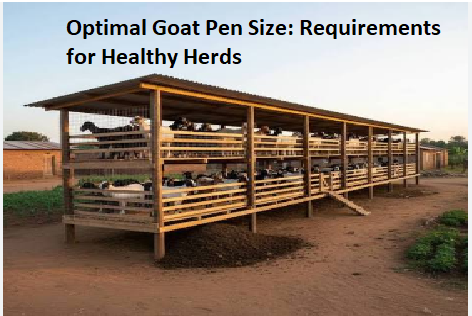
Goats are naturally inclined to climb, which makes vertical space an important part of your pen design. You can effectively increase the usable square footage of a pen by adding platforms, stumps, or ramps. These structures allow goats to escape the mud and stay off cold ground during damp weather.
A well-designed pen should include a covered area that is at least 50% of the total indoor space. This shelter must be draft-free but well-ventilated at the roofline to allow moisture to escape. Goats are highly sensitive to respiratory stress, so a stuffy, enclosed shed is often worse than an open-sided lean-to.
When planning your layout, consider the following elements for a functional setup:
- Dry bedding area: Essential for preventing hoof rot and mastitis.
- Raised feeding stations: Prevents contamination of feed with manure.
- Access to sunlight: Vital for Vitamin D synthesis and overall animal health.
- Sturdy partitions: Necessary for separating bucks from does or sick animals from the herd.
- Secure latching mechanisms: Goats are notorious for learning how to open simple gate latches.
Fencing Height and Security
The height of your fence is just as critical as the square footage of the pen. For most standard dairy or meat breeds, a fence should be at least 4 to 5 feet high to prevent jumping. If you have particularly athletic breeds like Alpines or Saanens, a 5-foot fence is highly recommended to discourage escapes.
Materials matter when determining the effectiveness of your containment. Woven wire, often called “no-climb” fencing, is the industry standard for goats because it prevents them from getting their heads stuck. Avoid using high-tensile smooth wire, as goats can easily slip between the strands or push them apart.
You should inspect the perimeter of your pen weekly for potential breach points. Goats will test the strength of the fence by rubbing against it or standing on their hind legs to reach over the top. For additional technical guidance on livestock management, you can refer to the eXtension Foundation for research-based resources on small ruminant husbandry.
Calculating Space for Different Life Stages
The space requirements for your herd will fluctuate depending on the age and reproductive status of the goats. A nursing doe with two kids needs significantly more space than a dry doe or a wether. You should allocate at least 20 square feet for a doe and her offspring to ensure they have enough room to move without constant interference from the rest of the herd.
Bucks require their own dedicated space, especially during the breeding season. A buck pen should be robust and located away from the does to prevent accidental breeding and reduce aggression. Because bucks are often more destructive, the fencing in their specific pen should be reinforced with heavy-duty posts and thicker gauge wire.
It is wise to keep a “hospital pen” or isolation area available at all times. This space should be at least 8 by 8 feet to allow for easy medical treatment and observation. Having this area ready before you actually need it will save you significant stress during an emergency.
Comparing Space Needs by Herd Type
The following table provides a quick reference for space allocation based on common herd configurations. Note that these figures are intended for the primary sleeping and shelter area.
| Goat Type | Indoor Space (sq ft/head) | Outdoor Space (sq ft/head) |
|---|---|---|
| Miniature Breeds | 6 – 8 | 150 – 200 |
| Standard Dairy/Meat | 10 – 15 | 200 – 300 |
| Nursing Doe + Kids | 20 – 25 | 400+ |
| Bucks | 15 – 20 | 300+ |
Managing Mud and Drainage
Goat pen size is largely irrelevant if the space is constantly covered in mud. Goats hate getting their feet wet and will often refuse to go outside if the ground is saturated. You must grade the land around your shelter to ensure water drains away from the structure.
Adding a heavy-duty gravel base or wood chips to high-traffic areas can mitigate mud issues. These materials create a barrier between the goat’s hooves and the wet soil. If you are in an area with high rainfall, you may need to increase the size of the covered porch area to provide more “dry” surface for the herd.
Poor drainage leads to hoof scald and foot rot, which are debilitating conditions for goats. If you notice your goats standing in water, you have a design flaw that no amount of extra space will fix. Prioritize drainage improvements before you consider expanding the dimensions of your pen.
Common Mistakes in Pen Layout
One frequent error is failing to account for the “pecking order” within the herd. If your pen is too narrow, a dominant goat can trap a subordinate one in a corner, leading to injuries. Your layout should always include multiple exits or circular pathways so that a goat can easily escape from a conflict.
Another mistake is placing feeders in dead-end corners. Always place feed troughs and hay racks in open areas where goats can easily move around them. This prevents bullying during feeding time, which is when most hierarchical disputes occur in a goat pen.
Finally, do not underestimate the amount of storage space needed for supplies. You should have a dedicated area for hay, grain, and medical kits that is completely inaccessible to the goats. If they have access to their own food supply, they will overeat, which can lead to life-threatening digestive issues like bloat.
Frequently Asked Questions
How can I tell if my goat pen is too small?
If you notice frequent fighting, high levels of stress, or excessive mud that doesn’t dry out, your pen is likely too small. Another sign is the rapid disappearance of all vegetation in the outdoor area, which suggests you are overstocking the space.
Do goats need a different pen size in the winter?
While the minimum square footage remains the same, goats spend much more time inside during winter. You should ensure the indoor area is well-ventilated but free of drafts, and you may want to provide extra bedding to keep them off the cold ground.
Will a 4-foot fence keep all goats inside?
A 4-foot fence is sufficient for many breeds, but it is often not enough for highly active or curious goats. If you have a breed like a Nubian or a dairy goat, you will likely find them jumping over a 4-foot fence with ease.
How many acres are truly needed for a small herd?
For a small herd of 3 to 5 goats, you can manage them on as little as half an acre if you practice intensive rotational grazing. If you want them to be strictly self-sustaining on pasture, you would need significantly more land, often 1 to 2 acres per goat depending on your climate.
Can I keep goats in a small suburban backyard?
You can keep a small number of miniature goats in a backyard, provided your local zoning laws allow it. You must be diligent about odor control and noise management, and you must ensure the pen is kept immaculately clean to avoid attracting pests.
The success of your goat-keeping venture depends on your ability to provide a space that meets the physical and behavioral needs of your animals. While the numbers for goat pen size provide a solid baseline, you must always observe your herd’s behavior and adjust accordingly. If your goats are calm, healthy, and showing no signs of persistent stress, you have likely struck the right balance.
Remember that a well-designed, appropriately sized enclosure is the foundation of a productive and happy herd. By focusing on drainage, security, and adequate space for each individual, you create a manageable environment that supports your long-term goals. Start with these guidelines, monitor your herd closely, and adapt your setup as your experience grows.
