

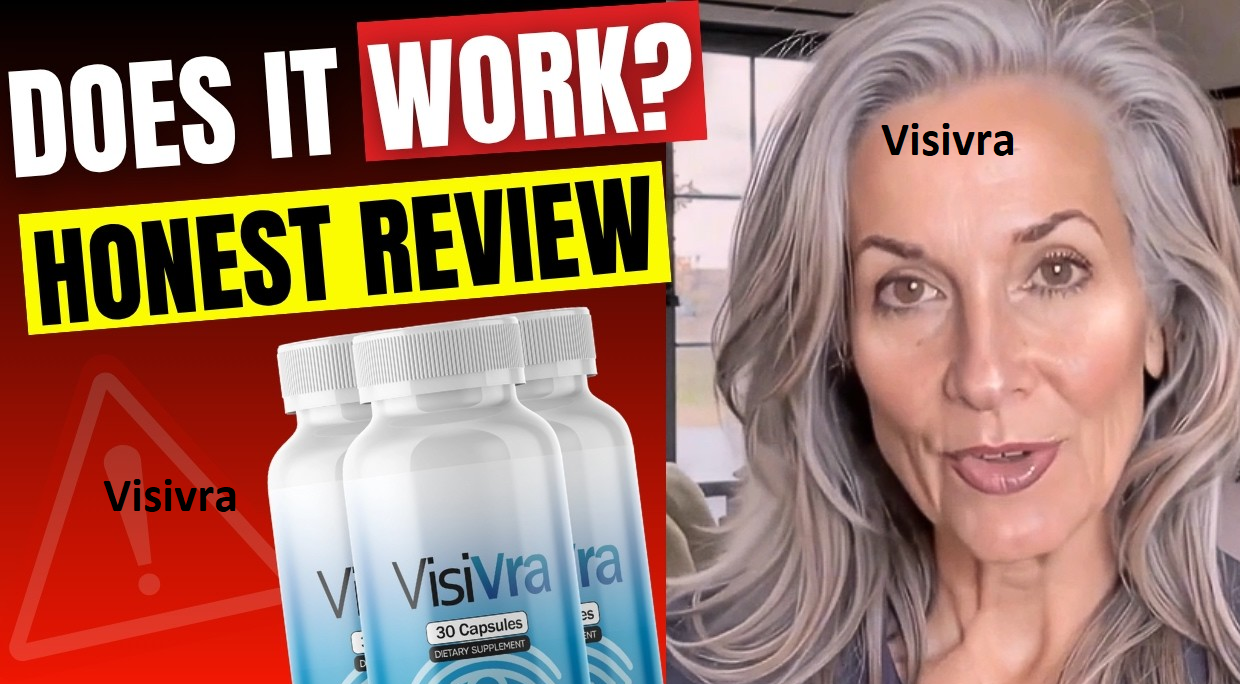
Visivra Review 2026: Ingredients, Benefits and Safety
If you spend hours staring at a laptop or phone, you have probably wondered whether a daily eye supplement could help. Visivra is one of the products getting attention right now. This guide walks you through what Visivra claims to do, which ingredients matter, what the research says, and how to decide whether it fits your needs. You will also learn how to check whether a supplement is trustworthy before you spend money on it.
What Is Visivra?
Visivra is marketed as a daily oral supplement in capsule form. The brand positions it as an eye health formula that combines vitamins, minerals, antioxidants, and plant extracts. Its stated goals include supporting clearer vision, easing digital eye strain, and supporting the retina and macula over time.
Keep in mind that Visivra is a dietary supplement. It is not a prescription drug, and it is not approved to treat, cure, or prevent any eye disease. That distinction matters. A supplement can fill nutritional gaps, but it cannot replace an eye exam or medical treatment.
Product details vary across the websites and articles that discuss Visivra. Some pages list a different number of ingredients than others. Because of that, the most reliable source is always the label on the bottle you receive. Read it carefully before you decide.
Why Eye Health Supplements Are Popular
Eye health has moved up many people’s list of priorities. Screen time keeps rising, and many adults report tired, dry, or strained eyes by the end of the workday. Aging also brings changes to vision, including reduced focus in low light and gradual changes in the macula, the central part of the retina that handles sharp detail.
Supplement makers have responded with products that promise relief. Some are useful, and some overpromise. The good news is that the nutrients most often found in eye formulas have real research behind them. Understanding those nutrients will help you judge any product, including Visivra, on its merits.
Visivra Ingredients: What to Look For
Ingredient lists for Visivra differ across sources, so treat the following as a guide to what to check rather than a confirmed formula. The nutrients that appear most often in eye supplements, and in the material describing Visivra, include lutein, zeaxanthin, bilberry extract, vitamin C, vitamin E, zinc, and astaxanthin.
Lutein and zeaxanthin are carotenoids. Your body does not make them, so you need to get them from food or supplements. They concentrate in the macula, where they are thought to filter some high-energy blue light and help protect cells from oxidative stress. Leafy greens, eggs, and corn are good dietary sources.
Vitamin C and vitamin E are antioxidants. They help neutralize free radicals, which are unstable molecules linked to cell damage. Zinc supports the function of enzymes and is found in higher concentrations in the retina and choroid than in most other tissues.
Bilberry extract comes from a small berry related to blueberries. It contains anthocyanins, plant compounds that have been studied for their antioxidant activity. Research on bilberry and vision is mixed, so its benefits should be viewed as possible rather than proven.
Astaxanthin is a red pigment found in algae and seafood. It is a strong antioxidant, and some small studies have looked at its effects on eye fatigue. The research is still limited.
When you read the label, look for three things. First, check whether each ingredient lists a specific amount. Second, see whether the amounts fall in ranges used in published research. Third, make sure there are no unexpected fillers or proprietary blends that hide the actual dosage of key nutrients.
Potential Benefits of Visivra
Visivra’s marketing centers on three main benefits. Each one connects to a real area of eye science, but each also has limits.
The first benefit is support for digital eye strain. Many people feel dryness, burning, or fatigue after long screen sessions. Lutein and zeaxanthin have been studied for their role in visual performance and contrast sensitivity. Some research suggests they may help with glare and comfort, though the effects are modest and vary from person to person. Good habits like the 20-20-20 rule, which means looking at something 20 feet away for 20 seconds every 20 minutes, often help more than any supplement.
The second benefit is retinal and macular support. The macula relies on high concentrations of carotenoids, and a diet low in these nutrients may leave less protection in place. Large studies, including the AREDS and AREDS2 trials sponsored by the National Eye Institute, found that certain antioxidant and zinc formulas slowed progression of advanced age-related macular degeneration in people who already had the condition. AREDS2 also showed that lutein and zeaxanthin could replace beta-carotene in that formula. Those findings apply to people with a diagnosed condition, though, not to healthy adults using a supplement for general wellness.
The third benefit is general antioxidant support. Antioxidants play a role in protecting eye tissue from everyday stress. Even so, the body balances antioxidant needs carefully, and more is not always better.
Set realistic expectations. Most people who take eye supplements notice any changes slowly, over several weeks or months, and results differ widely. A supplement should complement healthy habits, not replace them.
Visivra Side Effects and Safety
Most people tolerate common eye supplement ingredients well at standard doses. Still, side effects are possible, so it helps to know what to watch for.
Mild side effects often include stomach upset, nausea, or loose stools, especially when you take a supplement on an empty stomach. Taking it with a meal often helps. Some people also notice a change in color of urine from certain B vitamins, which is harmless.
More serious concerns involve high doses over long periods. Vitamin E in large amounts can increase bleeding risk, particularly for people who take blood thinners such as warfarin. Zinc taken in high amounts for a long time can interfere with copper absorption and lead to deficiency. Bilberry extract may also affect how the body handles blood thinners. These risks depend on the total amount you take from all sources, not just one capsule.
Talk with a doctor before you start Visivra if you take prescription medication, have a bleeding disorder, are pregnant or breastfeeding, have kidney or liver problems, or are scheduled for eye or other surgery. A pharmacist can also check for interactions with your current medicines in just a few minutes.
If you notice rash, swelling, difficulty breathing, or sudden changes in your vision, stop taking the supplement and seek medical care right away. Sudden vision changes need prompt attention regardless of what you have been taking.
Does Visivra Work? What the Evidence Says
This is the question most readers want answered, so here is a straight response. The ingredients in Visivra, as they appear across the sources reviewed, have published research supporting certain eye health roles. Lutein and zeaxanthin have the strongest evidence, particularly for macular pigment density and for people with low dietary intake. Antioxidants have a role too, although the benefits for healthy people are less clear.
However, the research on the finished product is a different matter. Finding a published, independent clinical trial that tests Visivra itself, with its exact formula and dosage, is what would show whether it works. The sources reviewed for this article did not provide that kind of trial. Many pages cite research on individual ingredients rather than on the product.
Ingredient research is useful, but it does not prove that a specific product delivers the same results. The amounts matter, the quality of the raw materials matters, and the overall formula matters. Before you rely on any supplement, ask whether the company has published trials on the exact product.
The honest answer, then, is that the ingredients make scientific sense for eye health support, but the product-level evidence is not yet established in what is publicly available. You should view any claim of dramatic improvement with healthy skepticism.
Visivra Dosage and How to Take It
Dosage is one of the most important details, and it is also one of the easiest to get wrong. Visivra is usually described as a once-daily capsule. Follow the directions on the label exactly, and do not take more than the recommended number of capsules in a day, even if you hope for faster results.
Taking more does not mean better results. Fat-soluble nutrients such as vitamin E and some carotenoids can build up in the body over time. Lutein and zeaxanthin are better absorbed when taken with a meal that contains some fat, so pairing your capsule with breakfast or lunch is a practical choice.
Consistency matters more than intensity. Choose a time of day you will remember, such as with your morning coffee or evening meal, and keep the routine going for several months before deciding whether it helps.
Write down the dosage on the label, your start date, and any changes you notice. That record will help you and your eye doctor make informed decisions at your next appointment.
Visivra Price, Where to Buy and Customer Reviews
Pricing for Visivra is not consistent across the sources reviewed. Some pages report a promotional price well below a listed retail price, while others mention multi-bottle bundles with lower per-bottle costs. Because prices change often and some pages use promotional language, confirm the current price directly on the official website before you order.
Buy only from the official site or from authorized retailers. Unofficial sellers may offer counterfeit or expired products. Check that the site lists a physical address, a customer service phone number or email, a refund policy, and a clear privacy statement. Be cautious of countdown timers, claims of a shortage, and pressure to buy the largest bundle immediately.
Customer reviews can be helpful, but they need careful reading. Many review pages online are written to sell a product, and some are affiliate pages that earn a commission when you buy. Look for balanced reviews that mention both positives and negatives. Pay attention to reviews that describe realistic timelines, such as several weeks of use, rather than instant results. Be aware that individual experiences do not predict what will happen to you.
Is Visivra Legit? How to Check
Asking whether Visivra is legit is smart, but the answer depends on verifiable facts rather than enthusiasm or criticism. A legitimate supplement company usually shows its manufacturing facility details, lists every ingredient with an exact amount, and provides a lot number or batch code. It may also share results from third-party testing by an independent laboratory, such as NSF or USP certification, if it has them.
Next, search for complaints through the Better Business Bureau, the Federal Trade Commission, and the FDA adverse event reporting system. Also check whether the company has received warning letters from regulators. Remember that a few negative reviews are normal for almost any product, while a consistent pattern of unresolved complaints is a red flag.
You can also verify ingredient safety on the National Institutes of Health Office of Dietary Supplements website, which provides fact sheets on vitamins, minerals, and botanicals.
Until you see strong, independent evidence, treat Visivra as a supplement with plausible ingredients and unproven overall results.
Pros and Cons of Visivra
Every product has trade-offs, so weigh these points against your own goals.
On the positive side, the ingredients overlap with nutrients that eye researchers study. The product is positioned as a convenient once-daily capsule, which makes it easy to fit into a routine. Many buyers report few side effects when they take it as directed. The brand also presents itself as a general wellness formula rather than a medical treatment, which is an honest starting point.
On the other side, the product-specific research is not clear in publicly available sources. Ingredient lists and prices differ across websites, which makes comparison harder. Many promotional pages use strong language about results that cannot be confirmed. Costs can add up over several months, and a supplement cannot substitute for an eye exam, healthy diet, or screen habits.
Weigh both sides, and remember that a balanced diet rich in leafy greens, fish, eggs, and colorful fruits and vegetables delivers many of the same nutrients at a lower cost.
Who Should Consider Visivra and Who Should Skip It
Visivra may suit an adult who wants general eye health support, has a balanced diet with possible gaps in carotenoids, and understands that results vary. It may also suit someone who has already spoken with a doctor and confirmed that a supplement is appropriate.
Skip Visivra if you are pregnant or breastfeeding without medical guidance, take blood thinners or other medicines that interact with vitamin E, zinc, or bilberry, have a known allergy to any ingredient, or are looking for a treatment for a diagnosed eye disease. Also skip it if the company will not show clear ingredient amounts or third-party testing.
If you have sudden vision loss, flashes, floaters that appear suddenly, eye pain, or any changes that worry you, see an eye doctor promptly. No supplement should delay that care.
Frequently Asked Questions
Is Visivra a prescription medicine?
No. Visivra is a dietary supplement. It is not a prescription drug and is not approved to diagnose, treat, or cure any eye disease.
Does Visivra work for digital eye strain?
Some of its ingredients have research on visual comfort and contrast, but the product itself lacks clear independent trial results in publicly available sources. Breaks and screen habits remain the most reliable approach.
What are the main ingredients in Visivra?
Sources differ, but commonly mentioned ingredients include lutein, zeaxanthin, bilberry extract, vitamin C, vitamin E, zinc, and astaxanthin. Always check the label on your bottle for the exact list and amounts.
Are there Visivra side effects?
Mild stomach upset is the most common concern. High doses of vitamin E, zinc, or bilberry can cause problems over time, especially with blood thinners. Talk with your doctor before starting.
How long does it take to notice results?
Most people who use eye supplements report changes after several weeks or months of daily use. Results vary, and some people notice nothing at all.
Can I take Visivra with other vitamins?
Possibly, but the total amount of vitamin E, zinc, and vitamin A from all sources matters. Ask a pharmacist or doctor to review your full list of supplements.
Is it safe to buy Visivra online?
Buy only from the official website or authorized sellers. Check for a physical address, a clear refund policy, and contact information before you enter payment details.
Should I stop seeing my eye doctor if I take Visivra?
No. Regular eye exams are essential for detecting glaucoma, cataracts, and macular changes, many of which have no early symptoms.
Conclusion
Visivra is a daily eye health supplement built around ingredients that have real scientific interest, including lutein, zeaxanthin, and antioxidants. Those ingredients have a credible role in supporting macular health and general visual comfort. However, the product-level evidence is not clear in publicly available sources, and ingredient lists and prices vary across the web.
Your next steps are simple. Read the label, confirm the price on the official site, check for third-party testing, and talk with your doctor if you take medication or have an existing condition. Pair any supplement with an eye exam, regular screen breaks, and a nutrient-rich diet.
Make the decision with clear information rather than hype. A careful, informed choice protects both your eyes and your wallet.
