

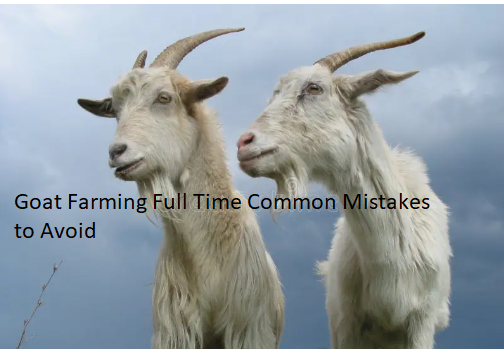
Transitioning into professional agriculture requires significant planning, especially when addressing goat farming full time common mistakes that often lead to financial insolvency. Many new farmers underestimate the sheer volume of daily labor and the capital required to reach a break-even point.
Avoiding these pitfalls starts with understanding that livestock management is a business of margins, not just animal husbandry. By recognizing the physical and economic constraints early, you can structure a sustainable operation that survives beyond the first three years of high mortality and cash flow volatility.
Financial Miscalculations and Budgeting Errors
The most frequent error in full-time goat operations is failing to account for hidden overhead costs. Beginners often focus on the purchase price of the herd while ignoring the compounding expenses of quality forage, specialized fencing, and veterinary care. You must maintain a liquid cash reserve equivalent to at least six months of operating expenses to survive unexpected market dips or health crises.
Many farmers also neglect to calculate the depreciation of their equipment and infrastructure. A sturdy, predator-proof fence is your most vital asset, yet it degrades annually due to weather and animal pressure.
You should allocate roughly 15% of your annual revenue strictly to the maintenance and replacement of farm assets. Without this foresight, a sudden fence failure can lead to lost livestock and legal liabilities that quickly bankrupt a small operation.
Ignoring Herd Health and Biosecurity Protocols
Biosecurity is often treated as an afterthought rather than a core operational pillar. New farmers frequently introduce new goats into their herd without a proper quarantine period, which can lead to the introduction of incurable diseases like Caseous Lymphadenitis (CL) or Caprine Arthritis Encephalitis (CAE). These conditions can cripple your herd’s productivity and render your milk or meat products unsellable.
Consistent veterinary care is non-negotiable for a professional enterprise. Relying on “homestead” remedies instead of evidence-based veterinary practice is a major factor in high kid mortality rates.
You need a relationship with a large-animal veterinarian who understands the specific nutritional needs of dairy or meat goats. Keeping detailed medical records for every animal, including vaccination dates and parasite treatments, is essential for maintaining the health and value of your genetic stock.
Inadequate Pasture Management Strategies
Overgrazing is a silent profit killer that degrades your land’s long-term carrying capacity. When goats are left on the same plot for too long, they consume the most nutritious forage down to the root, leaving space for invasive weeds. This practice also creates a perfect breeding ground for internal parasites, which thrive in short, contaminated grass.
Implementing a rotational grazing system is the industry standard for high-density operations. By moving your herd through smaller paddocks every few days, you allow the forage time to recover and naturally break the parasite life cycle.
You should aim to keep the grass at a height of at least four inches to ensure rapid regrowth and healthy soil structure. Neglecting this cycle will force you to purchase expensive supplemental hay, which destroys your profit margins.
Misunderstanding Market Demand and Scaling
Many farmers fail because they produce a product without a verified buyer. You must conduct thorough market research before purchasing your foundation herd.
Determine whether your local area favors dairy, meat, or fiber production, and adjust your breed selection accordingly. The USDA Livestock and Poultry Market News provides real-time data that can help you identify price trends and demand shifts in your region.
Attempting to scale too quickly is another common trap for new entrants. You might be tempted to double your herd size after a successful first season, but this often leads to a dilution of management quality.
Focus on optimizing the performance of your existing animals before expanding your numbers. High-quality production from fifty goats is almost always more profitable than mediocre production from two hundred.
The Reality of Goat Farming Economics
Profitability in this sector is rarely achieved in the first two years. You are essentially building a biological factory that requires constant input before it yields a consistent output. The table below outlines typical cost-to-revenue considerations for a small, intensive commercial operation.
| Category | Primary Expense/Revenue Driver | Impact on Profitability |
|---|---|---|
| Infrastructure | Predator-proof fencing | High upfront capital cost |
| Feed | Supplemental grain/hay | Variable ongoing expense |
| Veterinary | Vaccines and parasite control | Critical for herd longevity |
| Marketing | Direct sales vs. auction | Determines final profit margin |
Labor Intensity and Burnout Factors
Goat farming is physically demanding and requires a level of stamina that many underestimate. Unlike cattle, goats are browsers that require constant monitoring for health changes and containment issues. You will spend significant time performing repetitive tasks that do not scale well with automation.
Burnout often occurs because farmers fail to implement efficient workflows. If you find yourself spending four hours a day on manual feeding or cleaning, you are losing money on labor efficiency.
Invest in automated waterers, easy-access hay feeders, and efficient milking parlors if you are in the dairy sector. Your time has a monetary value; if you don’t account for it, you aren’t running a business—you are running a hobby that loses money.
Essential Operational Lists
To maintain a professional standard, you must treat your farm like a corporate entity. The following list represents the fundamental components you should have documented and organized before your first year of full-time operations.
- Standard Operating Procedures (SOPs) for daily feeding and health checks.
- Emergency contact list including local large-animal vets and feed suppliers.
- A detailed breeding calendar to manage kidding intervals and milk production cycles.
- A comprehensive inventory of all equipment, including serial numbers and service records.
- Marketing plan with identified target demographics for kids, milk, or fiber.
- Annual financial projections with clear break-even milestones.
Common Management Mistakes FAQ
How many goats do I need to be profitable?
Profitability depends entirely on your production model and cost structure. Some dairy operations can be profitable with 50 high-producing does, while meat operations might require 200+ head to generate a full-time income due to lower per-animal margins.
Is it difficult to manage a full-time herd?
It is physically and mentally taxing. Goats are susceptible to parasites and predators, requiring constant vigilance and advanced knowledge of animal husbandry that goes far beyond basic feeding and watering.
What is the most common health issue in goats?
Internal parasites, specifically Haemonchus contortus (barber pole worm), are the most persistent threat. Resistance to chemical dewormers is widespread, making integrated parasite management a critical skill for any professional farmer.
How much land is needed for 100 goats?
The acreage depends on the quality of your forage and your management style. In a managed rotational grazing system, you might need 10 to 20 acres, but in poor, dry conditions, you could require 50 to 100 acres to prevent overgrazing.
Final Thoughts on Sustainable Operations
Successfully navigating goat farming full time common mistakes requires a shift in mindset from animal lover to farm manager. You must be prepared to make difficult decisions, such as culling unproductive animals or investing in expensive infrastructure, to ensure the long-term viability of your business. Success is found in the margins, the record-keeping, and the rigorous application of health protocols.
By focusing on efficiency and market-driven production, you can build a resilient operation that sustains your livelihood for the long term. Start small, track every expense, and never stop learning from the data your herd provides.
