

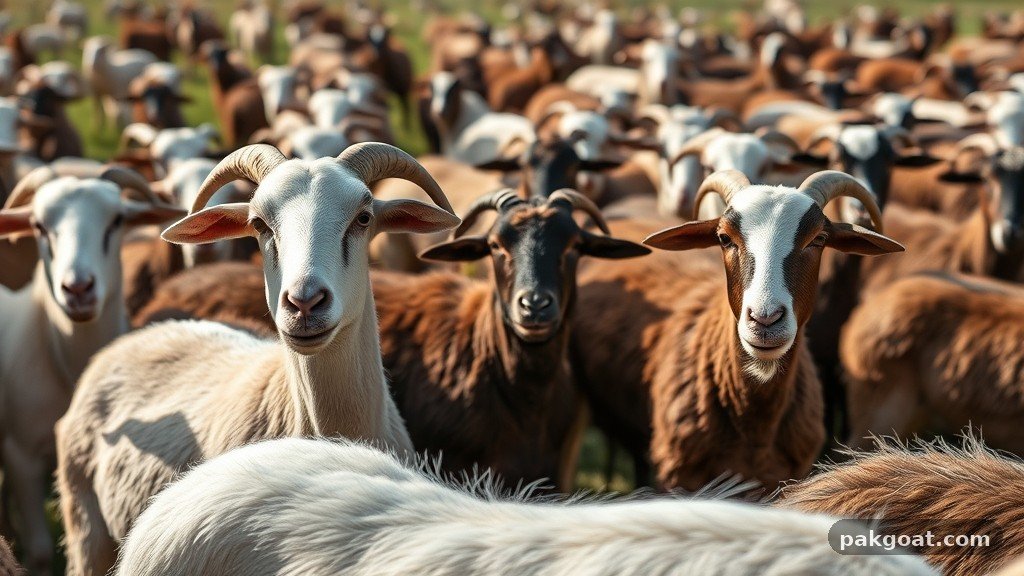
Extensive goat farming relies on the natural foraging behavior of livestock to sustain production across large tracts of land. Unlike intensive systems that focus on confined housing and high-input feed, this approach prioritizes low-cost maintenance and animal autonomy. Understanding the balance between stocking density and pasture regeneration is the primary challenge for producers working in this sector.
By leveraging natural landscapes, farmers can minimize overhead while producing animals that are hardy and well-adapted to their environment. This article provides a clear look at the operational realities, land requirements, and economic factors involved in maintaining a successful extensive operation.
Land Requirements and Stocking Density
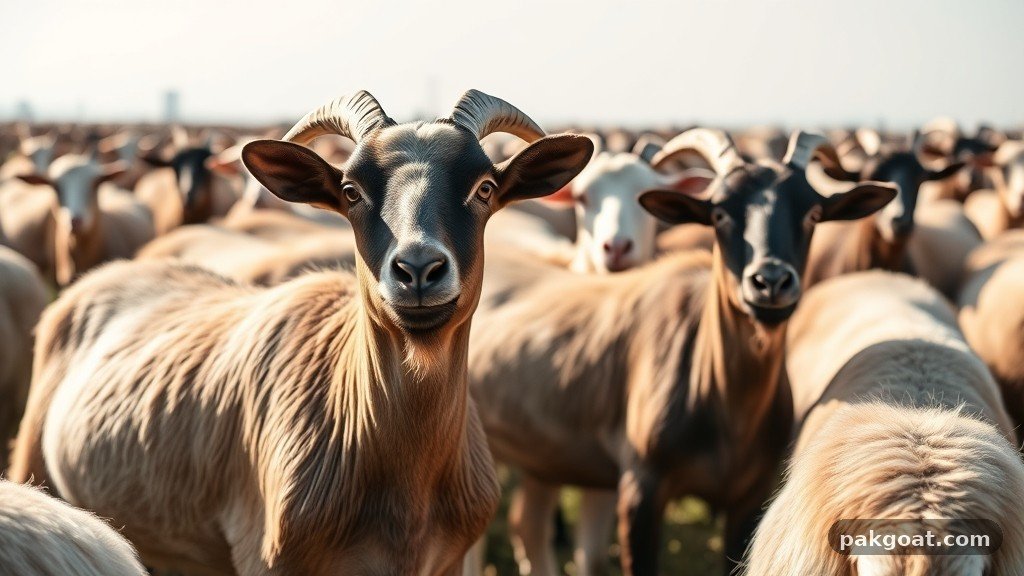
The fundamental question for any producer involves how much space is actually required for a viable operation. While stocking rates vary significantly based on local climate and vegetation quality, a general rule of thumb is that 100 goats require between 50 and 100 acres if relying solely on native forage.
In areas with high rainfall and lush, diverse plant life, you might manage higher densities. Conversely, arid regions with sparse vegetation may necessitate upwards of 200 acres to prevent overgrazing and soil degradation.
To determine your specific capacity, you must conduct a formal forage inventory. This involves calculating the pounds of dry matter produced per acre annually. Goats typically consume about 3% to 4% of their body weight in dry matter every single day.
If you calculate the total forage production and subtract the amount lost to trampling or non-palatable species, you reach a realistic carrying capacity. Failure to respect these limits leads to rapid pasture exhaustion and increased internal parasite loads.
Economic Viability and Profitability
Is it profitable to run an extensive goat farm? The answer depends heavily on your ability to keep input costs near zero. Extensive systems are often less profitable on a per-head basis compared to intensive operations, but they offer higher margins due to lower labor, feed, and utility expenses.
Profitability is usually realized through economies of scale, where the low cost of production per animal offsets the lower individual growth rates. Producers who focus on direct-to-consumer meat sales or niche markets often see better returns than those selling into commodity livestock auctions.
Comparing Production Models
The following table highlights the primary differences between extensive systems and their intensive counterparts.
| Feature | Extensive Farming | Intensive Farming |
|---|---|---|
| Feed Source | Native pasture/browse | Stored hay and grain |
| Infrastructure | Minimal (fencing/water) | High (barns/automation) |
| Labor Needs | Low (herd monitoring) | High (daily feeding/cleaning) |
| Growth Rate | Slow to Moderate | Rapid |
| Cost per Head | Low | High |
Strategic Herd Management
Managing a herd across a vast landscape requires a shift in mindset from “farming” to “resource management.” You are essentially a manager of sunlight and grass, using goats as a tool to convert those resources into protein.
Effective extensive goat farming requires a robust fencing strategy, typically utilizing high-tensile electric wire to keep predators out and goats in. Without secure perimeter control, your losses to predation from coyotes or stray dogs can quickly erase an entire year’s profit margin.
Water distribution is the silent bottleneck of extensive systems. Goats will not travel more than a quarter-mile to find water if they can avoid it, leaving large portions of your land under-utilized.
Installing gravity-fed troughs or solar-powered pumps at multiple points across the acreage ensures even grazing pressure. When goats are forced to congregate at a single water source, they create “sacrifice zones” of trampled dirt that eventually erode and lose productivity.
Essential Operational Tasks
Running a successful operation involves a recurring cycle of tasks that ensure herd health without constant intervention. You must prioritize these key activities to maintain a sustainable business model:
- Implementing a rotational grazing schedule to allow forage recovery.
- Monitoring body condition scores to identify animals struggling with seasonal shifts.
- Maintaining predator-proof fencing to protect the herd during nighttime hours.
- Managing internal parasite loads through strategic deworming and pasture rotation.
- Selecting breeding stock that demonstrates high foraging efficiency and maternal instincts.
- Installing and maintaining remote water delivery systems to encourage uniform range use.
The Role of Parasite Control
Parasites are the single greatest threat to profitability in extensive goat farming. Because the animals are constantly grazing on the ground, they are exposed to larvae that thrive in moist, warm environments.
Intensive use of chemical dewormers has led to widespread resistance, making traditional pharmaceutical approaches less effective over time. Many successful producers now utilize the FAMACHA system, which involves checking the color of the eye mucous membranes to identify individuals that truly need treatment.
By only treating the animals that show clinical signs of anemia, you preserve the efficacy of your dewormers and allow the rest of the herd to develop natural immunity. This approach relies heavily on genetics; you should cull animals that consistently require intervention.
Selecting for “resilience” rather than just “growth” ensures that your herd remains productive without needing a pharmacy budget. You can find detailed resources on parasite management through the American Consortium for Small Ruminant Parasite Control.
Managing Seasonal Variability
Extensive systems are at the mercy of the weather, and your production plan must account for the lean seasons. In temperate climates, grass growth stops during the winter months, forcing you to stockpile forage or provide supplemental hay.
If you lack the equipment to harvest and store hay, you must time your kidding season to match the spring flush of grass. This ensures that the nutritional demands of nursing does are met when forage quality is at its absolute peak.
Drought planning is equally critical for long-term survival. You should maintain a “drought reserve” in your pasture rotation, which is essentially an area of land you keep ungrazed until mid-summer. If rainfall is lower than average, you can move the herd into this reserve to extend your grazing season.
If the drought persists, you must be prepared to cull the herd early. Keeping unproductive animals during a dry spell is the fastest way to destroy your soil health and your bank account.
Environmental Impact and Soil Health
Goats are unique because they are browsers, not just grazers. They prefer woody shrubs, briars, and weeds over fine grasses, which makes them excellent tools for land clearing and invasive species management.
By controlling the brush, they allow more sunlight to reach the soil, which in turn stimulates the growth of grasses and forbs. This symbiotic relationship can actually improve the ecological health of degraded land if managed with precision.
However, overstocking can lead to severe compaction and soil erosion. Goats have sharp hooves that can break the soil surface, especially on hillsides.
You must monitor the ground cover constantly; if the soil becomes exposed, you have stayed on that plot for too long. Healthy soil is the engine of your farm, and protecting the root structure of your forage is more important than the immediate weight gain of your animals.
FAQ
How many goats can I keep on 10 acres of brushy land?
On average, 10 acres of high-quality brush can support 10 to 15 goats, depending on the density of the woody plants. Because goats are browsers, they can thrive on land that would be considered poor for cattle, but you must still monitor for overgrazing. Start with a conservative number and add animals only after you see that the vegetation is recovering adequately between grazing cycles.
What is the biggest risk in extensive goat farming?
The biggest risk is undoubtedly predation. In an extensive setup, you cannot be present 24/7, which leaves the herd vulnerable to local predators like coyotes, wolves, or stray dogs. Investing in livestock guardian dogs, such as Great Pyrenees or Anatolian Shepherds, is the industry-standard solution for protecting herds across large areas.
Does extensive goat farming require a lot of equipment?
Compared to dairy or intensive meat operations, the equipment needs are minimal. You will primarily need reliable fencing materials, a mobile water system, and basic handling facilities like a head gate or chute for medical treatments. Keeping the operation simple is the key to maintaining the low-overhead structure that makes extensive farming attractive.
How do I know if my goats are getting enough nutrition?
You should regularly assess the body condition of your goats using a scale of 1 to 5. If your animals are consistently scoring below a 2.5, they are likely not receiving enough energy from the pasture. This indicates that you either need to reduce your stocking density or move the herd to a fresh paddock more frequently to ensure they have access to the most nutritious forage.
What is the most profitable breed for extensive systems?
Hardy breeds like the Kiko or Spanish goat are generally considered the best for extensive environments. These breeds were developed in harsh conditions and possess higher parasite resistance and better foraging instincts than more delicate breeds like the Boer. Choosing the right genetics for your specific climate is just as important as the land management itself.
Conclusion
Extensive goat farming offers a sustainable and relatively low-cost path to livestock production if you prioritize land health and predator protection. By moving away from high-input systems and leaning into the natural foraging behaviors of the animals, you create a business that is resilient to market fluctuations. Success in this field is not about maximizing the growth rate of every single animal, but about maximizing the efficiency of your land and the health of your herd over the long term.
Start by assessing your forage capacity and securing your perimeter. Once you have a handle on the land, focus on selecting genetics that thrive in your specific environment.
With careful planning and consistent monitoring, you can build a productive operation that works with nature rather than against it. Reach out to local agricultural extension offices for specific data on forage types in your region to refine your strategy further.
