

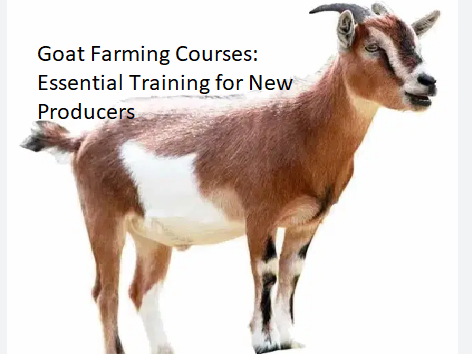
Enrolling in professional goat farming courses provides the technical foundation necessary to manage a healthy, productive herd while avoiding costly beginner mistakes. Whether you are interested in dairy production, fiber harvesting, or meat sales, these programs offer structured insights into animal husbandry, pasture management, and local regulatory requirements.
By leveraging expert knowledge, you can significantly reduce the steep learning curve often associated with livestock management. This article examines the specific value of structured education, the typical costs involved, and how to select the right training program for your agricultural goals.
Selecting the right training is the most effective way to address the question of whether goat farming is a viable business, as profitability depends heavily on efficient resource management. You should expect to pay between $150 and $800 for high-quality, comprehensive workshops, though many regional extension services offer introductory seminars for as little as $25 to $50.
These courses typically cover the essential metrics for success, such as feed conversion ratios, parasite control schedules, and market pricing strategies. If you are looking for official resources to get started, the National Institute of Food and Agriculture provides a wealth of data on livestock management practices that complement formal training.
Understanding the Core Curriculum
Most reputable programs focus on animal health as the primary pillar of production. You will learn how to perform basic physical exams, identify signs of common illnesses like pneumonia or foot rot, and manage internal parasites, which are the leading cause of loss in small ruminants. Instructors emphasize the importance of FAMACHA scoring, a diagnostic tool used to monitor anemia levels in goats caused by barber pole worms.
Nutrition management forms the second major block of study in these programs. You will study the difference between browse and graze behaviors, as goats are biologically designed to eat shrubs and woody plants rather than just grass.
Understanding how to supplement forage with minerals and protein during winter months is critical for maintaining body condition scores. A well-structured course will teach you how to read feed tags and calculate dry matter intake to prevent metabolic disorders like pregnancy toxemia.
Evaluating Regional vs. Online Training
Choosing between in-person workshops and digital platforms depends on your specific learning style and the need for hands-on experience. Regional programs hosted by land-grant universities often include field days where you can practice hoof trimming, vaccination techniques, and disbudding kids. These physical interactions provide a level of confidence that digital screens cannot replicate, especially for those who have never handled large animals.
Online options offer unmatched flexibility for those balancing a day job with farm startup efforts. Many of these programs are self-paced, allowing you to revisit complex modules on reproductive cycles or milk quality standards as often as needed. While you lose the ability to physically touch the animals, many high-end online courses provide high-definition video demonstrations of medical procedures that are just as effective as live classroom observation.
Financial Planning and Business Strategy
A significant portion of any professional curriculum is dedicated to the economics of the operation. You will learn how to create a balance sheet, track variable costs like veterinary bills, and calculate the break-even point for your herd. Instructors often use case studies to demonstrate how to minimize overhead by utilizing existing infrastructure or rotational grazing systems.
Marketing your products is the final step in the business modules of these classes. You will examine the differences between selling live animals at auction versus direct-to-consumer sales of meat or soap products. Understanding the specific regulations for selling raw milk or goat meat in your state is vital, as these laws vary drastically across different jurisdictions.
| Operational Focus | Primary Expense Factor | Profitability Driver |
|---|---|---|
| Meat Production | Feed and Forage | Weight gain consistency |
| Dairy Production | Equipment and Labor | Milk volume per lactation |
| Fiber Production | Shearing and Breeding | Fiber quality and fineness |
| Breeding Stock | Genetics and Registry | Pedigree and health records |
Managing Herd Growth and Genetics
Effective breeding management is essential to prevent inbreeding and improve the performance of your herd over time. Courses typically cover how to interpret pedigree charts and select bucks that complement the specific traits of your existing does. You will learn to recognize the signs of estrus and the technical requirements for artificial insemination if you choose to pursue advanced genetics.
Culling is another difficult but necessary topic covered in the classroom. You will learn to identify animals that consistently fail to meet production targets or exhibit poor temperament, which can drain your farm’s resources. Proper culling based on data rather than emotion is a hallmark of a professional producer who understands the necessity of herd efficiency.
Infrastructure and Land Management
Your farm setup determines the amount of daily labor required to maintain your animals. Trainers will show you how to design efficient fencing systems that keep predators out and goats in, as these animals are notoriously good at escaping. You will also look at shelter requirements, which must provide adequate ventilation to prevent respiratory issues while remaining dry during inclement weather.
Rotational grazing is a recurring theme in modern agricultural education because it maximizes forage utility and breaks parasite life cycles. You will learn how to divide a single acre into smaller paddocks to prevent overgrazing and soil erosion. By moving the herd every few days, you can increase the carrying capacity of your land significantly compared to continuous grazing methods.
Key Skills for New Goat Farmers
Beyond the technical aspects of biology and finance, you need a specific set of practical skills to run a farm successfully. Most courses will require you to master the following tasks before you are considered ready to scale your herd size:
- Hoof trimming techniques to prevent foot rot and lameness.
- Administering subcutaneous and intramuscular injections safely.
- Assisting with difficult births, known as dystocia, during kidding season.
- Maintaining accurate medical and breeding records for every animal.
- Calculating pasture rotation schedules based on forage growth rates.
- Managing internal parasite resistance through strategic deworming.
Frequently Asked Questions
Is it possible to be profitable on a small acreage?
Profitability is achievable on small plots of land, but it requires intensive management techniques. You must focus on high-value products like cheese or boutique fiber rather than commodity meat production to offset the higher cost of intensive inputs per acre.
How many months does it take to raise a goat for market?
Most meat goats reach a marketable weight between 6 and 9 months of age, depending on the breed and the quality of the forage. Faster growth rates require supplemental grain, which increases your input costs and decreases your profit margin per head.
What is the most important skill for a beginner?
The ability to observe your herd for subtle changes in behavior is the single most important skill. Goats are prey animals that hide illness well, so noticing a goat that is slightly off-feed or isolated is often the difference between a quick recovery and a loss.
Are there free resources available for training?
Yes, your local Cooperative Extension Service is the best place to find free or low-cost educational materials. They often host workshops, provide fact sheets, and offer one-on-one consulting for producers in their specific county or region.
Does the breed of goat change the management requirements?
Different breeds have different needs, particularly regarding climate tolerance and nutritional efficiency. A Boer goat managed for meat has very different physiological requirements than a Nigerian Dwarf goat managed for dairy production, so your training should align with your specific breed.
Next Steps for Prospective Farmers
Starting your journey into agriculture requires careful planning and a commitment to continuous learning. By investing time in goat farming courses, you gain access to a network of mentors and peers who can help you solve problems before they become crises. Begin by contacting your local agricultural extension office to see what workshops are scheduled in your area for the coming season.
Remember that practical experience is the best partner to formal education. Start with a small, manageable herd size to test your infrastructure and your personal capacity for the daily chores involved.
As you become comfortable with the rhythms of the farm, you can expand your operation with confidence. Engaging with professional training early on is the most reliable way to turn your interest in livestock into a sustainable and productive enterprise.
