

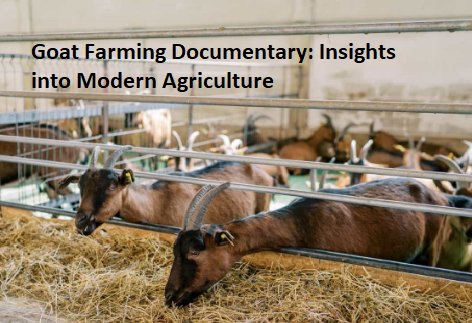
Exploring a goat farming documentary provides a unique window into the realities of small-scale livestock management and regenerative agriculture. These films often move beyond the romanticized view of pastoral life to show the technical challenges of herd health, forage management, and market viability.
Whether you are an aspiring producer or a consumer interested in food systems, understanding the professional side of goat husbandry is essential. This article breaks down the technical aspects of the industry, the economic realities of running a commercial operation, and how visual storytelling shapes public perception of modern animal farming.
Financial Realities of Commercial Goat Operations
The primary question for those researching the industry is whether goat farming offers a sustainable income. A professional goat farming documentary often highlights that profitability depends heavily on the specific product focus, such as dairy, meat, or fiber production.
For instance, goat dairies typically require a higher initial capital investment due to the need for milking parlors, cooling systems, and strict sanitation equipment. Meat production, by contrast, relies more on pasture management and the ability to scale herd numbers to reach a profitable weight efficiently.
Margins in the goat industry are generally thin, often requiring producers to diversify their revenue streams. Farmers frequently combine livestock sales with agritourism, value-added product processing like artisanal cheese-making, or even vegetation management services. The following table illustrates the approximate revenue potential for different business models based on a hypothetical small-scale farm.
| Business Model | Primary Revenue Source | Scaling Potential |
|---|---|---|
| Dairy Operation | Milk and Cheese | Moderate (High labor) |
| Meat Production | Live Kids/Carcass | High (Land dependent) |
| Fiber (Angora) | Mohair/Wool | Low (Market niche) |
| Vegetation Control | Service Fees | High (Regional demand) |
Land Requirements and Carrying Capacity
Successful goat farming hinges on the efficient use of land and the implementation of rotational grazing. Unlike cattle, which are primary grazers, goats are browsers that prefer shrubs, weeds, and woody plants.
This dietary preference makes them excellent for land restoration but requires careful planning to prevent overgrazing. Industry standards suggest that a producer can maintain between 6 and 10 goats per acre depending on the quality of the forage and the supplemental feed provided.
When planning a layout, you must account for perimeter fencing, which is one of the highest startup costs for any new farm. Goats are notorious escape artists, requiring high-tensile woven wire fencing at least 48 inches high to keep predators out and livestock in.
Many producers also incorporate electric fencing strands to reinforce these boundaries and deter coyotes or stray dogs. Without secure fencing, the risk of predation can quickly wipe out an entire season’s profit.
Health Management and Herd Biosecurity
Herd health is a recurring theme in any serious goat farming documentary because diseases can devastate a farm in days. Parasite control, particularly the management of Haemonchus contortus (barber pole worm), is a constant battle for goat farmers in humid climates.
Producers must implement a strict deworming schedule and use FAMACHA scoring to monitor anemia levels in their animals. This diagnostic tool allows farmers to treat only the individuals that need it, slowing the development of drug-resistant parasites.
Biosecurity protocols are equally important to prevent the introduction of incurable diseases like Caseous Lymphadenitis (CL) or Caprine Arthritis Encephalitis (CAE). Responsible breeders maintain closed herds, meaning they rarely bring in new animals from outside sources unless they have been quarantined and tested.
This practice protects the genetic integrity of the herd and ensures that the farm remains a reliable source for high-quality breeding stock. You can find more detailed information on herd health standards through the USDA Animal and Plant Health Inspection Service.
The Role of Genetics and Selective Breeding
Genetic selection is what separates hobbyists from professional livestock producers. Breeders focus on specific traits such as milk yield, butterfat content, growth rates, or fiber fineness depending on their target market.
A high-performing dairy doe might produce over 3,000 pounds of milk per lactation, a figure that is only achievable through generations of careful record-keeping. Farmers track pedigree, birth weights, and weaning performance to make informed culling decisions each year.
Artificial insemination (AI) has become more accessible to small farms, allowing producers to introduce superior genetics without the cost and risk of keeping multiple bucks. This technology allows a small farm to breed their does to top-tier sires from across the country.
By focusing on longevity and structural soundness, producers reduce the frequency of veterinary interventions. This focus on long-term genetic improvement is a core component of sustainable farm management.
Marketing and Value-Added Products
Producing a high-quality product is only half the battle in the goat industry. Most successful farms move beyond selling raw commodities to create value-added products that command higher retail prices.
For example, fresh chevre or aged goat cheese can sell for significantly more per pound than the raw milk used to produce it. Similarly, producers of cashmere or mohair often process their fiber into yarn or garments to capture more of the profit margin.
Direct-to-consumer sales channels are the most effective way for small farms to maintain profitability. Farmers markets, community-supported agriculture (CSA) subscriptions, and farm-to-table partnerships allow producers to tell their story directly to the customer.
This transparency builds trust and justifies the price premium associated with locally raised products. When a customer understands the labor involved in the process, they are far more likely to support the farm consistently.
Common Challenges Faced by Goat Farmers
Every goat farming documentary captures the inherent volatility of the agricultural lifestyle. Weather events, fluctuating feed prices, and the physical demands of labor take a toll on even the most experienced farmers.
Feed costs, in particular, can fluctuate wildly based on global grain markets, forcing farmers to optimize their on-farm forage production. Many producers find that the most challenging months are during the winter when grazing is not possible.
Predation remains the single largest threat to small ruminant operations in many regions. Coyotes, bobcats, and even domestic dogs can cause significant losses in a single night.
To mitigate these risks, many farmers employ livestock guardian dogs (LGDs) like Great Pyrenees or Anatolian Shepherds. These dogs bond with the herd and provide 24/7 protection, but they come with their own costs for feed, veterinary care, and training.
- Initial Capital: Costs for fencing, housing, and breeding stock.
- Labor Intensity: Daily requirements for milking, feeding, and medical care.
- Market Volatility: Changes in demand for meat and dairy products.
- Predator Pressure: The constant need for effective security measures.
- Regulatory Hurdles: Licensing requirements for selling raw milk or meat.
The Future of Regenerative Goat Farming
The industry is seeing a shift toward regenerative practices that prioritize soil health as much as animal production. By moving goats through paddocks in a tight rotation, farmers mimic the natural migratory patterns of wild herbivores.
This method allows the grass to recover, increases carbon sequestration in the soil, and reduces the need for chemical fertilizers. As consumers become more environmentally conscious, this approach is gaining traction as a viable, sustainable alternative to factory farming.
Technology is also playing a larger role in how goats are managed. Wearable sensors can now monitor the health and location of individual animals, sending alerts to a smartphone when an animal is in heat or showing signs of illness.
While these tools are expensive, they provide data that can improve efficiency and reduce waste. As these technologies become more affordable, the average size and productivity of small-scale farms are likely to increase.
Frequently Asked Questions
What is the typical lifespan of a commercial dairy goat?
A well-managed dairy goat typically remains productive for 8 to 12 years. While they can live longer, most commercial operations cull older does once their milk production significantly declines or their health requires excessive maintenance.
How much space is actually required for a small herd?
The space requirement depends on your management style, but a general rule is to have at least 15 to 20 square feet of indoor shelter per goat. For outdoor space, the carrying capacity is roughly 6 to 10 goats per acre of high-quality pasture.
Is it profitable to raise goats for meat in the US?
Yes, it can be profitable, particularly if you target ethnic markets where goat meat is a staple. Success usually requires consistent production, good marketing, and the ability to keep input costs low by utilizing high-quality pasture.
What are the most common health issues for goats?
Internal parasites are the most frequent health issue, especially in wet climates. Other common concerns include respiratory infections, foot rot, and nutritional deficiencies that can affect fertility and overall growth rates.
How do documentary filmmakers choose which farms to feature?
Filmmakers typically look for farms with a compelling narrative, such as a farm that is transitioning to sustainable practices or one that has overcome significant adversity. Visual appeal and the farmer’s willingness to be candid about the struggles of the business are also major factors.
Conclusion
Engaging with a goat farming documentary offers more than just a glimpse into rural life; it provides a realistic look at the dedication required to succeed in modern animal husbandry. From the precise science of genetic selection to the daily grind of pasture management, the industry is built on a foundation of hard work and careful planning. Aspiring producers should focus on building a resilient business model that balances production with marketing efforts.
By understanding the financial and biological complexities outlined here, you can better appreciate the effort that goes into every aspect of goat farming. If you are serious about entering the field, start by visiting local producers and observing their operations firsthand to see if the reality matches your goals.
