

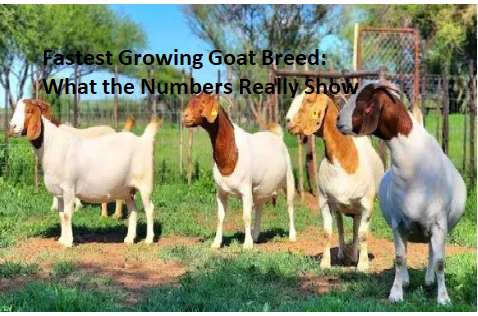
Finding the fastest growing goat breed is a priority for producers looking to maximize their meat production efficiency and shorten the time between birth and market weight. If you are focused on pure growth rates and feed conversion, the Boer goat consistently ranks as the industry standard.
Originating from South Africa, this breed was specifically developed for meat production, and its ability to gain weight rapidly makes it the top choice for commercial farmers worldwide. Understanding the growth dynamics of these animals helps you make better decisions about your herd management, feed costs, and overall profitability in the livestock sector.
The Boer Goat Advantage
The Boer goat is widely recognized as the fastest growing goat breed due to its unique genetic selection for muscle mass and frame development. Unlike dairy or fiber-focused breeds, the Boer was selectively bred for centuries to produce heavy, high-quality carcasses in a shorter window of time.
You will find that a healthy, well-fed Boer kid can achieve a daily weight gain of 0.4 to 0.6 pounds under optimal forage conditions. This rapid growth allows farmers to bring kids to market weights of 70 to 90 pounds in just four to five months.
Their structural build is significantly different from other breeds, featuring a broad chest, deep body, and thick muscling across the loins and thighs. This conformation allows them to carry more weight and convert feed into muscle rather than fat.
When you compare them to landrace or dairy breeds, the difference in skeletal maturity is striking. Boer goats reach physiological maturity for market purposes significantly faster than smaller, less specialized breeds.
Growth Metrics and Feed Conversion
Growth rate is not just about genetics; it is heavily dependent on how effectively an animal converts nutrients into mass. The Boer breed exhibits an exceptional feed conversion ratio compared to most other meat goat breeds.
Because they are efficient foragers, they can maintain high growth rates even on pasture, provided the forage quality is managed correctly. You can expect a Boer goat to reach a market-ready weight while consuming less total grain than slower-growing breeds would require.
Farmers often track Average Daily Gain (ADG) as the primary indicator of growth performance. While environmental stressors like heat or parasites can fluctuate these numbers, the genetic baseline for a Boer is consistently higher.
Data collected by the United States Department of Agriculture indicates that meat-specific breeds like the Boer maintain a weight advantage through the weaning phase and beyond. This early-stage growth is vital because it determines how quickly you can turn over your inventory and clear space in your barn for the next kidding cycle.
Comparison with Other Meat Breeds
While the Boer is the fastest growing goat breed, several other breeds are gaining popularity for their specific traits and hardiness. The Kiko goat, for instance, is often praised for its parasite resistance and maternal instincts, though it typically matures at a slower rate than the Boer.
The Spanish goat is another common breed known for its extreme hardiness in rugged terrain, though it generally produces a smaller carcass. You must weigh the trade-offs between pure growth speed and the cost of maintaining the animal.
| Breed | Primary Strength | Relative Growth Speed |
|---|---|---|
| Boer | Muscle Mass | Very High |
| Kiko | Parasite Resistance | Moderate |
| Spanish | Hardiness | Moderate |
| Savanna | Heat Tolerance | High |
The Savanna goat is a notable competitor to the Boer, often showing similar growth rates while offering superior heat tolerance. If your farm is located in a hot, humid climate, the Savanna might provide a faster growth trajectory simply because the animal remains healthier and more active during peak summer months. Choosing the right breed involves assessing your local climate and available feed resources as much as the genetic potential of the breed itself.
Management Practices for Rapid Growth
Even the fastest growing goat breed will fail to reach its potential without proper nutritional support during the critical early months. Creep feeding is a common practice among serious producers to ensure kids receive high-protein supplementation before they are weaned.
You should aim for a creep feed that contains at least 16% to 18% crude protein to support rapid muscle development. This early boost significantly impacts the overall weight at five months of age.
Parasite management is the other major hurdle that slows down growth in young goats. A heavy worm load, particularly Haemonchus contortus, can cause a goat to stop gaining weight or even lose body condition rapidly.
Implementing a rotational grazing system helps break the parasite life cycle and keeps your goats grazing on clean, nutrient-dense forage. When goats spend their energy fighting parasites, they aren’t spending that energy growing, so proactive health management is a direct investment in your growth rates.
The Role of Genetics and Selective Breeding
To maintain the high growth rates associated with the fastest growing goat breed, you must be selective about your herd sires. A buck with poor growth genetics will set your herd back by multiple generations.
Look for performance records that include weaning weights and yearling weights when purchasing a new herd sire. These numbers provide a concrete look at how that animal’s offspring are likely to perform in your specific environment.
Crossbreeding is another common strategy used to capture “hybrid vigor” while maintaining the rapid growth of the Boer. Crossing a Boer buck with a hardy, maternal breed like a Kiko or a Spanish doe often results in offspring that grow nearly as fast as purebred Boers but with increased overall hardiness.
This strategy helps mitigate the health issues that can sometimes accompany purebred Boer lines. By balancing growth genetics with local environmental adaptability, you create a more profitable and sustainable production system.
Economic Impact of Growth Speed
Speed of growth translates directly into cash flow for a commercial goat operation. The faster your kids reach market weight, the sooner you can sell them, which reduces your total feed costs and labor requirements.
Managing a herd that grows quickly means your facility operates at higher efficiency. You spend less money on winter hay and supplemental grain per pound of meat produced.
* Reduced time to market lowers total feed expenditure.
* Faster turnover allows for higher annual production volume.
* Decreased exposure to environmental risks during the juvenile stage.
* Higher profit margins per animal sold.
Consider the cost of keeping a kid for an extra three months. You are paying for feed, potentially medication, and the opportunity cost of that space being occupied.
If you can shave 60 days off the time it takes to reach market weight, you essentially increase the capacity of your farm without needing to add more land or buildings. This is the financial core of why producers prioritize the fastest growing goat breed.
Environmental Factors Affecting Growth
Your local ecosystem plays a massive role in whether your goats can hit their genetic growth targets. A goat in a lush, high-rainfall environment has access to different forage profiles than one in a dry, arid climate.
You must adjust your stocking rates and supplemental feeding programs to match the carrying capacity of your land. Overstocking leads to overgrazing, which depletes the soil and forces goats to consume dirt and lower-quality forage, inevitably slowing their growth.
Temperature stress is another factor that is often overlooked. Goats are ruminants, and the process of digestion generates internal body heat. During extreme heat waves, goats will naturally reduce their feed intake to manage their body temperature, which leads to a plateau in weight gain.
Providing adequate shade, ventilation, and fresh water is essential to keep the metabolism working at peak efficiency. If you don’t manage these environmental variables, even the best genetics will struggle to show their true performance potential.
Future Trends in Goat Production
The global demand for goat meat is rising, and with it, the focus on efficiency in the livestock sector is intensifying. Producers are increasingly using data-driven tools to track individual animal performance and identify the fastest growing goat breed lines within their own herds.
Genomic testing is becoming more accessible, allowing breeders to select for growth traits before the animal has even reached maturity. These advancements are making it easier to identify top-tier performers early in their lives.
Sustainable production is also shaping how we think about growth rates. There is a growing interest in how to achieve fast growth while maintaining soil health and biodiversity. Rotational grazing and integrated crop-livestock systems are becoming standard practices for high-performing farms.
As we look forward, the most successful producers will likely be those who combine the high-growth genetics of the Boer with regenerative land management techniques. This balance ensures long-term profitability without degrading the resources that the goats depend on for their rapid development.
Frequently Asked Questions
Which goat breed is the most profitable?
Profitability is usually tied to the Boer goat because its rapid growth rate allows for quicker market turnover. However, the most profitable breed for your specific farm depends on your climate, available forage, and local market demand for certain carcass weights.
How many acres are required to raise 100 goats?
A general rule of thumb is that you can support roughly 6 to 10 goats per acre, depending on the quality of your pasture. For 100 goats, you would ideally need at least 10 to 15 acres of well-managed, high-quality grazing land.
What is the easiest goat to raise?
The Kiko and Spanish breeds are often considered the easiest to raise because they possess high levels of natural parasite resistance and require less intensive management. They are more “hands-off” than the more specialized meat breeds like the Boer.
Do goats need grain to grow fast?
While goats can grow on forage alone, they require high-quality pasture to achieve peak growth rates. If your forage is poor, you will need to supplement with grain to meet their protein and energy requirements for rapid weight gain.
How often should I weigh my goats?
Weighing your goats monthly is a great practice to track their growth and catch any health issues early. Significant weight loss or a plateau in growth is often the first sign of parasite pressure or nutritional deficiency in a herd.
Closing Thoughts
Selecting the fastest growing goat breed is a foundational step in building a productive and efficient livestock operation. By focusing on the Boer goat and understanding the environmental and nutritional factors that influence its development, you can significantly improve your herd’s performance. Focus on consistent weight tracking, proactive parasite management, and high-quality nutrition to see the best results.
As you refine your management practices, you will find that the time invested in selecting the right genetics pays dividends in your overall production efficiency. Whether you are scaling up for commercial markets or managing a small homestead herd, these principles remain the key to success. Please reach out if you have further questions about optimizing your own herd’s growth rates and profitability.
