

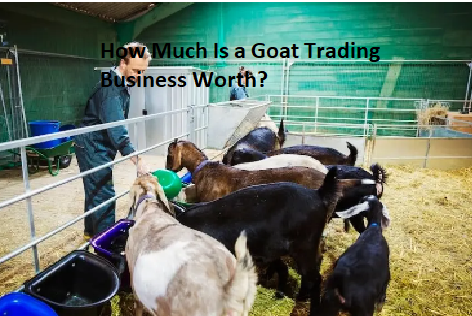
Engaging in a goat trading business requires a deep understanding of both agricultural livestock cycles and the shifting market demands for meat, dairy, and breeding stock. Whether you are operating as a small-scale broker or managing a larger regional supply chain, the profitability of this venture is heavily tied to your ability to manage inventory turnover and health costs.
By focusing on high-demand breeds and optimizing your logistics, you can establish a sustainable income stream in this niche agricultural sector. This article explores the economic realities, operational strategies, and financial benchmarks necessary for anyone looking to build a successful career in the livestock trade.
The financial viability of a goat trading business is primarily determined by the “spread” between your acquisition cost and the final sale price at auction or private treaty. On average, a successful trader can expect a net profit margin ranging from 15% to 25% per animal, provided that veterinary and feed overheads remain tightly controlled.
While a single goat might be purchased for $150 to $200 at a regional sale barn, the same animal, once conditioned and finished, can command $300 to $450 depending on the regional market demand. Profitability is not guaranteed, however, as it requires avoiding high mortality rates and minimizing the transit stress that can cause rapid weight loss and illness.
Understanding Market Dynamics
The livestock market operates on cycles that are often dictated by religious holidays, seasonal grazing availability, and regional consumer preferences. Traders who time their purchases to align with peak demand—such as the surge in meat goat pricing during Eid al-Adha—frequently see the highest returns on their capital.
You must monitor local auction reports to identify price discrepancies between different counties or states. Arbitrage remains the most effective strategy for those who lack the land to raise goats from birth, as it allows you to capitalize on the inefficiency of sellers who need to liquidate stock quickly.
Managing Operational Risks
Risk management is the defining characteristic of a professional trader in the livestock space. Diseases like caseous lymphadenitis or internal parasites can wipe out your entire profit margin if you do not implement a strict quarantine protocol upon receiving new stock.
Always budget for an initial veterinary assessment and a standard vaccination schedule before offering any animal for resale. Investing in proper transport trailers and secure holding pens prevents physical injury to the animals, which is a common but avoidable cause of financial loss.
Financial Performance Comparison
The following data provides a general comparison between different tiers of trading operations based on annual turnover and typical profit margins observed in the industry. These figures assume a standard mid-market environment and do not account for catastrophic health events or extreme fluctuations in grain prices.
| Operation Scale | Annual Volume (Heads) | Average Net Profit Margin |
|---|---|---|
| Small-Scale Broker | 50 – 150 | 12% – 15% |
| Mid-Market Trader | 500 – 1,200 | 18% – 22% |
| Regional Supply Chain | 2,500+ | 20% – 25% |
Essential Assets for Success
To scale your operations, you need more than just a truck and a trailer; you need a network of reliable producers and reputable buyers. Building these relationships takes time, but it reduces the need to rely solely on public auctions where prices are volatile.
Maintaining a digital ledger or a simple spreadsheet to track the purchase date, weight, cost basis, and sale price for every individual animal is critical for long-term viability. You should also consider the following essential assets that every professional trader should prioritize:
- Reliable, well-ventilated livestock trailer with non-slip flooring.
- Secure, isolated quarantine area for new arrivals to monitor health.
- Partnerships with local feed mills to secure bulk pricing on high-protein supplements.
- Verified contact list of ethnic markets and specialty butchers who pay premium prices for specific weights.
- Basic veterinary kit including thermometers, dewormers, and antiseptic supplies.
The Importance of Breed Selection
Not all goats are equal in the eyes of the market, and your choice of breed dictates your target buyer. Boer goats are widely considered the standard for meat production due to their rapid growth rates and heavy muscling. If you are targeting the dairy sector, breeds like Nubians or Alpines will be your primary focus, though they require a much higher level of daily care and infrastructure.
Understanding the specific carcass yield expectations of your customers ensures you are buying animals that meet their precise requirements. For more information on livestock management practices, consult the United States Department of Agriculture Agricultural Marketing Service for current market trends and standards.
Scaling Your Trading Volume
Scaling a goat trading business often involves moving from individual animal purchases to acquiring entire herds from farmers who are retiring or downsizing. This approach allows you to secure stock at “bulk” prices, which are significantly lower than individual auction prices.
However, this strategy requires significantly more capital and a larger infrastructure to house and manage the animals during the conditioning phase. You must also be prepared for the logistical challenge of transporting dozens of animals simultaneously, which necessitates a commercial-grade trailer and potentially a Class A or B driver’s license.
Regulatory and Legal Compliance
Operating a livestock business involves navigating a complex web of local, state, and federal regulations regarding animal movement and disease traceability. You are generally required to use scrapie tags, which are mandatory in many jurisdictions for identifying sheep and goats moving across state lines.
Failing to maintain proper documentation can lead to heavy fines and the potential seizure of your livestock. Keep digital and physical copies of all bills of sale, health certificates, and movement permits for at least five years, as these are often requested during routine inspections by state agricultural departments.
Strategic Pricing and Marketing
Pricing your animals effectively requires a deep understanding of the “price per pound” metrics that drive the industry. Never rely on “per head” pricing if you can avoid it, as this often leads to overpaying for underweight or unhealthy animals.
Always have a calibrated livestock scale on-site to verify weights before you finalize a deal with a seller. When marketing your stock, focus on the health history and the weight gain potential of the animals, as these are the two factors that matter most to repeat buyers who want to finish the goats for their own retail purposes.
Frequently Asked Questions
Is it possible to start a goat trading business with very little capital?
Starting with small capital is possible if you focus on the brokerage model, where you act as a middleman connecting local farmers to buyers without taking physical possession of the animals. This reduces your overhead significantly, as you do not need to pay for feed, housing, or veterinary care. However, your margins will be thinner, and you will rely entirely on your ability to negotiate a commission or a finder’s fee.
What is the most profitable age to trade goats?
The most profitable age is typically between 4 and 8 months, often referred to as “weanlings” or “kid meat” stock. At this stage, the animals are gaining weight rapidly and are highly sought after for the meat market, where tenderness is a primary consumer preference. Older animals are often harder to condition and may have higher health risks, which can quickly erode your profit margins.
How many goats do I need to make a full-time income?
A full-time income in this industry usually requires a throughput of at least 1,000 to 1,500 head per year, depending on your local market prices and your ability to keep overhead costs low. This volume allows you to absorb the occasional loss of an animal while maintaining a consistent cash flow. Most traders reach this level by diversifying their sourcing and building a consistent pipeline of repeat buyers.
Are there specific times of the year when trading slows down?
Trading volume often dips in the winter months when forage is scarce and the cost of supplemental hay increases significantly. This is the time when many producers look to offload stock to avoid high feed costs, which can be an excellent opportunity for a trader with access to affordable feed. Conversely, spring and summer are peak times for movement, as grazing conditions improve and demand for fresh meat increases.
Do I need a license to buy and sell goats?
Licensing requirements vary widely by state and municipality, so you must check with your local agricultural extension office. In many areas, you will need a livestock dealer’s license if you are buying and selling on a commercial scale, especially if you are crossing state lines. You may also need to register your premises with the state to obtain a unique identification number for disease tracking purposes.
Building a successful goat trading business is a process of refinement, where each transaction serves as a lesson in logistics, animal health, and market timing. By focusing on the fundamentals—buying at the right price, keeping your overhead low, and maintaining strict health standards—you can create a profitable enterprise that sustains itself over the long term. The key is to remain disciplined with your finances and never allow the excitement of a new deal to overshadow the cold, hard numbers of your profit margin.
As you develop your network and refine your processes, you will find that the consistency of your supply chain becomes your greatest asset. Start small, track your results diligently, and continue to adapt your strategy as you learn the unique patterns of your local livestock market.
