

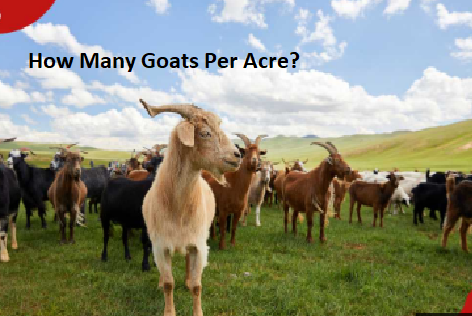
Determining how many goats per acre you can sustainably support requires a careful balance between your land’s forage production and the specific nutritional needs of your herd. Because soil quality, climate, and goat breed vary significantly, there is no single universal number for every farm. Most agricultural experts suggest a baseline of 6 to 10 goats per acre for managed rotational grazing, though this figure can fluctuate based on your goals.
Understanding these variables helps you avoid overgrazing, which degrades soil health and introduces parasite cycles that are difficult to manage. This information provides the foundational knowledge needed to plan your livestock density effectively and maintain a productive, healthy pasture environment.
When considering how many goats per acre you can host, the industry standard for a well-managed pasture is typically 6 to 8 mature goats per acre. If you are utilizing intensive rotational grazing, some producers push this number to 10 or 12 goats for short durations. However, these higher densities require supplemental feeding and strict movement schedules to protect the vegetation.
If your land is poor quality or lacks irrigation, you might only support 2 to 3 goats per acre without relying heavily on imported hay. Always prioritize the health of your forage over maximizing animal count, as bare soil leads to erosion and long-term land degradation.
Understanding Forage and Soil Productivity
The actual carrying capacity of your land is dictated by the amount of dry matter forage your soil produces annually. A healthy, well-managed pasture in a temperate climate can produce between 3,000 and 5,000 pounds of dry matter per acre each year. Goats typically consume about 3% to 4% of their body weight in dry matter daily.
If you have a 150-pound goat, it requires roughly 5 pounds of forage every single day. Over a year, that animal needs nearly 1,800 pounds of forage, which consumes a significant portion of your land’s total production.
Soil fertility acts as the engine for your pasture’s growth, directly impacting how many goats per acre your operation can sustain. Nitrogen, phosphorus, and potassium levels determine how quickly grass and browse recover after being grazed. You should conduct a soil test through a local university extension office to understand your nutrient profile.
Adding lime or organic compost can drastically increase your biomass yield, effectively allowing you to increase your stocking rate. Without testing, you are essentially guessing at your land’s potential and risking the health of both your animals and your soil.
The Impact of Goat Breed and Size
Not all goats exert the same pressure on your land, as body weight and metabolic rate vary by breed. A miniature breed, such as the Nigerian Dwarf, requires significantly less forage than a large commercial meat breed like the Kiko or Boer.
You can often keep 10 to 12 Nigerian Dwarf goats on the same acreage that would support only 4 or 5 full-sized Boer goats. When calculating your stocking density, always use the total biomass of your herd rather than just the number of heads.
Age and production status also play a critical role in your calculation of how many goats per acre are appropriate. A lactating doe has a much higher nutritional demand than a dry doe or a wether, meaning she will graze more aggressively. If your goal is meat production, you are managing growing kids that require high-protein forage for optimal weight gain.
You must factor in the “nursing unit,” which counts both the mother and her kids as a single grazing entity until weaning. Failing to account for the increased consumption of lactating animals often results in the unintended overgrazing of prime pasture areas.
Implementing Rotational Grazing Systems
Rotational grazing is the single most effective tool for increasing your stocking capacity while maintaining land health. By dividing your property into smaller paddocks, you allow the vegetation to rest and recover between grazing events.
Goats are naturally browsers that prefer shrubs and weeds over short grass, which makes them excellent for land clearing. If you leave them in one large field, they will selectively graze their favorite plants until they die, leaving behind only weeds or bare patches.
The strategy involves moving your herd every 1 to 3 days depending on the forage growth rate and the size of the paddock. This practice breaks the life cycle of internal parasites, which is a major concern for goat owners. Most parasites live in the bottom few inches of the plant, so moving animals before they graze too close to the ground reduces their exposure.
You can find detailed resources on managing these cycles through the USDA Natural Resources Conservation Service, which offers guidance on sustainable grazing plans. Rotational grazing doesn’t just protect the land; it ensures your animals get the highest quality nutrition throughout the season.
Seasonal Variations in Carrying Capacity
Your land’s ability to support goats changes drastically with the seasons, requiring a dynamic approach to stocking rates. In the spring, when forage growth is explosive, you may find your land can support more animals than the average yearly estimate.
Conversely, during the late summer heat or mid-winter, growth often stalls or stops entirely. You must prepare for these “lean” periods by either reducing your herd size or having a plan for supplemental hay.
Many producers choose to time their breeding cycles so that the highest nutritional demands align with the peak forage growth. If your does are kidding in the spring, the grass is naturally at its most nutritious, supporting milk production without the need for excessive grain. You should also consider the dormant season, where your pasture provides zero growth.
During these months, your land acts only as a space for the animals to live, and your carrying capacity effectively drops to zero regarding forage. Managing these fluctuations is the difference between a sustainable farm and one that requires constant expensive input.
Calculating Your Specific Stocking Rate
To determine exactly how many goats per acre you can handle, you must perform an audit of your available grazing space. First, exclude any areas that are not suitable for grazing, such as wooded ravines, rocky outcrops, or structures.
Measure the remaining usable acreage accurately using a GPS tool or a satellite mapping application. Once you have your total usable acreage, multiply it by your estimated forage production per acre.
Divide this total weight by the annual consumption needs of your specific breed. Keep in mind that you should never aim to consume 100% of your available forage, as the plants need leaves to photosynthesize and recover.
A safe rule of thumb is to manage for 50% utilization, leaving the other half of the forage to protect the soil and provide root energy. Use the following table as a general reference for varying land quality scenarios:
| Pasture Quality | Goats Per Acre (Estimate) | Management Intensity |
|---|---|---|
| Poor (Sandy, rocky, little rain) | 1-2 | Low |
| Average (Standard grazing) | 4-6 | Moderate |
| Excellent (Irrigated, fertilized) | 8-12 | High |
Managing Parasites Through Density Control
Internal parasites like Barber Pole Worms are the primary enemy of goat health and are directly linked to your stocking density. When you keep too many animals on a small piece of land, they inevitably ingest larvae from the manure they leave behind.
The higher the concentration of goats per acre, the faster the parasite load builds up in the soil. This creates a vicious cycle where goats become sick, lose weight, and require expensive chemical dewormers.
Over-reliance on chemical dewormers leads to resistance, making it impossible to treat your herd effectively. By keeping your stocking density conservative, you ensure that the animals are not forced to graze near the ground where larvae congregate. Combining lower density with frequent paddock rotations creates a “clean” environment where the grass stays tall and healthy.
Monitor your herd’s FAMACHA scores regularly to detect anemia early, as this is a direct indicator of parasite burden. A healthy, properly stocked pasture is your first and most effective line of defense against disease.
The Role of Browse vs. Grass
Goats are unique among livestock because they are browsers, not grazers, meaning they prefer leaves, twigs, and bark. If your property consists mostly of brush or overgrown thickets, you can support a higher number of goats than if your land is strictly pasture grass.
In a brushy environment, you might support 10 to 15 goats per acre initially as they clear the woody material. This “biological clearing” is a popular use for goats, but it is not a permanent stocking rate.
Once the brush is cleared, the land will revert to grass, and your carrying capacity will drop significantly. You must be prepared to transition your management strategy as the landscape changes under your herd’s influence. If you maintain the brush intentionally, you can keep a higher density, but you must ensure the goats have enough variety in their diet.
A diet consisting only of woody material can lead to nutritional deficiencies if not supplemented correctly. Watch their body condition score to ensure they are getting enough energy, regardless of how much brush they are removing.
Essential Infrastructure for Herd Management
Regardless of how many goats per acre you decide to keep, your infrastructure must be capable of supporting them. Fencing is the most significant investment, as goats are notorious for testing boundaries and escaping through small gaps.
Woven wire fencing at least 48 inches high is the standard for keeping predators out and goats in. You must also have a reliable water source that is accessible from every rotation paddock to avoid stressing the animals.
* Woven wire fencing: Essential for security and predator control.
* Portable electric netting: Useful for temporary paddock partitioning.
* Automated water troughs: Ensures constant access to fresh hydration.
* Portable shelters: Protects the herd from extreme weather and heat.
* Mineral feeders: Crucial for preventing trace mineral deficiencies.
If you cannot provide adequate shelter and water for every rotation area, your stocking density must be reduced. Animals that have to walk long distances to find water will drink less and lose weight, regardless of how much grass is available.
Infrastructure allows you to manage the movement of the herd, which is the key to maintaining your land. Always build your systems to be modular so you can expand or contract your fencing as your herd size fluctuates.
Frequently Asked Questions
How long does it take 10 goats to clear one acre of brush?
The time required depends entirely on the thickness of the vegetation. Generally, a group of 10 mature goats can clear an acre of moderate brush in about 7 to 10 days. If the brush is extremely dense or features large woody stems, it may take them two weeks or longer to work through the material.
Is there a difference in acreage needs for meat versus dairy goats?
Yes, dairy goats generally require a higher plane of nutrition to maintain milk production, meaning they need higher-quality forage or supplemental feed. While the physical space requirement per animal is similar, the “carrying capacity” of your land in terms of milk output is lower for dairy breeds. You may need to stock them at a lower density to ensure they have constant access to high-protein forage.
What happens if I exceed the recommended goats per acre?
Exceeding the carrying capacity leads to overgrazing, where the preferred plants are eaten down to the roots and eventually die. This leaves the soil exposed to erosion, reduces the overall forage production of the property, and forces the goats to eat near the ground, which drastically increases parasite exposure. Over time, your land will become less productive and you will spend more money on hay and medical care.
Can I keep goats on less than half an acre?
You can keep a small number of goats on a very small plot, but you must treat them as “dry-lot” animals rather than grazers. This means you will need to provide 100% of their nutrition via hay and grain, as the land will not provide enough biomass to sustain them. You must be prepared to clean the area frequently to manage manure and odors, as the lack of pasture means the waste won’t naturally break down into the soil.
How do I know if my land is overgrazed?
The most obvious sign is the presence of bare soil where grass should be, or a shift in plant species toward weeds that goats typically avoid. If you notice your goats are constantly losing weight despite having access to the pasture, or if you are needing to deworm them more frequently, your stocking density is likely too high. A healthy pasture should look lush and diverse; if it looks like a mowed lawn or a dirt lot, you have too many animals for the current forage growth rate.
Conclusion
Determining how many goats per acre your land can support is an ongoing process of observation and adjustment. Start with a conservative stocking rate of roughly 6 goats per acre and monitor the condition of your forage and your animals over the first year. If your pasture remains thick and your goats maintain a healthy body score without excessive supplementation, you may have room to increase your herd size.
Always prioritize the long-term health of your soil, as it is the most valuable asset in your livestock operation. By implementing rotational grazing and keeping a close eye on forage availability, you can create a sustainable system that provides for your goats and improves your land year after year. Feel free to evaluate your local extension office’s resources to refine your specific management plan.
