

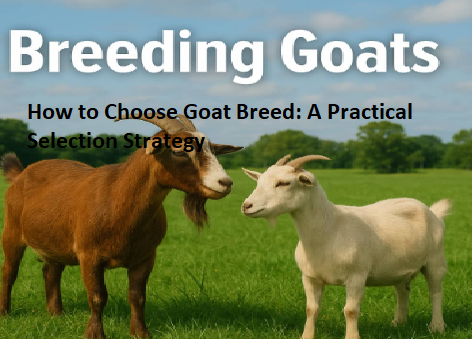
Successfully choosing a goat breed requires balancing your specific production goals with the environmental realities of your land. Whether you prioritize high-volume milk production, efficient meat conversion, or simply desire manageable companions for brush control, the right genetics will dictate your daily labor and long-term profitability.
By analyzing your local climate, available acreage, and management capacity, you can narrow down the vast array of available caprine genetics to find the animals that thrive in your specific conditions. This process involves evaluating trade-offs between yield, temperament, and maintenance requirements to ensure your herd remains a sustainable asset rather than a constant source of frustration.
Defining Your Primary Production Goals
The first step in determining which animal fits your farm is defining exactly what you want to produce. Most goat keepers focus on one of three pillars: dairy, meat, or fiber production. Dairy breeds like the Alpine or Saanen are metabolic engines designed to convert feed into high volumes of milk, but they require significant daily attention.
Meat breeds such as the Kiko or Boer are selected for rapid growth rates and muscular development, focusing on carcass quality rather than daily milking. If you attempt to raise a dairy-type goat for meat, you will likely be disappointed by their slow weight gain and lack of conformation.
Fiber goats, such as Angoras or Cashmeres, introduce a completely different set of management metrics. You aren’t just managing weight or milk volume; you are managing the quality, length, and cleanliness of the animal’s fleece. These breeds often require more intensive parasite management and shelter requirements to keep the fiber clean and free of vegetable matter.
Choosing a breed that doesn’t align with your primary output goals is the most common reason new owners struggle to maintain a profitable or sustainable herd. You must be honest about your time commitment before selecting a breed that demands specific outputs.
Climate and Regional Adaptability
Your local climate acts as a filter that eliminates certain breeds from consideration. A goat adapted to the arid, high-altitude regions of the Mediterranean will struggle significantly in a humid, parasite-heavy climate like the American Southeast.
Humidity increases the risk of barber pole worm infestations, meaning you need breeds with high natural resistance, such as the Kiko. Conversely, if you live in a region with long, harsh winters, you need a breed with a robust constitution and a thick coat.
Always consult local extension services to see which breeds are currently thriving in your immediate area. If you see a particular breed dominating the landscape in your county, there is a reason for it. These animals have likely been selected over generations to survive the specific stressors of your local environment.
Don’t be tempted to import a “perfect” breed from a different climate zone unless you are prepared to modify your housing and management to accommodate their specific weaknesses. Failure to adapt your breed choice to your local reality often results in high veterinary bills and poor animal performance.
Evaluating Temperament and Handling Requirements
Goats vary wildly in their personality, which directly impacts how much you enjoy working with them. Dairy goats are generally handled twice a day for milking, so they are typically bred to be docile and accustomed to human interaction.
Meat herds, which might only be gathered once or twice a year for health checks or transport, can be much more flighty and harder to manage. If you are a beginner, starting with a breed known for an inquisitive but calm temperament will save you hundreds of hours of frustration.
Consider how much time you have to invest in training and socialization. A bottle-raised kid will almost always be friendlier than a dam-raised kid, but the breed’s inherent temperament still plays a major role. Some breeds, like the Nigerian Dwarf, are popular in backyard settings because they are smaller and easier to physically control than a 200-pound Boer buck.
If you have children or limited physical strength, selecting a breed with a smaller stature is a practical safety decision. Never underestimate the physical toll of managing a herd that is difficult to lead or restrain.
Space and Acreage Considerations
The amount of land you have and the quality of your forage will dictate your stocking density and breed choice. A highly productive dairy goat requires high-quality pasture or significant supplemental feeding to maintain her body condition.
If your land is mostly rough, woody brush, you might look toward breeds like the Spanish goat or Kiko, which are known for their ability to browse effectively and thrive on marginal forage. These “easy-keeper” breeds are designed to survive on what other animals might consider poor-quality ground.
You should also look into the USDA Agricultural Research Service resources regarding sustainable grazing practices to understand how different breeds impact your land. High-intensity dairy breeds can quickly overgraze a small paddock, leading to erosion and parasite issues. Smaller breeds or those with lower metabolic demands can be easier to manage on limited acreage.
Before you purchase your first animal, calculate your forage availability during the leanest months of the year. If your land cannot support the nutritional needs of a high-production breed, you are setting yourself up for failure.
Understanding Maintenance and Veterinary Costs
Every breed comes with a different set of maintenance requirements, from hoof trimming frequency to parasite susceptibility. Breeds that have been “improved” for maximum production often have thinner immune systems and higher nutritional demands.
This means you will spend more on specialized feed, minerals, and veterinary interventions. In contrast, “landrace” or hardy heritage breeds often have stronger immune systems and require less human intervention to stay healthy.
You need to factor these hidden costs into your budget before you choose a breed. If a specific breed is famous for being a “show animal,” it may require extensive grooming and climate-controlled housing that a commercial meat goat would never need. Calculate the cost of feed, vaccines, and potential medical emergencies for each breed you are considering.
A breed that is cheap to buy but expensive to keep will cost you more over a five-year period than a more expensive, low-maintenance animal. Always prioritize long-term health and structural soundness over short-term visual appeal.
Comparison of Common Goat Categories
When deciding on the right animal for your operation, it helps to see how the primary categories stack up against one another. The following table provides a general overview of how these groups differ regarding their primary inputs and outputs.
| Breed Category | Primary Output | Management Intensity | Forage Efficiency |
|---|---|---|---|
| Dairy | Milk/Cheese | High | Low |
| Meat | Meat | Moderate | High |
| Fiber | Wool/Mohair | High | Medium |
| Miniature | Pets/Small Dairy | Low |
Key Selection Criteria for Beginners
If you are just starting your journey, the sheer number of choices can be overwhelming. To keep things simple, focus on breeds that have a reputation for being forgiving of beginner mistakes. You want an animal that is hardy, has a good maternal instinct, and is easy to find in your local area.
Access to a local breeder is vital because they can provide mentoring and support when problems arise. If you buy a rare, exotic breed that no one else in your area keeps, you will be on your own when it comes to finding a vet or sourcing specialized feed.
- Prioritize breeds with strong, proven maternal lines to reduce kid mortality.
- Choose animals that are already adapted to your local parasite load.
- Ensure you have a local source for breeding stock to avoid long-distance transport stress.
- Look for breeds that have a well-documented growth or production history.
- Select for structural soundness, such as good leg conformation, to reduce future lameness.
The Impact of Genetic Selection
Never settle for “barnyard crosses” if you have specific goals in mind. While mixed-breed goats can be healthy, they lack the predictability of registered, purebred animals. When you choose a specific breed, you are buying into decades of genetic selection for traits like milk fat content, carcass yield, or parasite resistance.
This predictability is what allows you to plan your business and manage your resources effectively. If you don’t know the genetic history of your animals, you are essentially guessing at their performance potential.
Always ask to see the performance records of the sire and dam before purchasing. If a breeder cannot tell you about the milk production of the mother or the growth rates of the father, look elsewhere. Reliable breeders keep detailed records that prove their animals perform as advertised.
Investing in high-quality genetics at the start is the most effective way to ensure your herd remains productive for years to come. Do not let a lower price tag on inferior stock distract you from the long-term value of a well-bred animal.
Frequently Asked Questions
Which breed of goat is best for beginners?
Most experts recommend starting with breeds like the Nigerian Dwarf for dairy or the Kiko for meat. These breeds are generally known for their hardiness and manageable temperaments, making them more forgiving for those learning the ropes of herd management.
How many goats should a beginner start with?
You should always start with at least two goats, as they are herd animals and suffer from severe stress when kept alone. Starting with two or three animals allows you to learn the basics of animal husbandry without being overwhelmed by the labor requirements of a large herd.
Which breed of goat is the friendliest?
While temperament varies by individual and upbringing, Nigerian Dwarf and Pygmy goats are frequently cited for their friendly, playful nature. However, a goat’s friendliness is more a result of how much time you spend socializing it than its specific breed.
How to determine goat breed?
You determine a goat’s breed by its physical conformation, registration papers, and history. If you are buying an animal, always request documentation from a recognized breed association to verify its lineage and purity.
Conclusion
Choosing the right animal is the foundation of a successful farming venture. By focusing on your specific goals, understanding your local environment, and selecting hardy genetics, you set yourself up for long-term success. Remember that your management style must align with the needs of the breed you select to ensure both animal welfare and your own satisfaction.
Take the time to visit local farms and observe the animals in their day-to-day environment before making a final commitment. With careful planning and a clear focus on the practical requirements of the job, choosing a goat breed becomes a manageable and rewarding process. Start small, learn from local experts, and build your herd on a solid genetic foundation.
