

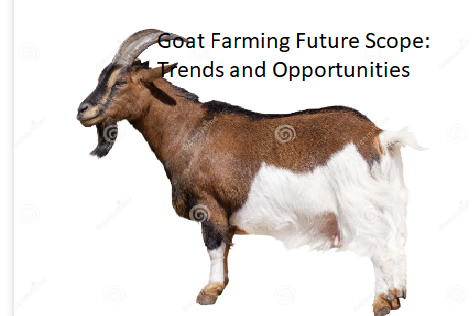
Understanding the goat farming future scope requires looking at shifting consumer dietary habits and the increasing demand for sustainable protein sources. As global populations rise, the livestock industry faces immense pressure to produce food with a smaller environmental footprint. Goats offer a unique solution because they are efficient converters of low-quality forage into high-quality meat and milk.
This article provides a realistic outlook on how the industry is evolving to meet these modern challenges. You will learn about the economic potential, necessary infrastructure, and the specific market segments driving growth in the coming decade.
Current Market Demand and Profitability
The economic viability of small-scale livestock production is currently at an all-time high due to the rising cost of traditional beef and pork. Goats provide a lean, healthy red meat alternative that aligns with modern nutritional preferences for low-fat protein.
In many regions, the demand for goat meat, often referred to as chevon, consistently outstrips local supply. This supply-gap creates a reliable price floor for farmers who can maintain consistent production cycles.
Profitability in this sector relies heavily on understanding seasonal demand spikes. Religious holidays and cultural celebrations create predictable surges in market prices that smart producers leverage for maximum revenue. By timing kidding seasons to coincide with these high-demand windows, farmers can command premium prices at the sale barn. Net profit margins often range from 15% to 25% for well-managed operations that minimize feed costs through effective pasture rotation.
Land Requirements and Herd Scaling
A common misconception is that massive tracts of land are required to sustain a profitable operation. In reality, the goat farming future scope leans toward intensive, managed grazing systems that maximize the output of smaller acreages.
Goats are browsers, not grazers, meaning they thrive on brush and weeds that cattle often ignore. This dietary habit makes them excellent tools for land management and fire prevention in semi-arid environments.
When considering herd size, the rule of thumb is that one acre of well-managed, improved pasture can support between 6 to 10 adult goats. If you are operating on unimproved or brush-heavy land, this carrying capacity decreases significantly.
Intensive rotational grazing allows farmers to move herds frequently, preventing overgrazing and parasite buildup. This method also improves soil health by ensuring manure is distributed evenly across the landscape rather than concentrated in one area.
| Herd Size | Estimated Land Needed (Acres) | Primary Input Cost |
|---|---|---|
| 20 Goats | 2 – 4 Acres | Supplementary Hay |
| 100 Goats | 10 – 20 Acres | Fencing & Infrastructure |
| 500 Goats | 60 – 100 Acres | Labor & Veterinary |
Technological Integration in Livestock Management
Modern agriculture is moving away from manual record-keeping toward data-driven decision-making. Future-focused goat operations are increasingly using RFID ear tags to track individual growth rates and health histories.
These digital records allow farmers to identify their most productive does and cull underperforming animals quickly. Efficiency is the primary driver of success in a competitive market.
Automated feeding and watering systems are also becoming standard for mid-to-large scale farms. These systems reduce labor costs and ensure that the herd receives consistent nutrition regardless of the farmer’s daily schedule.
For more insights on sustainable livestock practices, the Food and Agriculture Organization of the United Nations provides extensive research on global animal husbandry standards. Utilizing such resources helps farmers align their operations with international best practices.
Diversification of Income Streams
Relying solely on meat production limits the financial potential of any goat farm. The most successful operations diversify their revenue by tapping into the dairy, fiber, and byproduct markets.
Goat milk is increasingly popular among consumers with lactose sensitivity, and its production can be more profitable than meat alone. High-quality milk can be processed into specialty cheeses, soaps, and lotions to capture higher margins.
Fiber production, particularly from breeds like the Angora, offers another layer of financial stability. While the market for mohair fluctuates, it provides a secondary income source that does not require additional livestock. Some farmers also earn revenue through:
-
- Land clearing services for commercial or residential property owners.
-
- Selling high-quality manure as organic fertilizer to local gardeners.
-
- Offering educational tours or “goat yoga” sessions to diversify cash flow.
-
- Selling breeding stock to hobbyists and new farmers entering the industry.
Health Management and Mortality Reduction
Parasite control remains the single largest hurdle for goat farmers worldwide. Because goats are highly susceptible to internal parasites, future success depends on implementing integrated pest management strategies.
Relying exclusively on chemical dewormers is no longer effective due to increasing drug resistance. Farmers must adopt rotational grazing and nutritional management to keep parasite loads at manageable levels.
Preventative veterinary care is the most cost-effective way to protect your investment. Regular vaccination schedules for diseases like enterotoxemia and tetanus are essential for maintaining herd health.
A sick animal is not just a loss of capital; it represents a disruption in the production cycle. By maintaining a clean, dry environment with proper ventilation, farmers can prevent respiratory issues that often plague confined herds.
Infrastructure and Fencing Requirements
Goats are notoriously difficult to contain, and high-quality fencing is the most significant upfront investment for any new farm. Woven wire fencing, often called “no-climb” fencing, is the industry standard for preventing both escapes and predator entry.
Electric fencing can be used as a cost-effective supplement to internal cross-fencing. It teaches the animals to respect boundaries and allows for rapid changes in pasture layout.
Shelter design is equally important to the long-term viability of the herd. Goats dislike rain and wind, and exposure to cold, damp conditions can lead to pneumonia and other health complications.
A simple, three-sided shed oriented away from the prevailing wind is often sufficient. Ensuring this shelter remains dry and provides enough space for every animal to lie down simultaneously prevents overcrowding stress.
Marketing and Direct-to-Consumer Sales
The gap between the farm gate price and the retail price is where the most significant profit potential lies. Direct-to-consumer sales allow farmers to capture the entire value of their product rather than splitting it with wholesalers.
Farmers markets, social media platforms, and online subscription boxes are effective ways to reach local customers. Building a brand based on transparency and animal welfare can justify higher price points.
Processing is the main bottleneck for direct sales in many regions. Finding a local, USDA-inspected facility that handles goats is essential for selling individual cuts of meat.
If no local facility exists, many farmers explore on-farm slaughter regulations or focus on live animal sales for religious or ethnic markets. Understanding the local regulatory environment is a critical step before investing in production infrastructure.
Economic Risks and Mitigation Strategies
Every agricultural venture carries inherent risks that can impact the goat farming future scope. Feed prices, drought, and fluctuating market demand can all threaten the bottom line of an operation.
Diversifying the farm’s geographic reach or product offerings acts as a hedge against these localized risks. Maintaining a cash reserve that can cover at least six months of operational costs is a standard best practice for long-term survival.
Insurance for livestock is often overlooked but provides a necessary safety net for catastrophic losses. While premiums can be high, they protect against events like predator attacks or disease outbreaks that could wipe out a herd.
Developing a strong relationship with a local veterinarian who specializes in small ruminants is also a vital risk mitigation strategy. They can provide guidance on disease prevention and offer emergency support when problems arise.
Frequently Asked Questions
Is goat farming profitable for beginners?
It can be highly profitable if the beginner starts small and focuses on learning the nuances of health management. Most beginners fail by over-investing in equipment before they have a firm grasp of the herd’s needs. Start with a small, manageable group to understand the daily labor requirements and market cycles.
How much space do I really need for a herd?
The amount of space depends entirely on the quality of your forage and your management style. In an intensive, rotational grazing system, you can support a surprising number of animals on a small plot of land. If you rely on hay and supplemental feed, the land requirement is even lower, but your operating costs will increase significantly.
What is the biggest challenge in raising goats?
Parasite management is widely considered the most difficult aspect of the business. Because goats are browsers, they are naturally adapted to eating higher off the ground, but they often graze shorter grass where parasite larvae thrive. Consistent monitoring and rotational grazing are the only ways to stay ahead of this challenge.
Can you make a full-time living from goat farming?
Yes, but it typically requires scaling to a commercial size and diversifying revenue streams. A farm that only sells meat will have a much harder time generating a full-time income than one that sells dairy products, fiber, and breeding stock. Most successful full-time farmers operate a vertically integrated business model.
How long does it take for a goat to reach market weight?
Most meat breeds reach a marketable weight between 6 and 9 months of age, depending on their diet and genetics. Some high-growth breeds can finish faster with intensive feeding, but this increases your input costs. Monitoring the weight gain of your animals is essential for determining when they are ready for the market.
The future of this industry is bright for those who prioritize efficiency, health, and direct market access. As consumers continue to seek out sustainable and healthy protein sources, the demand for goat products will likely see steady growth. Success requires a commitment to learning the specific biological needs of your herd and a willingness to adapt to changing market conditions.
By focusing on high-quality production and building strong local relationships, you can establish a resilient business that thrives in the years ahead. The goat farming future scope is defined by those who treat their animals as a serious investment rather than a hobby, ensuring long-term profitability and environmental stewardship. Start by researching your local market needs today to find your specific niche within this growing sector.
