

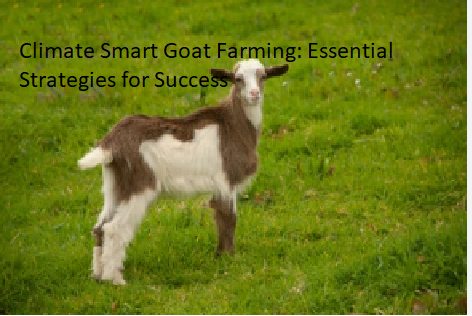
Adopting climate smart goat farming is becoming a critical necessity for producers facing increasingly volatile weather patterns and shifting environmental conditions. By integrating sustainable land management with resilient livestock breeds, farmers can protect their livelihoods while reducing their ecological footprint. You will find that this approach focuses on maximizing resource efficiency, improving soil health, and ensuring long-term herd productivity despite external pressures.
Implementing these specific techniques allows for more predictable yields and greater financial stability in an unpredictable climate. This article explores the core methodologies and practical steps required to build a resilient, high-performing goat operation that thrives under modern environmental constraints.
Core Principles of Resilient Livestock Management
Climate smart goat farming hinges on the ability to maintain animal health while minimizing external inputs. A primary strategy involves matching goat breeds to the specific environmental stressors of a region.
For instance, hardy indigenous breeds often display superior resistance to local parasites and heat stress compared to imported high-production breeds. By selecting animals that have evolved to tolerate local temperature fluctuations, you significantly reduce the need for expensive veterinary interventions and climate-controlled housing.
Another foundational element is the optimization of dietary intake through rotational grazing. Moving goats between small paddocks prevents overgrazing, which is a major contributor to soil erosion and degradation.
When goats consume high-quality forage in controlled bursts, their metabolic efficiency increases, leading to better weight gain and milk production. This method also allows pastures to recover more quickly, sequestering more carbon in the soil and improving water retention across the farm.
Managing Land and Water Resources
Effective water management is the backbone of any sustainable agricultural system. In regions prone to drought, building small-scale rainwater harvesting systems or farm ponds can provide a buffer during dry months.
These structures capture runoff during intense rainfall events, which would otherwise lead to topsoil loss and nutrient depletion. Storing this water directly on the land reduces the reliance on municipal supplies or deep well pumping, lowering both operational costs and the carbon footprint of your daily activities.
Soil health serves as your most valuable asset when managing a herd. Incorporating legumes like clover or alfalfa into pastures fixes nitrogen naturally, reducing the need for chemical fertilizers.
You should also monitor the soil’s organic matter content, as higher levels increase the ground’s ability to hold moisture during heatwaves. Practices such as minimal tillage and the use of cover crops ensure that the land remains productive even when rainfall is erratic.
Economic Impacts and Production Metrics
The financial viability of your operation depends on balancing input costs with market output. Climate smart goat farming often requires higher upfront labor for infrastructure, but it typically results in lower long-term expenditures on feed supplements and medications.
By focusing on forage-based diets, producers can save between 20% and 35% on annual feed costs, which are usually the largest expense in any goat enterprise. This shift toward self-sufficiency creates a buffer against the volatile prices of commercial grains and hay.
| Operational Factor | Conventional Method | Climate Smart Method |
|---|---|---|
| Feed Source | High reliance on grain/hay | Managed rotational grazing |
| Water Security | Municipal/Grid-dependent | Harvested rainwater/Ponds |
| Breed Selection | High-production/Sensitive | Resilient/Local adapted |
| Soil Maintenance | Chemical fertilizers | Legume intercropping/Compost |
Optimizing Herd Health and Breeding
Maintaining a healthy herd in a changing climate requires a shift toward preventative care. You should focus on breeding programs that prioritize longevity, fertility, and disease resistance rather than just maximum output.
For example, selecting for “parasite tolerance” can drastically reduce the frequency of anthelmintic use, which helps prevent the development of drug-resistant parasite strains. This natural approach to health management ensures that your animals remain robust even when external environmental conditions are less than ideal.
Nutrition also plays a critical role in immune function. Providing mineral-rich forage through a diverse plant landscape ensures that goats receive a broad spectrum of micronutrients.
This diversity acts as a natural insurance policy against crop failures, as some plants will thrive in dry years while others flourish in wetter ones. By managing the diet holistically, you keep the animals in a state of consistent health, which translates to fewer losses and higher reproductive success rates over the long term.
Infrastructure for Changing Conditions
The physical layout of your farm should be designed to mitigate the effects of extreme weather. Providing adequate shade through natural tree lines or lightweight, reflective structures can prevent heat stress in your herd.
During peak summer months, heat stress can reduce milk production by up to 15% and lower fertility rates, making shade a direct investment in your bottom line. Ensure that your barn ventilation is adjustable, allowing you to maximize airflow during hot days while maintaining warmth during unexpected cold snaps.
Fencing is another critical piece of infrastructure that supports sustainable management. Portable electric fencing is essential for implementing the rotational grazing patterns that protect your soil and forage.
These systems are easy to move, allowing you to react quickly to changing growth rates in your pastures. Investing in reliable, solar-powered energizers ensures that your fencing remains functional even if your farm loses grid power during severe storms or regional outages.
Key Components of a Sustainable Operation
To succeed in this niche, you must integrate several distinct, functional elements that work in tandem. Each component should serve multiple purposes, such as a windbreak that also provides fodder or a pond that supports both hydration and biodiversity. Building this type of system requires careful planning but pays dividends by creating a farm that is more than the sum of its parts.
- Rotational grazing schedules that prevent pasture degradation.
- Water catchment systems sized for projected rainfall totals.
- Native breed selection for superior local adaptation.
- Integrated pest management to reduce chemical reliance.
- Composting manure to restore soil organic matter.
- Strategic planting of drought-tolerant forage species.
Addressing Nutritional Challenges
Feed security is the most significant hurdle for many producers. You can mitigate this by stockpiling forage during the peak growing season to use during the lean months.
Techniques such as “standing hay,” where forage is allowed to mature and dry in the field, can provide a low-cost winter feed source that also protects the soil from winter erosion. This strategy reduces the need to harvest, bale, and store hay, which are labor-intensive and energy-consuming processes.
You should also explore the use of browse species like shrubs and trees, which often have deeper root systems than grasses. These plants remain green and nutritious long after the grasses have gone dormant or withered under the sun.
Providing access to diverse vegetation not only improves the nutritional profile of the goat’s diet but also helps manage the farm’s overall water cycle. Deep-rooted plants improve soil structure, allowing for better water infiltration and less runoff during heavy downpours.
Technological Tools and Monitoring
Modern data collection allows for precise management that was previously impossible. Using simple tools like forage sticks to measure pasture height helps you decide exactly when to move your herd.
Keeping detailed records of breeding cycles and health events will help you identify which animals are truly thriving in your specific environment. You can find detailed resources on best practices through the Food and Agriculture Organization of the United Nations, which provides extensive documentation on sustainable livestock systems.
Digital scales and basic herd management software can track weight gain trends, allowing you to catch health issues before they become crises. Even a simple spreadsheet can help you correlate rainfall patterns with your pasture productivity, giving you the information needed to adjust your stocking rates accordingly.
By quantifying your results, you move from reactive farming to proactive stewardship. This shift is the hallmark of a resilient, modern operation that is prepared for the future.
Frequently Asked Questions
How many acres do I need to support a herd?
The amount of land required depends entirely on the forage productivity of your soil and the type of management you employ. In a well-managed rotational grazing system, you might support between 5 and 10 goats per acre, whereas set-stocking might only allow for 1 or 2 goats per acre. You should conduct a forage audit to determine the specific carrying capacity of your land based on its current health and local rainfall averages.
Which goat breeds are most resistant to climate change?
Generally, local or “landrace” breeds that have been raised in your specific region for generations are the most resilient. These animals have adapted to the local parasite load, temperature ranges, and forage availability, meaning they require fewer inputs. For example, Kiko goats are often noted for their hardiness and parasite resistance, but you should always prioritize animals that have already proven they can thrive in your specific climate.
How can I improve soil health on a goat farm?
Focus on increasing the organic matter in your soil by using rotational grazing to ensure rest periods for your pastures. Integrating manure management, such as composting and spreading, adds essential nutrients back into the soil cycle. Planting deep-rooted legumes and native grasses will also improve soil structure and water retention, which are vital for maintaining productivity in the face of climate variability.
Is it more profitable to raise dairy or meat goats?
Profitability is not tied solely to the product type but rather to your management efficiency and market access. Meat goats often have lower infrastructure requirements and lower daily labor demands, making them easier to manage in a low-input, climate-smart system. Dairy goats can offer higher profit margins per animal, but they require a much higher level of daily input, specialized infrastructure, and consistent market access to remain viable.
What is the biggest risk in climate-smart farming?
The biggest risk is failing to plan for extreme weather events, such as prolonged droughts or unseasonable flooding. You must build enough redundancy into your system—such as water storage, emergency feed supplies, and resilient shelter—to survive these events without liquidating your herd. By treating your farm as an ecosystem rather than a factory, you can create the buffers necessary to withstand these inevitable environmental shocks.
Building a Sustainable Future
Investing in climate smart goat farming is an ongoing process of observation, adjustment, and improvement. You are not just raising livestock; you are managing a living landscape that must be resilient enough to handle the challenges of tomorrow.
By focusing on soil health, water conservation, and animal adaptability, you create an operation that can remain profitable regardless of the weather. Start small by implementing one or two of these strategies, such as rotational grazing or water harvesting, and monitor the results over a full season.
Your ability to adapt to changing conditions will determine the long-term success of your agricultural enterprise. Stay observant of your land and your animals, as they will often signal what is working and what needs to change.
Engaging with local agricultural extension offices or farmer networks can provide the community support and localized knowledge needed to refine your approach. By committing to these sustainable practices, you ensure that your farm remains a productive and viable resource for years to come.
