

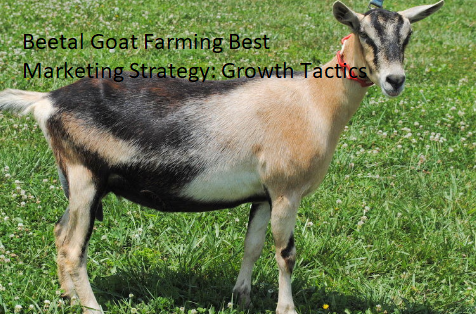
Implementing a successful beetal goat farming best marketing strategy requires a deep understanding of your specific market niche and the unique physiological advantages of the Beetal breed. Beetal goats are highly valued for their high milk yield and rapid weight gain, making them a premium commodity in both dairy and meat sectors.
By focusing on direct-to-consumer sales, local butcher partnerships, and digital branding, you can shift from generic livestock trading to building a high-margin agricultural business. This approach allows you to capture more value from each animal while establishing a reputation for quality that sustains long-term growth.
The primary answer to achieving profitability in this sector lies in aggressive vertical integration and localized branding. Instead of relying on traditional middlemen who often absorb up to 40% of the profit margin, you must establish direct channels to end-users.
A beetal goat farming best marketing strategy prioritizes selling high-quality breeding stock to other farmers while simultaneously supplying premium meat cuts to high-end restaurants or households. By positioning your farm as a source of high-genetic-merit animals, you command a price premium that exceeds standard market weight rates by 20% to 50%.
Identifying Your Core Revenue Streams
Your financial success depends on diversifying the products that leave your farm gate. While many farmers focus solely on selling live animals for meat, a truly effective model extracts value from every asset the animal provides. This means you should treat your operation as a multi-product business rather than a single-commodity venture.
Primary Income Sources for Beetal Farmers
- Sales of high-pedigree breeding bucks to local farmers for flock improvement.
- Supply of high-quality milk to local artisanal cheese makers or health-conscious consumers.
- Direct-to-consumer meat sales during festivals and holidays when demand peaks.
- Sale of high-quality manure as an organic fertilizer for local horticultural farms.
- Training and consultancy services for aspiring goat farmers in your region.
Focusing on these diverse streams reduces the risk of market volatility. When meat prices drop, your income from milk or breeding stock sales can provide a necessary buffer. This stability is the hallmark of a professional-grade operation that can survive seasonal fluctuations.
Establishing a Professional Brand Presence
Marketing in the agricultural sector has shifted from physical livestock markets to digital visibility. Even if your farm is remote, your brand must be accessible to potential buyers through mobile platforms. You should maintain a consistent presence on social media that showcases the health, size, and temperament of your Beetal herd.
Use high-resolution photos and short video clips to document the growth stages of your goats. Potential buyers, especially those looking for breeding stock, want to see clear evidence of your management practices and the genetic quality of your animals. When you share evidence of your day-to-day operations, you build trust with customers who are often wary of inconsistent quality in the open market.
Leveraging Direct-to-Consumer Channels
Traditional livestock markets are often race-to-the-bottom environments where price is the only variable. To avoid this, you must build a private database of regular customers who value the traceability and quality of your goats. By selling directly to households, you eliminate the commission fees that middlemen charge.
Create a seasonal calendar that tracks key events like Eid-ul-Adha or other regional festivals. Start your marketing efforts at least three months in advance by reaching out to your existing client list. Offering pre-orders at a slight discount secures your cash flow early and guarantees that you have buyers for your stock before they reach peak market weight.
Analyzing Market Price Variations
Understanding the pricing structure of the goat market is essential for timing your sales. Prices for Beetal goats fluctuate significantly based on age, weight, and pedigree status. You must track these trends to decide whether to sell at a younger age or hold the animal for a higher-weight premium.
Estimated Price Comparison by Market Segment
| Market Segment | Typical Price Premium | Primary Buying Driver |
|---|---|---|
| Standard Meat Market | Baseline Price | Live weight |
| Breeding Stock | 30% – 60% Above Base | Genetic pedigree |
| Festival/Holiday Demand | 20% – 40% Above Base | Timing and availability |
| Artisanal Dairy | 15% – 25% Above Base | Milk quality/fat content |
Keep detailed records of your production costs for every animal. If your feed and care expenses exceed the market price for meat, you must shift your focus toward higher-value segments like breeding or specialized dairy. Never assume that selling to the local market is your most profitable option without calculating your overhead.
The Importance of Genetic Documentation
For Beetal goat farming, the best marketing strategy involves selling the “story” and the lineage of your animals. Buyers willing to pay a premium for breeding stock require proof of performance. You should maintain a comprehensive record-keeping system for every goat on your farm to provide this data.
Document the birth weight, weaning weight, and health history of every kid. If you can provide a potential buyer with a health certificate and a growth chart, you transform from a casual seller into a professional breeder. This level of transparency allows you to charge significantly more than the average farmer who lacks these records.
Strategic Partnerships with Local Businesses
Your farm should function as an anchor for other local businesses. Partnering with local butchers, chefs, and organic food stores can create a steady demand for your produce. These partners are often looking for a reliable, year-round supply of high-quality meat or milk.
Approach high-end restaurants that prioritize farm-to-table sourcing. Explain the superior taste profile of Beetal meat and offer to provide a consistent supply.
When a restaurant puts your farm’s name on their menu, you gain free marketing to their affluent customer base. This type of partnership is far more valuable than a one-off sale at a crowded livestock market.
Utilizing Digital Tools for Farm Management
Modern agriculture relies on data to optimize profit margins. You should use simple software or even detailed spreadsheets to track your feed conversion ratios. If you know exactly how much it costs to put one kilogram of weight on a Beetal goat, you can calculate the exact point where selling becomes most profitable.
The Food and Agriculture Organization of the United Nations provides extensive resources on global livestock best practices that can help you refine your production standards. Aligning your farm with international benchmarks enhances your reputation when marketing to commercial buyers. Use these standards to justify your premium pricing to clients who demand quality assurance.
Scaling Through Specialized Breeding
As your reputation grows, focus your marketing on the most desirable traits of the Beetal breed. High milk yield and fast growth are your strongest selling points. By selectively breeding for these traits, you create a product that is inherently more valuable than the average herd in your region.
Advertise your farm as a center for genetic excellence. When you have a high-performing buck or doe, use that animal as the face of your marketing materials. Potential buyers are drawn to visible proof of success, and a well-conditioned, high-pedigree animal is the best advertisement for your farming techniques.
Frequently Asked Questions
What is the most effective way to reach buyers for breeding stock?
The most effective way is to maintain a digital portfolio of your herd’s performance data. When you share clear, documented evidence of growth rates and milk production on social media or dedicated agriculture forums, you attract serious buyers who are willing to pay for quality.
How do I set my prices for Beetal goats?
You should calculate your total production cost per animal, including feed, labor, and veterinary expenses. Once you have a base cost, add a margin based on the market segment you are targeting, such as breeding, meat, or specialized dairy, and adjust based on the animal’s pedigree.
Is it better to sell at live markets or directly to customers?
Direct-to-customer sales are almost always more profitable because they eliminate middlemen who take a percentage of your revenue. While live markets offer quick liquidity, direct sales allow you to capture the full retail value of your high-quality Beetal stock.
What role does seasonal demand play in my marketing?
Seasonal demand, particularly around religious holidays and festivals, is a critical factor for price spikes. You should align your breeding cycles so that your animals reach their prime weight exactly when market demand—and thus, the price—is at its highest point of the year.
How do I build trust with new customers?
Trust is built through transparency and consistency. Providing health records, vaccination histories, and clear photographs of your farm facilities will help potential buyers feel confident in the quality of your stock before they even visit your property.
Strategic Outlook for Long-Term Success
Developing a beetal goat farming best marketing strategy is a continuous process of refinement and relationship building. You must constantly analyze your sales data to identify which segments offer the highest margins and pivot your production accordingly.
Whether you are focusing on the premium breeding market or the high-end culinary sector, your competitive advantage will always be the quality of your animals and the transparency of your records. By moving away from commodity-based selling and into value-added marketing, you secure a sustainable future for your farm.
The most successful farmers are those who treat their operation as a professional enterprise. Stay informed on industry trends, keep your records immaculate, and never stop looking for new, direct channels to reach your target audience.
As you build your reputation, your marketing efforts will become more efficient, allowing you to focus on the core task of raising superior Beetal goats. Start by implementing one direct-to-consumer channel this season and observe how your profit margins respond to the change.
