

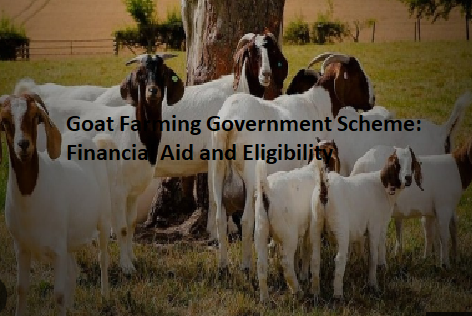
Securing a goat farming government scheme can significantly reduce the initial capital burden required to establish a commercial livestock operation. These programs typically function by providing direct subsidies, low-interest credit facilities, or infrastructure support to farmers looking to scale their production.
Understanding the specific requirements and financial thresholds is essential for anyone aiming to transition from subsistence farming to a professional commercial enterprise. By aligning your business plan with official guidelines, you can access the necessary funding to purchase quality breeds and improve your facility’s infrastructure.
Financial Support and Subsidy Breakdown
The primary financial benefit of a typical goat farming government scheme is a capital subsidy, which often covers between 25% and 50% of the total project cost. In many regions, the National Livestock Mission (NLM) acts as the central pillar for these grants, specifically targeting entrepreneurs who manage medium to large-scale herds. For a project involving 100 goats, the government might provide a back-ended subsidy that is credited to your bank account only after the successful implementation and verification of the farm. This ensures that the funds are used for their intended purpose, such as constructing sheds or purchasing breeding stock. You must maintain a detailed ledger of all expenditures to qualify for these disbursements.
Eligibility Criteria and Land Requirements
To participate in most government-backed initiatives, you must prove that you have a viable business model and sufficient land to accommodate your livestock. While the specific land requirement varies by region, a standard rule of thumb is that 100 goats require approximately 0.5 to 1 acre of land for shed construction and grazing space. You will need to provide proof of land ownership or a long-term lease agreement to be considered for any grant. Furthermore, applicants are often required to undergo basic training in animal husbandry conducted by state-run agricultural extension centers. This training ensures that you possess the technical knowledge to manage herd health and nutrition effectively.
Application Process and Documentation
Applying for financial assistance requires a systematic approach to documentation and filing. You should start by visiting the official National Livestock Mission portal to understand the current windows for application in your specific state. Once you identify the correct scheme, you must prepare a comprehensive project report that includes your total budget, expected herd size, and projected annual revenue. Banks often require this document to process the loan component of your funding package. Ensure all your identification documents, such as tax certificates and land deeds, are verified and up to date before submitting your application through the designated online portal.
Financial Comparison of Herd Sizes
The scale of your operation directly influences the amount of subsidy you can receive under various government programs. Smaller operations might qualify for local state-level grants, whereas larger commercial ventures are better suited for national-level funding. The following table illustrates the typical subsidy structure based on standard herd sizes found in modern agricultural initiatives.
| Herd Size | Estimated Project Cost | Subsidy Percentage | Capital Support |
|---|---|---|---|
| 20 Goats | $4,000 | 25% | $1,000 |
| 50 Goats | $10,000 | 33% | $3,300 |
| 100 Goats | $20,000 | 50% | $10,000 |
Infrastructure and Breed Selection Guidelines
Government schemes often mandate that you invest in specific types of infrastructure to ensure animal welfare and productivity. This includes the construction of elevated sheds, which help prevent hoof-related diseases and allow for better waste management. When selecting breeds, the government usually encourages the purchase of high-yield varieties that are adapted to the local climate. You may be required to buy your initial breeding stock from government-approved farms or certified breeders to ensure genetic quality. Documenting the purchase of these animals is crucial, as you will need invoices for the subsidy claim process.
Revenue Generation and Business Sustainability
Running a profitable goat farm involves more than just receiving a grant; it requires a diversified income strategy. Successful farmers often supplement their income through the sale of meat, milk, manure, and breeding stock. Manure, in particular, is a high-demand commodity among organic farmers and can provide a steady secondary income stream. By integrating these revenue sources, you reduce your reliance on a single market and improve the overall sustainability of your enterprise. Government programs often prioritize applicants who demonstrate this kind of diversified business thinking in their project proposals.
Key Milestones for New Farmers
Successfully managing a project under a government scheme requires hitting specific operational targets. These milestones are often used by auditors to determine if your farm remains eligible for continued support or tax benefits.
- Phase 1: Land preparation and shed construction according to state specifications.
- Phase 2: Procurement of initial breeding stock from certified government sources.
- Phase 3: Implementation of a standardized vaccination and health monitoring calendar.
- Phase 4: Setup of a digital record-keeping system for daily feed and medical expenses.
- Phase 5: Marketing and sales coordination with local cooperatives or meat processors.
Long-term Financial Monitoring
Once your farm is operational, you must continue to provide periodic progress reports to the funding agency. These reports typically include mortality rates, weight gain statistics for your herd, and total sales volume. Maintaining transparency with your bank and the agricultural department is the best way to secure future funding for expansion. If you demonstrate consistent growth, you may become eligible for additional low-interest loans for infrastructure upgrades, such as automated milking machines or advanced feed processing equipment. Staying proactive about these updates prevents administrative hurdles that could otherwise delay the release of your subsidy funds.
Frequently Asked Questions
What is the minimum land requirement for a 100-goat farm?
Most state guidelines recommend a minimum of 0.5 to 1 acre of land for a 100-goat herd. This space must account for both the covered shed area and an attached yard for exercise and grazing.
Can I apply for a subsidy if I have a small herd?
Yes, many programs offer support for smaller herds, typically starting at 10 or 20 goats. However, the percentage of the subsidy may be lower compared to larger commercial-scale projects.
How long does the approval process take?
The timeline varies by region, but it typically takes between three to six months from the initial application to the final approval. You must ensure all your documentation is complete to avoid unnecessary delays.
Do these schemes cover the cost of feed?
Generally, the subsidy is intended for capital expenditures such as shed construction and the purchase of breeding stock. Recurring costs like feed and medicine are usually expected to be covered by your operational budget.
Are there tax benefits for goat farming?
In many jurisdictions, agricultural income is treated differently than standard business income and may be exempt from certain taxes. You should consult with a local accountant to understand the specific tax laws applicable to livestock farming in your area.
Conclusion
The right goat farming government scheme can provide the financial foundation necessary for a successful and scalable agricultural business. By carefully following the application procedures and maintaining clear records, you can leverage these subsidies to purchase better stock and build superior infrastructure. Focus on building a sustainable operation that diversifies its revenue streams beyond simple meat sales. If you are prepared to manage your herd with professional diligence, the support provided by these programs offers a clear path toward long-term profitability. Start by reviewing your local agricultural department’s website to identify the specific requirements for your region and begin your formal application process today.
