

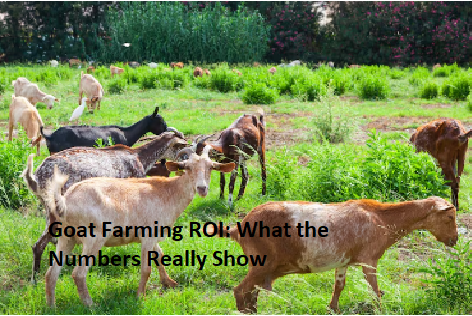
Understanding the financial outlook of goat farming ROI requires a clear-eyed assessment of operational costs versus potential revenue streams. Small-scale producers and commercial operations alike must account for feed, veterinary care, and market fluctuations to determine if their venture is truly sustainable. This breakdown provides the data needed to evaluate whether your agricultural investment will yield the returns you anticipate.
Achieving a positive goat farming ROI typically takes between three to five years for a well-managed startup. While initial capital expenditures for fencing and shelter are high, the ongoing variable costs are manageable if you maintain high herd health and efficient breeding cycles. Most profitable farms see an annual net profit margin ranging from 15% to 25% once the operation reaches full scale.
Initial Capital Investment Breakdown
Setting up a goat farm requires significant upfront expenditure before you ever sell your first product. The most critical asset is land, which must be properly fenced to prevent predation and ensure rotational grazing efficiency. Expect to spend between $2,000 and $5,000 per acre for raw land, depending on your geographic region and local zoning laws.
Shelter requirements are often underestimated by new farmers who assume goats are purely outdoor animals. You need a dry, draft-free structure that provides at least 15 square feet per animal for sleeping and protection from harsh weather. Construction costs for these buildings, including metal roofing and proper ventilation, typically run between $10 and $20 per square foot.
Essential Infrastructure Assets
Beyond land and barns, your budget must cover specialized equipment to keep the business running. High-tensile woven wire fencing is the industry standard, costing roughly $1.50 to $3.00 per linear foot including installation labor. You will also need handling chutes, weighing scales, and medical kits to manage herd health and maintain accurate records for your financial planning.
| Expense Category | Estimated Cost Range |
|---|---|
| Land Preparation/Fencing | $3,000 – $8,000 |
| Housing/Shelter | $5,000 – $15,000 |
| Breeding Stock (10 Does) | $2,500 – $5,000 |
| Equipment/Tools | $1,000 – $3,000 |
Operational and Variable Costs
Once the farm is established, your focus shifts to managing the daily costs that eat into your margins. Feed is consistently the largest expense, accounting for roughly 40% to 60% of your total operating budget. While grazing reduces this, you must supplement with hay and grain during winter months or drought periods to maintain body condition scores.
Veterinary expenses are another non-negotiable line item that directly impacts your goat farming ROI. Deworming, vaccinations, and hoof trimming require consistent investment to prevent parasite loads that can decimate a herd’s productivity. Expect to allocate at least $50 per head annually for routine medical supplies and preventative care.
Revenue Streams and Market Value
Diversifying your income is the most effective way to protect your farm from market volatility. Most successful operations generate revenue through three primary channels: meat production, milk sales, and the sale of breeding stock. Selling high-quality registered bucks can fetch significantly higher prices than selling wethers for market meat.
The demand for goat meat, or chevon, has grown steadily in ethnic markets across the United States. You can maximize your returns by targeting holiday windows, such as Eid al-Adha or Easter, when demand for specific weights and breeds peaks. Prices fluctuate, but selling directly to consumers or local butchers often yields a higher premium than selling at auction barns.
- Meat kids: High turnover, consistent demand in urban centers.
- Dairy products: Requires pasteurization licenses and specialized handling.
- Breeding stock: Highest profit per animal but requires strict genetic selection.
- Manure sales: A secondary, often overlooked, source of supplemental income.
Managing Herd Health for Profitability
A sick animal is a direct loss of capital and labor hours. You must implement a strict biosecurity protocol to prevent the introduction of diseases like Caseous Lymphadenitis or Caprine Arthritis Encephalitis. These conditions can devastate your herd and render your operation non-viable within a single season.
Consulting with experts is essential for maintaining a healthy, high-yield herd. The USDA Natural Resources Conservation Service provides technical guidance on managing grazing lands to ensure your goats remain well-fed and parasite-free. Following these professional standards helps you avoid the common pitfalls that lead to high mortality rates in new, inexperienced herds.
Land Management and Grazing Efficiency
Your land is your most valuable resource, and how you manage it determines your long-term success. Overgrazing is a common mistake that leads to soil erosion and the proliferation of weeds that goats refuse to eat. Implementing a rotational grazing system allows your pastures to recover, which increases the total amount of biomass produced per acre.
Goats are browsers by nature, not just grazers. They prefer shrubs, briars, and weeds over lush grass, which makes them excellent for land clearing and brush management. Some farmers charge a service fee to clear brush for neighbors, adding an entirely new revenue stream that requires no additional inputs.
Scaling Up Your Operation
Moving from a hobby farm to a commercial entity requires a shift in mindset and a focus on economies of scale. As your herd size increases, your fixed costs per animal decrease, which naturally improves your overall goat farming ROI. However, scaling too quickly without adequate infrastructure often results in management failures and increased vet bills.
Focus on increasing your kidding percentage to at least 150% annually to ensure a steady supply of market-ready animals. This requires rigorous record-keeping regarding which does consistently produce twins or triplets. Culling underperforming animals that do not meet your production targets is a cold but necessary business decision for long-term viability.
Financial Planning and Risk Mitigation
Agricultural markets are notoriously unstable, making a financial buffer a mandatory part of your business plan. You should aim to keep at least six months of operating expenses in a liquid savings account to cover unexpected costs like drought-induced feed shortages. Without this safety net, one bad season can force you to liquidate your herd at a loss.
Diversification extends beyond just your products; it also includes your market outlets. Don’t rely solely on one local buyer or a single auction house to move your inventory. Building a direct-to-consumer brand allows you to capture the retail price of your product rather than settling for the wholesale value offered by intermediaries.
Frequently Asked Questions
Is goat farming profitable for beginners?
Profitability for beginners depends heavily on their ability to manage expenses and find reliable markets. Many new farmers struggle because they over-invest in fancy equipment rather than focusing on animal health and productivity. If you start small with a few quality animals and grow slowly, it can be a sustainable secondary or primary income.
How many acres do I need for 100 goats?
You generally need between 5 and 10 acres of high-quality pasture to support 100 goats, depending on the forage quality and your management intensity. If you use intensive rotational grazing, you can support more animals on less land. However, you must also account for the space required for housing, hay storage, and handling facilities.
What is the most common reason for failure in goat farming?
The most common cause of failure is poor parasite management and lack of attention to herd health. When farmers do not keep up with deworming or fail to recognize signs of illness early, mortality rates rise quickly. This creates a cycle of constant replacement costs that make it impossible to achieve a positive return on investment.
How much does it cost to feed a goat for a year?
On average, annual feed costs per goat range from $150 to $300, depending on your location and access to pasture. This figure includes hay, grain, and mineral supplements. If you have excellent forage, you can keep these costs at the lower end of the spectrum by minimizing the need for supplemental grain.
What is the best way to start a goat farm with a small budget?
Start by purchasing a small herd of high-quality, proven breeding does rather than a large herd of low-quality animals. Focus on building simple, functional infrastructure before investing in expensive technology. Prioritize learning animal husbandry skills and establishing local sales channels before you consider expanding your operation to a commercial scale.
Strategic Conclusion
Calculating your goat farming ROI is a continuous process that evolves as your herd grows and your market knowledge deepens. By focusing on low-cost, high-yield management practices, you can build a resilient operation that withstands the natural ups and downs of the agricultural industry. Success hinges on your ability to track every dollar spent and every animal produced, ensuring that your labor and capital are working as efficiently as possible.
Take the time to develop a comprehensive business plan before purchasing your first animal, and always prioritize land health to ensure long-term productivity. With a disciplined approach to breeding, feeding, and marketing, the potential for a steady, profitable enterprise is well within reach for the dedicated farmer. Start with a manageable herd size, refine your processes, and stay committed to the data to secure your farm’s financial future.
