

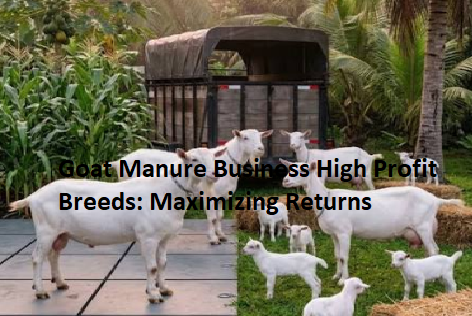
Starting a goat manure business high profit breeds strategy requires understanding that the value lies in both the livestock and the high-nitrogen fertilizer they produce. Most successful operators focus on dual-purpose animals that provide consistent manure output while maintaining market value for meat or dairy. By choosing specific breeds known for high intake and efficient digestion, you can turn a waste management challenge into a reliable revenue stream.
This article explores the intersection of animal husbandry and agricultural waste management to help you maximize your farm’s productivity. You will learn which breeds offer the best return on investment and how to process their manure for the organic fertilizer market.
The Financial Reality of Goat Manure
The primary question for any investor is whether a goat manure business high profit breeds model can actually sustain itself. The answer is yes, provided you treat the manure as a refined product rather than a byproduct. Raw manure is worth significantly less than processed, aged, or pelletized compost.
A mature goat produces approximately 1.5 to 2.5 pounds of manure per day, depending on its diet and size. If you manage a herd of 50 goats, you are looking at nearly 100 pounds of raw material every single day.
When processed into high-quality organic compost, this material can retail for $5 to $10 per bag in local garden centers or direct-to-consumer markets. The profit margin increases dramatically when you move from selling bulk raw manure to selling branded, nutrient-rich soil amendments.
You must account for the costs of bedding materials, labor, and storage, but the input cost for the manure itself is effectively zero. The secret is to maintain a high-turnover herd where the sale of the goats eventually pays for the feed, leaving the manure revenue as pure profit.
Top Breeds for Manure and Meat Production
Selecting the right animal is crucial when you are building a goat manure business high profit breeds system. You need breeds that are hardy, have a high metabolic rate, and produce a substantial volume of waste.
Boer goats are widely considered the gold standard for this specific dual-revenue model. They are heavy-bodied animals that consume large quantities of forage, which directly correlates to higher manure output.
Kiko goats are another excellent choice for those focusing on low-maintenance, high-volume production. These goats were developed in New Zealand for their hardiness and ability to thrive on scrub and brush that other breeds might ignore. Because they are efficient converters of roughage, they produce a consistent, dry manure pellet that is very easy to collect and process.
| Breed | Primary Utility | Manure Quality | Market Demand |
|---|---|---|---|
| Boer | Meat | High Nitrogen | Very High |
| Kiko | Meat/Hardiness | Consistent Pellet | High |
| Saanen | Dairy | Moist/High Volume | Moderate |
| Nubian | Dairy | High Volume | High |
Why Boer Goats Dominate the Market
Boer goats are the most common recommendation when discussing a goat manure business high profit breeds approach. Their sheer size means they consume more feed than smaller dairy breeds, which leads to a higher volume of manure production.
In a commercial setting, you want animals that grow quickly and reach market weight in under a year. The faster the turnover of your herd, the more you can control the density of your manure collection areas.
These animals also have a temperament that makes them easier to manage in concentrated feeding areas. When you keep goats in a barn or a managed paddock, you can install specialized flooring to catch waste before it touches the ground.
This reduces contamination and makes the harvesting process much faster. Because Boer goats are prized for their meat, you are never losing money on a “manure-only” animal; the animal itself is a liquid asset that appreciates over time.
Processing Manure for Maximum Profit
Raw goat manure is “hot” and can burn plants if applied directly to a garden. To command the highest prices, you must compost it properly.
The process involves balancing carbon-rich materials with the nitrogen-rich manure to create a stable, nutrient-dense fertilizer. You can find detailed technical guidance on proper composting techniques through the USDA Natural Resources Conservation Service guidelines.
Your composting setup should include a turning schedule to ensure oxygen reaches the center of the pile. This heat kills weed seeds and pathogens, turning a waste product into a premium horticultural asset.
Once the compost has matured, you can screen it for a fine texture that appeals to high-end landscape architects and organic gardeners. Using a simple mechanical screen can double the value of your product compared to selling rough, unrefined material.
Infrastructure and Collection Systems
Efficiency in collection is the difference between a hobby and a profitable business. You should design your housing to facilitate easy cleanup, perhaps using slatted floors or a deep-litter method.
If you use a deep-litter system, you add bedding such as wood shavings to the floor daily, which then composts in situ with the manure. This method reduces labor costs because you only empty the barn once or twice a year.
However, if you want a faster turnaround, a concrete pad with a slight slope is ideal. It allows for easy hosing and collection into a central composting bay.
Always consider the local environmental regulations regarding runoff and groundwater protection. Keeping your manure pile covered prevents nutrient leaching and ensures your final product remains potent and valuable.
Key Operational Expenses
Even with a high-margin product, you must keep your overhead low. Feed is your largest recurring cost, so grazing management is essential to the success of your operation.
If you have access to pasture, you can significantly reduce your reliance on expensive grain supplements. Rotational grazing not only saves money but also keeps your goats healthier and more productive.
* Housing and Shelter: Initial capital expenditure for barns and fencing.
* Feed and Forage: The largest variable cost in your monthly budget.
* Veterinary Care: Essential for maintaining a healthy, high-growth herd.
* Composting Equipment: Turners, screens, and bagging machinery.
* Marketing and Distribution: Costs associated with reaching local gardeners and nurseries.
Marketing Your Organic Fertilizer
Selling your product requires building a local reputation for quality. Start by offering free samples to local community gardens or small-scale organic farms.
Once they see the results of your fertilizer on their crops, they will become repeat customers. You can package your product in branded, 20-pound bags to reach the retail market, where the profit margin is significantly higher than selling by the truckload.
Social media is a powerful tool for this business. Posting pictures of your healthy herd and the resulting lush growth in test gardens provides social proof.
Focus on the “organic” and “sustainably sourced” aspects of your product, as these keywords resonate with modern consumers. A goat manure business high profit breeds model succeeds when it connects with the local farm-to-table movement.
Scaling Your Operation for Growth
Once you have mastered the basics, you can scale by diversifying your revenue streams. Consider adding a worm farm, or vermicomposting, to process the goat manure even further.
Worm castings are a premium product that can fetch prices three to four times higher than regular compost. You can also look into selling goat milk or cheese if you choose to include dairy breeds in your herd.
Always keep an eye on your herd size relative to your land capacity. Overstocking leads to disease and environmental degradation, which will eventually hurt your bottom line.
Proper stocking density is key to maintaining a healthy environment for your animals. When you scale, do it incrementally, ensuring that each new group of goats contributes to the efficiency of your manure collection system.
Conclusion
Building a successful venture in this sector requires a balance between animal husbandry and smart waste management. By focusing on Boer or Kiko breeds, you ensure that your herd provides both high-value meat and consistent, high-quality manure for your fertilizer business. The key to long-term profitability lies in your ability to process raw material into a premium, retail-ready product that gardeners and farmers trust.
Start small by perfecting your composting technique and building local relationships, then scale your operations as your brand gains traction. A goat manure business high profit breeds strategy is not just about keeping livestock; it is about creating a circular system that extracts maximum value from every resource on your farm. With patience and attention to detail, you can turn this agricultural niche into a thriving enterprise.
