

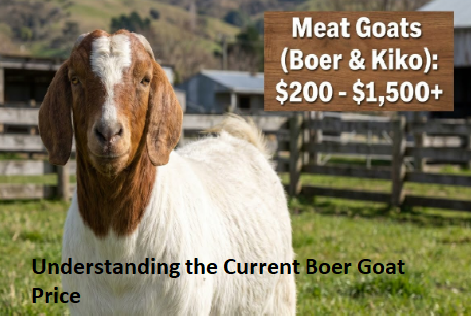
Understanding the current Boer goat price is essential for anyone looking to enter the livestock industry or expand their existing herd. These goats are highly sought after due to their rapid growth rates and superior meat quality, which directly impacts their market valuation.
Whether you are a hobbyist or a commercial producer, knowing what drives these costs helps you avoid overpaying for breeding stock or underpricing your own animals. This overview examines the specific factors that influence market rates, providing the clarity needed to make informed financial decisions in the goat meat sector.
The average Boer goat price typically ranges from $250 to $600 for commercial-grade animals, though purebred or registered stock can command significantly higher premiums. You will often find that a weanling kid sells for as little as $150 to $200 at local auctions, while a high-quality, registered buck with impressive bloodlines can easily exceed $1,500 to $3,000.
These figures fluctuate based on the animal’s age, pedigree, health status, and the specific region in which the sale occurs. Sellers often base their asking price on the current market rate for goat meat per pound, adjusted for the animal’s potential as a future breeder or show competitor.
Factors Influencing Market Valuation
The most significant factor affecting the Boer goat price is the animal’s registration status. Registered goats carry documentation from recognized breed associations, which guarantees their genetic purity and performance history.
This paperwork provides buyers with confidence that the animal will pass on desirable traits, such as heavy muscling and high fertility rates. Conversely, commercial or grade goats, which lack this formal documentation, are primarily valued for their meat production potential rather than their genetic lineage.
Age and reproductive history also play a critical role in determining the final transaction amount. A proven doe that has consistently produced healthy, fast-growing triplets is far more valuable than a young, unproven yearling.
Breeders are willing to pay a premium for animals with a documented history of success because it reduces the risk of investing in unproductive livestock. For bucks, the price is heavily influenced by the performance of their offspring in the show ring or their ability to increase the carcass weight of a herd.
Regional demand creates significant variance in pricing across different parts of the country. Areas with a high concentration of consumers who prioritize goat meat in their diet often see higher local prices due to increased competition for available stock.
Transportation costs also factor into the equation; if you must travel long distances to acquire high-quality genetics, the “effective” cost of the goat increases. You should always survey local auctions and private treaty sales in your immediate area to establish a realistic baseline for your specific market.
The Economics of Breeding Stock
Investing in high-quality breeding stock is a long-term strategy that requires careful financial planning. While the initial Boer goat price for a top-tier buck or doe might seem steep, these animals are essentially capital assets.
A superior buck can improve the growth rate and conformation of an entire herd within a single breeding season. This genetic improvement allows producers to bring more weight to market in a shorter timeframe, effectively increasing the overall profitability of their operation.
When evaluating potential purchases, you must look beyond the sticker price to assess the “value-added” potential of the animal. A goat that is resistant to common parasites or one that has a high feed-conversion ratio will save you thousands of dollars in veterinary bills and feed costs over its lifetime.
It is often more economical to pay a higher upfront price for a healthy, genetically superior animal than to settle for a cheaper, inferior goat that requires constant maintenance. Maintaining a healthy herd through USDA agricultural research-backed practices ensures that your initial investment remains protected.
The cyclical nature of the livestock market means that timing your purchases can also influence the final cost. Prices often peak during seasons when producers are looking to expand their herds, such as in the late winter or early spring.
If you have the facilities to hold onto animals, buying during the off-season can sometimes result in better deals. Being prepared to negotiate based on market data rather than just emotional attachment is the key to securing a fair price for your breeding foundation.
Auction Dynamics and Market Trends
Livestock auctions serve as a primary venue for determining the going rate for Boer goats in many regions. At these events, the price is set by the active bidding of participants, which provides a transparent look at what the current market will bear.
However, auctions can be unpredictable, and prices may spike due to a high turnout of buyers or a shortage of quality animals on a particular day. You must set a firm budget before entering an auction ring to avoid getting caught up in the competitive atmosphere.
Private treaty sales, where you negotiate directly with a breeder, offer a more controlled environment for transactions. These sales allow you to inspect the animals in their home environment and discuss their health history in detail with the owner.
Because there is no auction house commission, the seller might be willing to offer a more competitive price for a package deal if you are purchasing multiple head. This method is generally preferred by serious breeders who are looking for specific genetic traits to incorporate into their programs.
Market trends are frequently reported by local cooperative extensions and regional livestock associations. Keeping an eye on these reports helps you understand whether the market is trending upward or downward.
If you notice that supply is currently outpacing demand, you may have more leverage to negotiate a lower Boer goat price. Conversely, during periods of high demand for organic or farm-raised meat, you should expect to pay more as producers are less likely to offer discounts.
Comparative Cost Analysis
To help you understand how different categories of goats compare, the following table illustrates typical price ranges based on market role. These figures are estimates based on standard industry averages and can change based on economic conditions.
| Category | Estimated Price Range | Primary Value Factor |
|---|---|---|
| Commercial Weanling | $150 – $250 | Weight and meat quality |
| Registered Yearling | $400 – $800 | Pedigree and conformation |
| Proven Breeding Doe | $600 – $1,200 | Reproductive history |
| Elite Show Buck | $1,500 – $4,000+ | Genetic potential and wins |
This table highlights the wide disparity between commercial and elite-level animals. While a commercial weanling is priced largely as a commodity, the elite show buck is priced as a specialized tool for genetic advancement.
Understanding where your specific needs fall within this spectrum will help you avoid overspending on features you do not need. If your goal is simply meat production, investing in elite show-level genetics may not provide a sufficient return on investment.
Hidden Costs Beyond the Purchase Price
The purchase price is only the beginning of the financial commitment involved in keeping Boer goats. You must account for the infrastructure required to house and manage the herd safely and efficiently.
This includes sturdy fencing to keep predators out and the goats in, as well as shelters that protect them from extreme weather conditions. These capital expenditures can easily double or triple your initial investment depending on the scale of your operation.
Ongoing operational costs are another factor that must be factored into your financial model. Boer goats require a balanced diet, which includes quality forage, hay, and supplemental minerals to maintain their health and growth rates.
You will also need to budget for regular veterinary care, including vaccinations and internal parasite management programs. Failure to account for these recurring expenses often leads to financial strain, regardless of how good a deal you secured on the initial purchase.
Marketing and transport are frequently overlooked expenses for new producers. If you are selling kids to a processor or to other breeders, you will need a reliable way to move them safely.
If you are selling at a distance, the logistics of transport can significantly eat into your profit margins. Always include these logistical costs in your planning to ensure that the business remains viable over the long term.
Common Mistakes When Buying
Many new buyers focus too heavily on the color or appearance of the goat rather than its functional health. While a traditional Boer goat has a white body and a red head, these markings do not necessarily indicate superior performance.
You should prioritize structural soundness, such as correct leg placement and a strong jaw, over aesthetic markings. An attractive goat that is structurally unsound will not perform well in the field and will ultimately cost you more in the long run.
Another common mistake is purchasing from a single source without comparing the animal to others. It is highly advisable to visit multiple breeders to get a sense of what “good” looks like in your area.
This helps you develop an eye for conformation and allows you to compare the temperament and health of different herds. Rushing into a purchase often leads to buyer’s remorse when you discover health issues or poor temperament after the animal is already on your property.
Failing to verify the health status of a herd before purchase is a dangerous oversight. Always ask for records of vaccinations and deworming, and if possible, request a clean bill of health from a veterinarian.
Introducing a sick animal into your existing herd can be catastrophic, leading to widespread illness and significant financial losses. A responsible breeder will be happy to provide documentation and proof of their herd’s health status.
Frequently Asked Questions
Why is the price of a Boer goat so much higher than other breeds?
Boer goats are specifically bred for meat production, possessing a body composition that yields more muscle than standard dairy or brush goat breeds. This genetic specialization makes them more valuable to the meat industry, as they grow faster and reach market weight sooner than other goats.
How much does a 1-year-old Boer goat typically weigh?
A well-fed, healthy 1-year-old Boer goat can weigh anywhere from 100 to 150 pounds, depending on its sex and genetic background. Bucks are generally heavier than does, and animals that have been managed with high-quality forage and supplementation will naturally reach the higher end of this weight range.
Is it better to buy a young kid or an older, proven goat?
Buying a young kid is cheaper upfront but carries more risk because you don’t know how the animal will mature or perform as a breeder. An older, proven goat is more expensive initially but offers a known track record of fertility and mothering ability, which is often a safer choice for beginners.
How do I know if I am being overcharged for a goat?
You can avoid overpaying by tracking auction prices in your region and talking to multiple breeders to get a sense of the market average. If an asking price is significantly higher than what comparable animals are selling for at local auctions or private sales, ask the seller to justify the premium through pedigree, performance data, or health certifications.
Do registration papers really add that much value?
Yes, for serious breeders, registration papers are essential because they provide a verifiable history of the animal’s genetics. This documentation allows you to track potential health issues and performance traits across generations, which is vital for improving your herd’s quality and commanding higher prices for your own offspring.
Conclusion
Navigating the market for Boer goats requires a blend of research, patience, and a clear understanding of your own production goals. Whether you are aiming to build a high-performance breeding program or simply looking to produce quality meat for the market, the price you pay should always be weighed against the long-term value the animal brings to your farm. By focusing on structural health, proven genetics, and realistic budget planning, you can make smarter decisions that support a sustainable and profitable venture.
Remember that the most successful producers are those who treat every acquisition as a strategic investment rather than a simple purchase. Take the time to observe local trends, verify the health history of any animal you consider, and don’t be afraid to walk away from a deal that doesn’t align with your financial goals.
Staying informed about the shifting Boer goat price ensures that you remain competitive in an ever-evolving agricultural marketplace. If you are ready to get started, begin by connecting with local breeders and visiting regional livestock events to build your network.
