

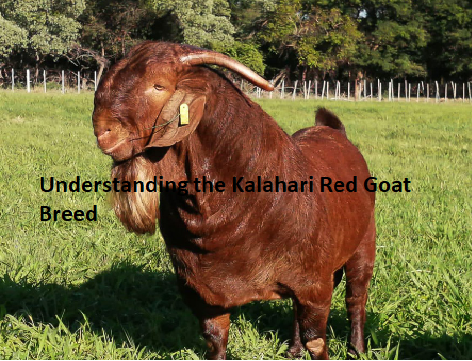
The Kalahari Red goat is a striking breed originating from the arid regions of Southern Africa, highly valued for its exceptional hardiness and rust-colored coat. Developed specifically to thrive in harsh environments, these animals have become a favorite for farmers looking for low-maintenance livestock that still provides excellent meat yields.
Understanding the unique traits of the Kalahari Red goat allows producers to better manage their herds while maximizing productivity in challenging climates. This overview provides the essential details on their physical characteristics, temperament, and economic viability for modern agricultural operations.
The defining feature of the Kalahari Red goat is its solid red coat, which serves as natural camouflage and provides superior protection against the intense African sun. Unlike many other breeds, these goats possess a pigmented skin that helps them resist skin cancer and other UV-related conditions.
A mature buck typically weighs between 70 and 90 kilograms, while does generally range from 50 to 65 kilograms. Their size makes them a versatile choice for crossbreeding programs, as they bring significant hybrid vigor to local populations.
Physical Characteristics and Breed Standards
The breed is characterized by a long, well-proportioned body and a strong, muscular frame. Their ears are typically long and pendulous, similar to the Boer goat, which helps with heat dissipation in high-temperature regions.
The coat is short and smooth, requiring minimal grooming even when kept in rough, scrub-heavy terrain. Breeders prioritize a uniform, deep-red color across the entire body, though some minor white spotting is occasionally observed in less refined lines.
These animals possess a strong skeletal structure that supports a high meat-to-bone ratio. Their legs are sturdy, allowing them to travel long distances over uneven ground in search of forage.
This mobility is a direct evolutionary result of their development in the semi-desert regions of the Kalahari, where food sources can be sparse. The head is expressive with a slightly convex profile, and they are known for their alert, inquisitive demeanor.
Adaptability to Harsh Climates
One of the primary reasons farmers invest in this breed is its remarkable ability to survive on limited water and low-quality vegetation. They are excellent browsers, capable of utilizing shrubs, weeds, and tree leaves that other livestock might ignore.
This dietary flexibility reduces the need for expensive supplemental feeding, significantly lowering the overhead costs of production. They are also highly resistant to many common parasites and diseases that plague more sensitive, specialized breeds.
The breed’s natural heat tolerance is supported by its efficient metabolic rate. They do not suffer from the same level of heat stress as European dairy breeds, allowing them to maintain weight and milk production even during peak summer months.
In areas prone to drought, they remain productive when other animals begin to lose condition. This resilience makes them a reliable asset for sustainable farming in regions where climate volatility is an increasing concern.
Comparing Kalahari Red and Boer Goats
Many potential buyers wonder how the Kalahari Red goat compares to the ubiquitous Boer goat. While both were developed in Southern Africa for meat production, they have distinct advantages depending on the specific environment. The following table highlights the core differences typically observed between these two popular breeds.
| Feature | Kalahari Red Goat | Boer Goat |
|---|---|---|
| Coat Color | Uniform deep red | White body, red head |
| Environment | Arid, harsh, hot | Mixed, temperate to hot |
| Foraging | Exceptional browser | Good browser/grazer |
| Maintenance | Very low | Moderate |
The Boer goat is often prized for its faster growth rate and heavier carcass weight under intensive management systems. However, the Kalahari Red goat consistently wins in scenarios where input costs must be kept low.
Farmers often prefer the Kalahari for its ability to handle parasite loads without constant drenching or chemical intervention. Choosing between them often comes down to whether the farm is set up for high-input feeding or extensive, pasture-based grazing.
Reproductive Performance and Mothering
Efficiency in a herd is largely determined by the reproductive success of the does. Kalahari Red goats are known for their strong maternal instincts and high fertility rates.
They frequently produce twins, and in favorable conditions, they can maintain a kidding interval of less than eight months. This frequent reproduction leads to a faster turnover of stock and a more consistent supply of meat for the market.
Does are generally excellent mothers, providing high-quality milk that allows their kids to grow rapidly during the critical first few weeks of life. They are protective of their young and are capable of rearing them in open, extensive grazing systems with minimal human assistance.
This self-sufficiency reduces labor requirements during the birthing season, which is a major advantage for large-scale operations. Mortality rates among kids are typically lower than average due to the breed’s natural hardiness and the mother’s attentive nature.
Management for Maximum Profit
Success with this breed requires a strategic approach to range management. Because these goats are natural browsers, they can be used to control invasive shrub species in pasture lands.
By integrating them into a rotational grazing plan, farmers can improve the overall health of their land while producing high-quality protein. It is important to monitor the stocking density to prevent overgrazing of preferred plants.
* Implement a strict deworming program based on fecal egg counts rather than a calendar schedule.
* Provide constant access to clean, mineralized water to support metabolic health.
* Rotate grazing areas every 7–14 days to break the lifecycle of internal parasites.
* Maintain accurate records of weight gain and kidding percentages to identify top-performing breeding stock.
* Ensure that fencing is secure, as these goats are agile and can be jumpers when they feel restricted.
Proper record-keeping is essential for identifying which animals are providing the best return on investment. By culling unproductive does and keeping only the most fertile, resilient animals, a farmer can significantly improve the herd’s genetic profile over several generations. The Department of Agriculture, Land Reform and Rural Development provides extensive resources on livestock management practices that can be applied to goat production.
Common Health and Husbandry Challenges
Even a hardy breed like the Kalahari Red goat can encounter health issues if managed improperly. Overstocking is the most common cause of problems, as it forces the animals to graze too close to the ground where parasite larvae reside.
While they are resilient, they are not immune to conditions like foot rot in damp, muddy environments. Maintaining dry bedding areas and ensuring good drainage in paddocks is vital during the rainy season.
Respiratory infections can occur if the animals are confined in poorly ventilated spaces. Because they are adapted to open, arid environments, they thrive in well-ventilated housing that protects them from extreme wind and rain.
It is also important to provide a balanced mineral supplement, specifically targeting deficiencies common in local soils. Copper and selenium levels should be monitored, as imbalances in these trace minerals can lead to poor coat condition and reduced fertility.
Frequently Asked Questions
Why is the Kalahari Red goat often more expensive than other breeds?
The price is largely driven by demand for their superior hardiness and the relative scarcity of high-quality, purebred bloodlines in certain regions. Because they are considered a specialized breed for arid environments, breeding stock with proven performance records commands a premium.
How do I identify a purebred Kalahari Red goat?
A purebred should display a deep, uniform red coat with no significant white patches, although some small white hair on the belly or extremities is sometimes permissible. They should also possess the characteristic long, pendulous ears and a sturdy, muscular build that conforms to the official breed standards.
What is the typical lifespan of a Kalahari Red goat?
Under good management, these goats can remain productive for 8 to 10 years. Their longevity is one of the financial benefits of the breed, as it reduces the frequency at which the farmer needs to purchase replacement breeding stock.
Are these goats suitable for small-scale hobby farms?
Yes, they are highly suitable for small farms due to their docile temperament and low-maintenance requirements. Their ability to clear brush and weeds makes them useful for land management in addition to meat production.
How do they handle cold, wet winters?
While they are adapted to arid, hot climates, they can handle moderate cold if they have access to dry, wind-free shelter. They struggle significantly in areas with prolonged freezing temperatures and high humidity, which can lead to pneumonia and foot issues.
Building a Sustainable Future
Investing in the Kalahari Red goat represents a commitment to efficient and sustainable agriculture. Their ability to thrive in challenging conditions while maintaining excellent meat quality makes them a cornerstone for producers looking to optimize their land usage. By focusing on selective breeding and smart grazing management, farmers can build a resilient herd that offers consistent profitability year after year.
As global interest in hardy, low-input livestock grows, the demand for this breed continues to rise. Whether you are aiming to improve your existing herd through crossbreeding or starting a new venture from scratch, the Kalahari Red goat provides a reliable foundation.
Take the time to source animals from reputable breeders with documented health histories to ensure your success. With proper care and strategic planning, these animals will continue to be a valuable asset for any forward-thinking agricultural operation.
