

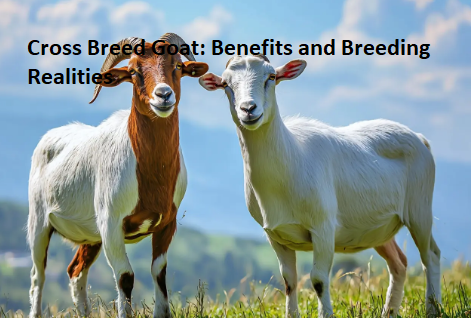
Selecting a cross breed goat often involves balancing productivity traits like milk yield or meat quality against the hardiness of a local landrace. Many farmers turn to these hybrids to capture “hybrid vigor,” a phenomenon where the offspring outperform either parent in specific environmental conditions. Understanding which traits are dominant and which are recessive is the first step toward a successful breeding program.
When you cross breed a goat, the primary goal is usually to improve specific farm outputs. For instance, crossing a high-production dairy breed like a Saanen with a hardy, parasite-resistant breed like a Kiko can result in offspring that maintain strong milk production while surviving better on pasture. These animals often show improved growth rates and better overall health compared to purebred stock raised in intensive environments.
The Science of Hybrid Vigor
Heterosis, or hybrid vigor, occurs when the crossbreed goat exhibits traits superior to the average of its parents. This doesn’t happen with every pairing, but it is highly predictable when crossing genetically distinct lineages. You will often see improvements in fertility, survival rates of kids, and overall longevity.
It is important to note that this effect is most pronounced in the first generation, known as F1. If you attempt to breed those F1 offspring back together, the genetic traits begin to segregate and the uniformity of the herd often declines. Experienced breeders frequently maintain two separate purebred lines specifically to produce F1 offspring for market or production.
Evaluating Genetic Compatibility
Not all breeds are compatible, and some crosses can lead to unexpected health issues or structural flaws. For example, crossing two breeds with vastly different frame sizes can lead to dystocia, or difficult births, if the kid grows too large for the dam’s birth canal. Always prioritize the health of the dam when selecting a sire for a crossbreeding program.
You must also consider the purpose of the animal before selecting parents. If your goal is meat production, you should look for breeds known for muscle conformation and rapid weight gain. If you are focused on dairy, ignore meat traits and prioritize lactation records and udder conformation.
Common Crossbreeding Strategies
Many commercial operations use a terminal crossbreeding strategy to maximize efficiency. In this model, all offspring are intended for market rather than herd replacement. This allows the farmer to select parents based purely on performance traits without worrying about the long-term genetic stability of the progeny.
Alternatively, some breeders use rotational crossbreeding to maintain a self-replacing herd. This involves using sires from different breeds in a rotating sequence over several generations. While this is more complex to manage, it allows the farm to sustain its own replacement stock while still benefiting from the advantages of genetic diversity.
- Increased Disease Resistance: Crossbreeds often inherit immune system diversity from both sides.
- Better Feed Efficiency: Hybrid animals frequently convert forage to body mass more effectively.
- Environmental Adaptability: You can blend the heat tolerance of tropical breeds with the cold hardiness of northern ones.
- Improved Fertility: Crossbred does often reach sexual maturity earlier and exhibit stronger heat cycles.
Comparing Typical Breed Characteristics
Understanding the base traits of popular breeds helps in planning your breeding outcomes. The following table illustrates common traits that are often targeted during the crossbreeding process.
| Breed | Primary Use | Key Trait |
|---|---|---|
| Boer | Meat | Rapid Growth |
| Nubian | Dairy | High Milk Fat |
| Kiko | Meat | Parasite Tolerance |
| Saanen | Dairy | High Volume |
| Spanish | Meat | Hardiness |
Navigating the Risks of Crossbreeding
While the benefits are significant, there are risks associated with breeding across distinct genetic lines. The most common pitfall is the loss of breed-specific traits that you might actually value. If you cross a high-milk-producing goat with a meat breed, you may end up with an animal that is average at both but excels at neither.
Another risk involves the predictability of the offspring’s temperament. Purebred lineages are often selected for specific behavioral traits, such as docility or ease of handling. Mixing these lineages can sometimes result in unpredictable temperaments that make daily management, such as milking or hoof trimming, much more difficult.
Management and Record Keeping
Success in breeding requires meticulous record-keeping to track which crosses produce the best results. You should document birth weights, weaning weights, and, for dairy animals, total milk production over a standard lactation period. Without this data, you are essentially guessing which combinations are working.
Consulting with resources like the American Dairy Goat Association can provide you with the necessary standards for breed evaluation. While you may not be breeding for the show ring, these standards provide a baseline for what constitutes a healthy, productive animal. Use these benchmarks to assess whether your crossbreeding program is actually yielding improvements.
Health Considerations and Inbreeding
One major reason breeders use crossbreeding is to avoid the negative effects of inbreeding depression. When you continuously breed closely related animals, you increase the likelihood that harmful recessive genes will manifest. This often results in smaller, weaker offspring with higher susceptibility to common goat diseases.
By introducing a different breed, you immediately mask those recessive traits. This is a common strategy used by commercial farmers to rejuvenate a herd that has become stagnant. However, you must ensure that you are not introducing new, undesirable health traits from the sire’s line, such as poor foot structure or dental issues.
Selecting the Right Sire
The sire is half the herd in terms of genetic influence. Because one buck can service many does, his impact on the next generation is far greater than that of any single female. Never compromise on the quality of your buck, even if you are just breeding for crossbreeds.
Look for a buck that has a documented history of producing offspring with the traits you desire. If possible, visit the breeder and observe his offspring from previous seasons. A good buck should be structurally sound, free of health issues, and exhibit the specific traits you hope to pass on to your herd.
FAQ
Is it safe to cross a goat with a sheep?
No, it is not biologically possible for a goat and a sheep to produce viable offspring. While they are both in the Bovidae family, they have different chromosome counts—goats have 60 and sheep have 54. Any claims of “geeps” or hybrids are usually misidentified animals or genetic anomalies that do not survive.
What is the most common crossbreed for meat?
The Boer goat is the most common sire used in crossbreeding for meat production. When crossed with local landrace goats or dairy breeds, the resulting kids grow significantly faster and have better muscle development. This is a standard practice in commercial meat goat production worldwide.
Does crossbreeding guarantee better milk production?
No, crossbreeding does not guarantee better milk production. If you cross a high-producing dairy goat with a low-producing meat breed, the offspring will likely have lower production than the dairy parent. You must carefully select parents that both possess the specific traits you want to improve.
Can you breed two goats that have the same father?
Yes, you can, but it is considered a form of linebreeding or inbreeding depending on how closely related the dams are. It is generally advised against for beginners because it increases the risk of expressing hidden genetic defects. If you must do it, ensure both parents are exceptionally healthy and free of any known hereditary issues.
How do I know if my crossbreed is healthy?
A healthy crossbreed should exhibit “hybrid vigor,” meaning it should be alert, active, and growing at a rate consistent with its parents’ best traits. It should have a shiny coat, clear eyes, and a solid body condition score. If you notice persistent health issues or poor growth, the cross may not be well-suited to your specific environment.
Conclusion
Developing a cross breed goat program is a powerful way to enhance the productivity and resilience of your herd. By leveraging the principles of hybrid vigor, you can create animals that are better suited to your local environment and your specific production goals. Success depends on careful selection, rigorous record-keeping, and a clear understanding of the genetic traits you wish to emphasize in your progeny.
Remember that while crossbreeding can overcome many limitations associated with purebred stock, it is not a substitute for good management and nutrition. Focus on providing your animals with the best environment possible, and the genetic advantages of your breeding choices will shine through. Whether you are aiming for higher meat yields or consistent milk production, intentional breeding decisions will always yield the best results for your operation.
