

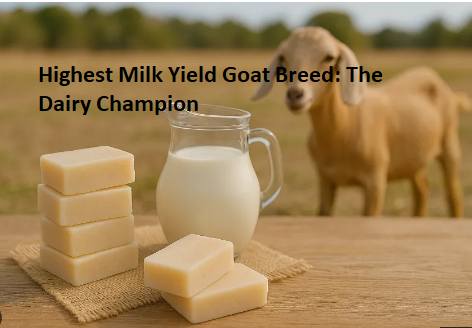
Selecting the highest milk yield goat breed is a primary concern for anyone looking to enter commercial dairy farming or simply maximize home production. Understanding which animals provide the most volume allows you to plan your herd size, infrastructure, and feed costs effectively from day one. While many factors influence output, specific breeds consistently outperform others in controlled environments and large-scale operations.
The Saanen is widely recognized as the highest milk yield goat breed in the world. Often called the “Holstein of the goat world,” these animals are capable of producing between 3 to 4 liters of milk daily during their peak lactation period.
Some high-performing individuals in professional dairy settings have even been recorded producing over 5 liters per day. Their reputation for volume is unmatched, making them the standard choice for intensive commercial dairy operations across the globe.
The Saanen: Why It Dominates Production
The Saanen originates from the Saanen Valley of Switzerland and has been selectively bred for over a century to prioritize dairy output. Their physical build is specifically adapted for high production, featuring a deep barrel and a well-attached udder that supports significant milk storage. Because they are docile and handle confinement well, they are ideal for automated milking parlors where consistency is required.
Their temperament is famously calm, which reduces stress levels during the milking process. Low stress is a biological necessity for high milk production, as cortisol can inhibit milk let-down.
You will find that these goats are generally easier to manage than more flighty breeds, allowing for more efficient daily routines. Their white coat also makes them easy to identify in a herd, which is a practical benefit for large-scale farm management.
Comparing Production Across Top Dairy Breeds
While the Saanen holds the title for the highest milk yield goat breed, other breeds offer different advantages that might suit specific climate or quality requirements. For example, while Nubians produce less volume than Saanens, their milk contains a significantly higher percentage of butterfat. This makes them a superior choice for cheesemakers or those producing high-end yogurt who prioritize quality and flavor density over sheer quantity.
Alpine goats are another strong contender, often running a close second to Saanens in total volume. They are known for their extreme hardiness and ability to adapt to varying climates, which makes them a better choice for mountainous regions or farms with less controlled environments. Choosing the right breed involves balancing your specific need for volume against the environmental realities of your land.
| Breed | Average Daily Milk (Liters) | Butterfat Content |
|---|---|---|
| Saanen | 3.0 – 4.5 | 2.5% – 3.5% |
| Alpine | 2.5 – 3.5 | 3.0% – 3.5% |
| Nubian | 2.0 – 3.0 | 4.0% – 5.0% |
| Toggenburg | 2.0 – 3.0 | 3.0% – 3.5% |
Environmental Factors Affecting Milk Volume
Even the highest milk yield goat breed will struggle to reach its genetic potential if its environment is not optimized. Nutrition is the single most important variable, as high-producing does require a significant intake of energy and protein to maintain their output. Without access to high-quality forage and supplemental grain, you will see a sharp drop in both daily volume and overall health.
Climate control also plays a major role in the sustained production of your herd. Goats are susceptible to heat stress, which causes them to eat less and drink more, inevitably leading to a reduction in milk supply. Providing adequate shade, ventilation, and constant access to clean, cool water is essential for maintaining production levels throughout the summer months.
The Role of Genetics and Selective Breeding
When purchasing your foundation stock, you should look for breeders who maintain detailed records of milk production. A pedigree that shows high-yielding ancestors is the best predictor of future performance in your own barn. Many successful farmers utilize the American Dairy Goat Association to verify the performance history of their potential purchases.
It is helpful to understand that milk yield is a heritable trait that can be improved over generations. By keeping the best-performing does and using bucks from high-milk lines, you can gradually increase the average yield of your herd. This is a long-term investment that requires patience but pays off in significantly higher daily returns.
Managing Nutrition for Maximum Output
To keep a high-yield goat producing, you must mimic the energy-dense diet that commercial dairies provide. Fresh, high-quality alfalfa hay is a staple for many producers because it provides the necessary protein and calcium for lactating does. You must also balance this with a grain ration that is formulated specifically for dairy animals to ensure they are getting the minerals required for sustained production.
Water intake is often overlooked, yet a lactating goat needs significantly more water than a dry doe. Some experts suggest that a high-producing goat should have access to as much water as she wants at all times to prevent metabolic issues. Dehydration is a silent killer of production, and even a minor restriction can cause a measurable decline in the evening milking volume.
Common Health Hurdles in High-Yield Breeds
High-production animals are often more susceptible to metabolic disorders because their bodies are working at maximum capacity. Mastitis is the most common issue, and it requires constant vigilance to prevent it from spreading through your herd. Regular udder checks and maintaining clean milking equipment are non-negotiable tasks for any serious producer.
Ketosis is another concern, occurring when the doe cannot consume enough energy to meet her production demands. This often happens in the early stages of lactation when milk production is spiking. Providing high-quality, palatable feed and monitoring body condition scores will help you identify these risks before they become serious health emergencies.
Best Practices for Herd Management
Running a profitable dairy operation requires more than just picking the highest milk yield goat breed; it requires consistent management practices. You should implement a strict milking schedule and stick to it, as goats thrive on routine. Deviations in timing can lead to anxiety and a decrease in the amount of milk released during the session.
* Establish a consistent twice-daily milking schedule.
* Maintain a strict sanitation protocol for all milking equipment.
* Monitor daily weight changes to detect early signs of nutritional deficiencies.
* Keep thorough records of individual doe performance to cull underperformers.
* Provide regular veterinary check-ups to prevent the spread of caprine arthritis encephalitis.
Frequently Asked Questions
Does the highest milk yield goat breed require more feed?
Yes, high-producing breeds like the Saanen have higher caloric requirements than smaller or lower-producing breeds. Because they are converting a large volume of nutrients into milk, they need a high-protein diet to avoid losing body condition. If you do not feed them according to their production levels, they will prioritize their own health over milk output.
Is it possible to keep a high-yield dairy goat in a small backyard?
You can keep them in a small space, but you must ensure the area is clean and provides enough room for exercise. The challenge with small setups is usually waste management and ensuring the animal has enough high-quality forage. If you are limited on space, you will need to be diligent about buying in premium feed to compensate for the lack of pasture.
How many years will a high-yield goat stay in production?
A well-managed dairy goat can remain productive for 7 to 10 years, though their peak production usually occurs between their second and fifth lactations. After this point, you might see a gradual decline in volume as the animal ages. Most commercial dairies rotate their herds to keep production levels high, but hobbyists often keep them longer as companions.
Are there goats that produce high milk volume and high butterfat?
Most breeds follow a trade-off where you either get high volume or high butterfat content. The Saanen is the king of volume, while breeds like the Nubian are the kings of butterfat. While it is difficult to find a single breed that excels at both, you can often achieve a balance through selective breeding or by maintaining a mixed herd.
Conclusion
Selecting the highest milk yield goat breed is a fundamental step toward building a successful and sustainable dairy operation. The Saanen remains the undisputed leader for total volume, providing the consistency that large-scale operations rely on. By pairing the right breed with proper nutrition, strict routine management, and a focus on animal health, you can achieve impressive results.
Remember that individual performance will always vary, even within the best breeds. Start with quality stock, track your data carefully, and be prepared to adjust your management style as your herd grows. Whether you are producing for your family or a commercial market, your commitment to the daily needs of your animals is what will ultimately drive your success.
