

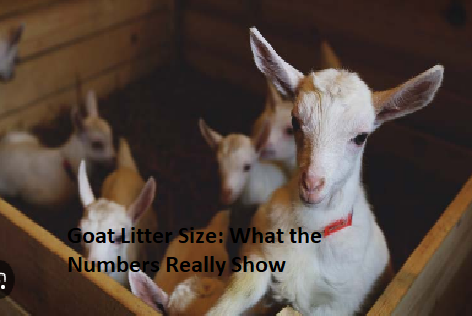
Understanding goat litter size is essential for anyone managing a herd, whether for dairy production, meat, or hobby farming. Knowing how many kids to expect helps you prepare for kidding season, manage feed resources, and ensure the health of both the dam and her offspring.
A typical goat litter size generally ranges from one to three kids, though this varies significantly by breed, age, and nutritional status. Most mature dairy goats like Alpines or Saanens frequently deliver twins, while meat breeds like Boer goats are often selected specifically for their tendency to produce triplets. You should plan for a single or twin birth as the most common baseline for a healthy, well-managed herd.
Factors Influencing Reproductive Outcomes
The genetics of your herd serve as the primary blueprint for how many kids a doe might carry. Some breeds are genetically predisposed to higher fecundity, meaning they are more likely to have multiple births. Boer goats, for instance, were developed with a strong selection pressure on fertility and twinning rates.
Environmental conditions and the timing of breeding also play a critical role in these outcomes. Goats are seasonal breeders, responding to the shortening daylight hours of autumn. When you breed them during their peak fertility window, the likelihood of a larger litter size increases compared to late-season breedings.
Nutrition acts as the engine behind reproductive success, specifically through a practice known as flushing. By increasing the energy and protein intake of a doe about three weeks before breeding, you can trigger a hormonal response that encourages multiple ovulations. A doe in optimal body condition is physically capable of supporting more than one fetus, whereas a thin doe may struggle to maintain even a single pregnancy.
Common Litter Sizes by Breed Type
Different breeds have evolved for different purposes, which directly impacts their typical litter size. Dairy goats are often managed for consistent production, and while they are highly fertile, breeders sometimes prefer twins over triplets to ensure each kid grows to a robust size. Meat breeds, conversely, are valued for high-volume production, making larger litters a financial asset.
Breed Comparisons
The following data provides a general expectation of what you might see across common goat categories. Keep in mind that individual health and age will cause these numbers to fluctuate.
| Breed Type | Average Litter Size | Common Frequency |
|---|---|---|
| Dairy (e.g., Alpine) | 1.8 to 2.2 | Twins are standard |
| Meat (e.g., Boer) | 2.0 to 2.5 | Frequent triplets |
| Pygmy/Miniature | 1.5 to 2.0 | Single or twins |
| Fiber (e.g., Angora) | 1.0 to 1.5 | Usually singles |
The Role of Age and Parity
A doe’s age is a significant indicator of how many kids she will deliver. A young doe, often called a doeling, is usually bred for the first time around her first year. Because her body is still growing, she is much more likely to have a single kid.
As a doe matures, her reproductive efficiency typically peaks between ages three and six. During these prime years, her uterine environment is fully developed and capable of supporting multiple fetuses. You will often notice that your older, experienced does are the ones consistently delivering twins or triplets.
Once a doe passes her prime, her litter size often begins to decline again. She may experience more difficulty conceiving or may revert to delivering single kids. Proper record-keeping allows you to track these trends so you can make informed decisions about when to retire a doe from your breeding program.
Nutritional Management During Pregnancy
Feeding during gestation is a delicate balancing act that directly impacts the health of the kids. During the first two trimesters, the doe needs enough energy to maintain her own body condition. In the final trimester, however, the growth of the kids accelerates rapidly.
If a doe is carrying a large litter, she faces significant physical pressure on her rumen capacity. Her stomach is compressed by the growing fetuses, making it harder for her to consume enough bulk forage to meet her energy needs. You must provide high-quality, nutrient-dense hay and appropriate mineral supplementation during this time.
Inadequate nutrition in the final weeks can lead to pregnancy toxemia, a metabolic disorder that is more common in does carrying multiple kids. When the body cannot get enough energy from feed, it begins breaking down fat stores too quickly. This produces ketones, which can be toxic to both the mother and the developing kids.
Monitoring and Recognizing Pregnancy
Identifying how many kids a doe is carrying can be done through various methods, though some are more precise than others. Visual inspection is rarely accurate until the very late stages of pregnancy, and even then, it can be deceptive. A doe might look huge simply because she has a large rumen, not because she has a large litter.
Ultrasound technology is the gold standard for determining the exact number of fetuses. A veterinarian or a trained technician can perform this procedure around 45 to 60 days after breeding. This allows you to prepare specific care protocols for a doe carrying triplets versus one carrying a singleton.
If ultrasound is not available, you must rely on careful observation of the doe’s behavior and physical changes. Toward the end of the term, you can often feel the movement of the kids against the doe’s flank. While this doesn’t give you an exact count, it confirms that the pregnancy is progressing as expected.
Preparing for Kidding Season
Preparation is the best way to handle the variability of litter sizes. You should have a dedicated kidding pen that is clean, dry, and draft-free, ready for any time a doe might go into labor. If you know a doe is expecting a large litter, keep a close watch for signs of labor, as she may require assistance.
Having the right supplies on hand is non-negotiable for a successful kidding season. You need items like clean towels, iodine for disinfecting umbilical cords, and a bottle of colostrum replacer just in case a kid struggles to nurse. For more detailed information on animal health and reproductive standards, you can review the resources provided by the United States Department of Agriculture.
Keep a list of essential items organized and ready for emergencies. Having these materials in a single, accessible location will save you valuable time if a birth becomes complicated or if a doe rejects one of her kids.
- Clean, dry bedding like straw or wood shavings.
- Disinfectant for the naval cord.
- A small scale to weigh kids at birth.
- A supply of warm electrolytes for the mother.
- A notebook to record birth dates, weights, and sex.
Common Kidding Complications
While most goats deliver without human intervention, large litters increase the risk of complications. A common issue is a malpresentation, where one kid is blocking the birth canal or two kids are trying to exit at the same time. You need to be prepared to gently assist if the delivery process stalls.
If a doe has been in active labor for more than 30 minutes without progress, it is time to investigate. Wash your hands thoroughly and use a lubricant to check the position of the kid. If you are inexperienced, always have the contact information for a local large-animal veterinarian ready to go.
Post-birth, the primary concern is ensuring every kid receives adequate colostrum. This first milk is packed with essential antibodies that the kids cannot produce themselves. If a doe has triplets, she may not have enough milk to support them all, or she may focus on the strongest kid while neglecting the others.
Managing Multiples and Orphaned Kids
When a doe delivers three or more kids, you may need to intervene to ensure every kid survives. Often, the smallest kid, sometimes called a runt, gets pushed away from the teat by its stronger siblings. You may need to supplement this kid with bottle feedings to keep its growth on track.
If a doe refuses a kid or cannot produce enough milk, you must decide whether to graft the kid onto another doe or bottle-feed it. Grafting involves tricking a doe into accepting a kid that isn’t hers, which is a labor-intensive but rewarding process. Bottle-feeding is simpler but requires a strict schedule and a commitment to hygiene.
The growth rate of kids raised in large litters can vary, so monitor their weight gain closely. If you see a kid falling behind in size compared to its peers, prioritize its nutrition. Consistent, daily attention is the best way to ensure that every kid reaches its full potential.
Frequently Asked Questions
Can a goat have more than four kids?
Yes, it is possible for a goat to have four or more kids, though it is relatively rare. These pregnancies are high-risk for the doe and often require significant nutritional support and veterinary oversight.
At what age is a doe most fertile?
Most does reach their peak reproductive capability between the ages of three and six. During this window, they are most likely to sustain healthy, multiple-kid pregnancies consistently across different seasons.
How do I know if my goat is carrying triplets?
The only way to know for certain before birth is through an ultrasound performed by a professional. Without this, you can only observe the doe’s physical size and wait for the actual birth, though a very large abdomen in late pregnancy is a common indicator.
Do male goats affect litter size?
While the doe’s genetics play the largest role, the buck does influence the outcome through his own genetic contribution. Using a buck that comes from a line of strong, multiple-birth families can statistically improve your herd’s overall litter size over several generations.
What should I do if a doe rejects a kid?
If a doe rejects a kid, you must step in as the primary caregiver. This involves immediate bottle-feeding with colostrum and later transitioning to a milk replacer, ensuring the kid stays warm and receives plenty of human interaction to thrive.
Conclusion
Managing the size of your goat litters requires a combination of good genetics, proper nutrition, and careful observation. By understanding the factors that influence how many kids a doe delivers, you can better prepare your farm for the demands of the season. Whether you are dealing with a single kid or a set of triplets, your proactive approach to health and management will make all the difference in your success.
Always keep accurate records to track the performance of your herd over time. If you have any specific concerns about your animals, reaching out to a local extension agent or a large-animal vet is the best next step to ensure you are managing your goat litter size effectively.
