

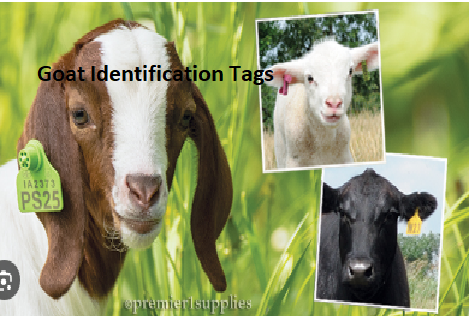
Effective management of a herd begins with reliable goat identification tags, which serve as the primary link between an individual animal and its health or production records. Whether you are tracking growth rates, monitoring breeding cycles, or meeting mandatory disease surveillance requirements, these markers are essential tools.
Understanding the different types available and the regulations surrounding their use helps owners maintain compliance while improving operational efficiency. This guide breaks down the legal requirements for disease tracking and the best practices for choosing durable, readable identifiers for your livestock.
The most critical fact for any goat owner is that federal regulations in the United States, managed by the USDA, require official identification for most goats moving in interstate commerce. This program is specifically designed for the National Scrapie Eradication Program. Scrapie is a fatal, degenerative disease affecting the central nervous system of sheep and goats.
Because it has a long incubation period, the USDA mandates that producers use official ear tags or other approved identifiers to trace animals back to their herd of origin. You must obtain these official tags through the USDA-APHIS veterinary services office or an approved manufacturer.
Understanding Official Scrapie Tags
Official scrapie tags are not the same as standard management tags you might purchase at a farm supply store. They are uniquely numbered and must be applied according to specific federal guidelines.
These tags typically feature the official shield logo and a unique alphanumeric code that identifies the state and the specific flock. Producers receive an allotment of these tags after registering their premises with their state or federal animal health authority.
Many new owners are surprised to learn that these tags are often provided free of charge by the federal government. This initiative reduces the barrier to entry for small-scale operations and hobby farmers who might otherwise neglect proper record-keeping.
You cannot simply create your own tags or use generic plastic markers for interstate transport. The identification must be recognized by the national database to ensure that if a disease outbreak occurs, health officials can quickly pinpoint the affected animals.
Management Tags vs. Official IDs
While official tags handle the legal side of things, many producers use secondary management tags for day-to-day operations. These tags are larger, often color-coded, and may include custom information like the animal’s birth year, dam, or sire. Using a dual-tagging system allows you to keep the official scrapie tag clean and intact while using the management tag for quick visual identification from a distance.
Color-coding is a standard industry practice for keeping track of age cohorts. For example, a producer might use white tags for animals born in 2024 and yellow tags for those born in 2025.
This simple system makes it easy to identify which does are reaching the end of their productive life or which bucklings are ready for sale. You can purchase these custom management tags from various livestock supply companies without needing government authorization.
Selecting the Right Material
The durability of goat identification tags depends heavily on the material used in their construction. Polyurethane is the industry standard because it is flexible, UV-resistant, and unlikely to tear out of the ear if the goat gets caught on fencing.
Some cheaper plastic tags become brittle in cold weather and may snap off after a single winter season. Always check the manufacturer’s specifications regarding temperature tolerance if you live in a region with harsh climate fluctuations.
Metal tags, often made of brass or aluminum, are sometimes used for permanent identification, though they are less common in modern goat production. They are highly durable but can be heavier and harder to read at a glance compared to large plastic panels.
Some producers prefer metal for long-term identification in dairy goats that remain in the herd for many years. Plastic, however, remains the superior choice for meat goats or animals that are frequently moved through chutes and handling facilities.
Application Techniques and Equipment
Applying a tag correctly is just as important as choosing the right type. You must use the specific applicator recommended by the tag manufacturer to ensure the stud and the panel lock together securely.
If the pin is bent or the applicator is misaligned, the tag might not close properly, leading to infection or loss. Always sanitize the applicator with a disinfectant solution between animals to prevent the spread of blood-borne pathogens or abscesses.
When tagging a goat, aim for the middle third of the ear, avoiding the major cartilage ridges and the primary veins. Piercing a vein can lead to excessive bleeding and a higher risk of the tag being ripped out as the wound heals.
A properly placed tag should sit flat against the ear, leaving enough space for the ear to grow without the plastic pinching the skin. If the tag is placed too tightly, the surrounding tissue may swell or become necrotic.
Common Challenges with Tag Loss
Goats are notoriously rough on their ear tags due to their penchant for rubbing against trees, fence lines, and each other. Even with high-quality materials, some level of tag loss is inevitable in any herd.
You can minimize this by ensuring the tag is positioned in the thickest part of the cartilage that still allows for a secure fit. Avoid placing tags too close to the edge of the ear, as this increases the likelihood of the tag being torn out during normal play or browsing.
If you find a goat with a missing tag, you should replace it as soon as possible. For official scrapie tags, you must contact your local veterinarian or the state animal health office if you need a replacement for an animal that has lost its original ID.
Maintaining a master logbook or digital spreadsheet that links the animal’s permanent ID to its scrapie tag number is vital for this exact scenario. Without these records, you may lose the ability to verify the animal’s provenance, which can complicate sales or health certifications.
Electronic Identification Systems
Technological advancements have introduced electronic identification (EID) tags to the goat industry. These tags contain a small radio-frequency identification (RFID) chip that can be read by a handheld or stationary scanner.
EID tags are particularly useful for large herds where manual record-keeping is time-consuming and prone to human error. When a goat walks through a scale or a sorting gate, the scanner automatically logs the animal’s ID, current weight, and any health notes.
While EID tags represent a higher initial investment, they pay for themselves in labor savings for large-scale producers. They also improve the accuracy of data collection, as there is no need to write down numbers or squint at a dirty plastic tag.
Some states and international markets are moving toward requiring EID for all small ruminants, so adopting this technology early can future-proof your operation. If you choose to use EID, ensure that your scanning equipment is compatible with the tag frequency used by your supplier.
Comparison of Identification Methods
Choosing the right method depends on your herd size, your goals, and your budget. The following table provides a quick comparison of the most common identification strategies used by goat producers today.
| Method | Best For | Durability | Cost |
|---|---|---|---|
| Plastic Ear Tags | General herd management | Moderate | Low |
| Official Scrapie Tags | Legal/Regulatory compliance | High | Free (USDA) |
| EID/RFID Tags | Large-scale data tracking | High | High |
| Tattoos | Registered breeding stock | Permanent | Moderate |
Alternative Identification Methods
In addition to tags, some producers use tattoos or branding as a permanent form of identification. Tattoos are commonly applied to the inside of the ear or the tail web in registered dairy breeds.
Because tattoos are permanent, they cannot be lost or tampered with, making them the gold standard for purebred identification and show animals. However, they require a physical, close-up inspection to read, which makes them impractical for sorting animals in a field.
Some producers use a hybrid approach, combining a highly visible plastic tag for daily management with a permanent tattoo for legal verification. This ensures that you have the convenience of a tag while maintaining a fail-safe backup if the tag is lost.
If you decide to use tattoos, you must register your specific herd prefix with the relevant breed association. This prevents duplicate identification numbers across different farms, ensuring your animals remain uniquely identifiable throughout their lifetime.
Frequently Asked Questions
Can I use my own homemade tags for goats?
No, official scrapie tags must be issued through the USDA or an approved manufacturer. While you are free to use your own custom tags for internal herd management, these do not satisfy federal requirements for interstate movement or disease traceability.
What should I do if my goat loses its official scrapie tag?
If an animal loses its official tag, you should attempt to replace it with a new tag from your allocated batch and document the replacement in your records. If you cannot link the animal back to its original official number, contact your state veterinarian for guidance on how to re-identify the animal according to current regulations.
Are goat identification tags required if I never sell my animals?
Most states have their own regulations regarding scrapie surveillance that apply even to hobby farms. While requirements vary by jurisdiction, it is best practice to tag all goats to ensure you are prepared for unexpected sales, veterinary emergencies, or state-mandated disease testing.
How do I read an EID tag without a scanner?
Most modern EID ear tags have a visual number printed on the outside of the plastic panel. This allows you to read the ID manually if you do not have your scanner handy, providing a secondary layer of convenience.
Do all goats need the same type of tag?
No, but all goats intended for interstate travel must bear an official scrapie-compliant tag. You can choose the brand, size, and secondary management tags that best suit your specific breed and handling facilities.
Conclusion
Managing your herd with professional-grade goat identification tags is a foundational step in responsible animal husbandry. By prioritizing official scrapie tags for regulatory compliance and supplementing them with clear, durable management tags, you ensure that your records remain accurate and your animals stay traceable. Remember that the goal is not just to satisfy government requirements but to create a system that simplifies your daily work and improves your ability to make data-driven decisions.
Whether you are managing a small backyard flock or a large commercial dairy, take the time to implement a tagging system that is both reliable and easy to maintain. Start by registering your premises for official tags, then choose the supplemental methods that fit your operational needs. Consistent identification practices will pay dividends in the health and productivity of your goats for years to come.
