

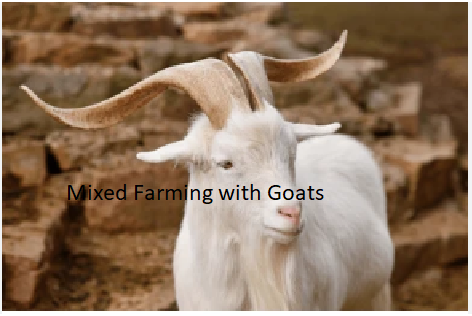
Mixed farming with goats allows landowners to diversify their biological assets while managing pastures more efficiently than with single-species systems. By integrating caprine herds with cattle, sheep, or poultry, you create a symbiotic environment that targets different vegetation layers and reduces parasitic pressure. This approach requires careful planning regarding fencing, animal behavior, and disease management, but it consistently leads to higher land utilization rates.
Whether you are managing five acres or five hundred, understanding the interaction between species is the key to balancing productivity with land health. This article explores how to successfully integrate goats into your existing operation to improve soil fertility and maximize your total output.
Understanding the Economics of Goat Integration
The primary financial appeal of mixed farming with goats is the utilization of feed resources that other livestock ignore. Cattle are primarily grazers, preferring grasses and clover, whereas goats are browsers that thrive on shrubs, weeds, and woody brush.
By pairing these species, you effectively harvest two different types of forage from the same acre of land. This dual-use strategy can increase the total kilograms of meat or milk produced per acre by 15% to 25% without requiring additional fertilizer or chemical weed control.
Profitability in this sector is heavily dependent on your choice of breed and the local market demand for goat meat, also known as chevon. Unlike beef, which often requires a longer finishing period, goats reach market weight relatively quickly, often between 6 and 10 months of age.
You should focus on high-growth breeds like Boer or Kiko if your objective is meat production. Smaller, dual-purpose breeds like Nubians offer the added benefit of milk production, which provides a more consistent cash flow throughout the year compared to seasonal meat sales.
Optimizing Pasture and Vegetation Management
Goats act as natural land managers by controlling invasive species that cattle and sheep typically avoid. Plants like multiflora rose, poison ivy, and kudzu are high in protein for goats, even though they are often considered nuisances in cattle pastures.
When you rotate livestock correctly, the goats remove the brush, which allows sunlight to reach the soil and encourages the growth of palatable grasses for your other animals. This cycle is a cornerstone of sustainable land management.
To prevent overgrazing, you must implement a strict rotational grazing schedule. Move your goats to a new paddock before they strip the bark off trees or graze the grass down to the roots.
A good rule of thumb is to move the herd when they have consumed about 70% of the available forage in a specific area. This allows the vegetation to recover and prevents the buildup of internal parasite larvae in the pasture.
Parasite Control and Animal Health Strategies
One of the most significant challenges in mixed farming with goats is the management of internal parasites, particularly Haemonchus contortus. Goats are notoriously susceptible to these worms, and they share many of the same parasites as sheep.
However, cattle generally do not share the same worm species with goats, making them an ideal partner for cross-species grazing. By rotating cattle after goats, you can significantly reduce the parasite load, as cattle ingest and “dead-end” the larvae that would otherwise infect the goats.
Monitoring the health of your herd requires regular FAMACHA scoring, a technique that assesses the color of the eyelid mucosa to determine anemia levels. You should keep records of every animal’s health status, especially during the transition periods between paddocks.
If you notice a spike in parasite counts, you must act immediately to prevent herd-wide losses. Maintaining a low-stress environment and providing mineral supplements are essential for keeping their immune systems robust enough to handle low-level parasite exposure naturally.
Space Requirements and Herd Density
Many new producers ask how much space is required to sustain a profitable operation. While there is no single “magic number,” a common industry standard suggests that you can support 5 to 8 goats on the same forage required for one cow.
The exact density depends on your soil quality, rainfall, and the specific forage species available on your property. You should start with a small number—perhaps 10 to 15 head—to learn the behavioral patterns of your herd before scaling up to larger numbers.
According to data from the USDA Natural Resources Conservation Service, proper stocking rates are the most significant factor in preventing soil erosion and maintaining long-term farm productivity. You must account for the “sacrifice area,” which is a small, well-drained portion of your farm where animals can stay during heavy rain or when pastures are recovering. Keeping your animals off wet, soft ground prevents the compaction of soil and protects the root systems of your pasture grasses.
Infrastructure and Fencing Requirements
Fencing is arguably the most critical investment for anyone practicing mixed farming with goats. Goats are agile, curious, and notoriously good at finding weaknesses in barriers.
Standard barbed wire, which works well for cattle, is usually ineffective for goats because they can easily climb over or squeeze through the gaps. You will need woven wire fencing, often called “no-climb” or “sheep and goat” fencing, to keep your herd secure.
Electric fencing can be used as a secondary layer or for interior paddock division, but it requires consistent maintenance to ensure the voltage remains high enough to discourage contact. A minimum of 4,000 volts is generally recommended for keeping goats contained.
If you have predators in your area, such as coyotes or stray dogs, consider adding a top strand of offset electric wire. This deters predators from trying to jump or dig under the fence line.
Complementary Animal Pairings
Choosing the right partner for your goats is essential for both animal welfare and operational efficiency. Cattle are the most common choice, but poultry, such as chickens or ducks, can also be integrated into a goat operation.
Chickens provide excellent pest control by scratching through manure piles to eat fly larvae and parasites, which helps break the lifecycle of many goat-specific pests. This multi-species interaction creates a more balanced ecosystem that requires fewer chemical interventions.
Comparison of Livestock Integration Benefits
| Species Pair | Primary Benefit | Parasite Interaction |
|---|---|---|
| Goats + Cattle | Vegetation variety | Cattle act as a biological vacuum |
| Goats + Sheep | Efficient forage use | High risk of shared parasites |
| Goats + Poultry | Fly and larvae control | Low risk; highly complementary |
Financial Milestones and Income Sources
Diversifying your income streams is a smart way to mitigate the risks inherent in agricultural production. While meat is the primary product, many successful mixed farms find that they can generate additional revenue through secondary products.
These include goat milk, artisanal cheeses, fiber, and even “weed control services” where you lease your goat herd to local municipalities or property owners to clear brush. Managing these different revenue streams requires a clear understanding of your local regulations and market demand.
* Meat sales: Selling kids directly to restaurants or at local markets.
* Dairy products: Processing milk into cheese, yogurt, or soap.
* Fiber production: Selling fleece from breeds like Angora or Cashmere.
* Custom brush clearing: Charging landowners a daily rate for vegetation management.
* Breeding stock: Selling registered, healthy animals to other farmers.
Frequently Asked Questions
How many acres do you need to raise 100 goats?
The amount of land required varies based on your climate and forage availability. In a lush, high-rainfall environment, you might need 15 to 20 acres to support 100 goats sustainably. In drier regions with poor soil quality, you could require 50 to 100 acres to prevent overgrazing. Always prioritize the health of your soil over the number of animals; it is better to have fewer goats on healthy land than to overstock and destroy your pastures.
What is the biggest mistake new goat farmers make?
The most common error is neglecting the importance of predator control and proper fencing. Goats are prey animals, and without adequate protection, you risk losing your entire investment to predators in a single night. Additionally, many beginners underestimate the impact of internal parasites. Failing to monitor and manage parasite loads early on leads to stunted growth, reduced milk production, and high mortality rates within the herd.
Are goats difficult to keep with cattle?
Goats and cattle are highly compatible because their grazing habits rarely overlap, meaning they don’t compete for the same food sources. Cattle graze the taller grasses, while goats browse the shrubs and weeds. As long as you have appropriate fencing that can handle both a 1,500-pound cow and a 150-pound goat, the two species can thrive together. Ensure that the cattle do not become overly aggressive toward the goats during feeding times.
How do I start selling my goat products?
Start by researching local and state food safety regulations, as these vary significantly depending on whether you are selling meat, milk, or cheese. If you are selling meat, you will likely need to use a USDA-inspected or state-inspected slaughterhouse to process the animals before sale. For dairy products, you often need a specific license and a certified processing facility. Begin with small batches to test the market in your local area before investing in expensive processing equipment.
Strategic Planning for Long-Term Success
Building a successful farm operation is a marathon, not a sprint. You should focus on establishing a strong foundation by investing in high-quality breeding stock and secure, reliable infrastructure during your first two years.
Keep detailed logs of all expenses, including feed, veterinary costs, and equipment maintenance. This data will allow you to identify which parts of your operation are the most profitable and where you can cut costs.
Networking with other producers is another vital step in your development. Join local agricultural groups or breed associations to share knowledge about best practices and market trends. These communities are often the best sources of information regarding local feed suppliers, reliable veterinarians, and potential buyers for your products.
By staying connected and remaining adaptable, you can build a sustainable and thriving operation that balances the unique needs of your goats with the long-term health of your land. Implementing mixed farming with goats is a commitment to biological diversity, and with careful management, it provides a rewarding path toward agricultural self-sufficiency.
