

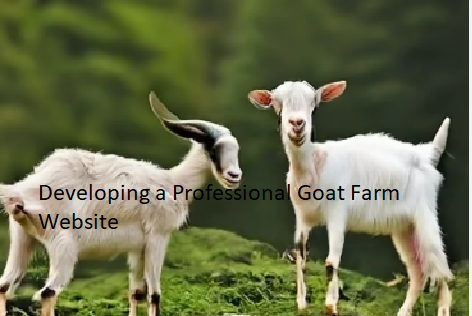
Building a functional goat farm website requires a clear focus on the specific needs of your customers, whether you are selling breeding stock, artisanal dairy products, or fiber. A well-structured digital presence acts as your primary storefront, allowing you to showcase the health of your herd and the quality of your farm management practices. By prioritising clarity and accessibility, you ensure that potential buyers find exactly what they need without unnecessary friction.
Establishing a credible online presence for your agricultural business is the most effective way to reach a wider market beyond local word-of-mouth. If you are wondering about the initial investment, a basic, professional goat farm website typically costs between $500 and $2,000 for initial development if you hire a freelancer, though DIY website builders can reduce this cost to roughly $15 to $40 per month in subscription fees. This investment covers domain registration, hosting, and the necessary design elements to display your herd’s performance data.
Defining Your Primary Objectives
Before you write a single line of code, you must determine what your business goals are for the platform. Are you primarily selling registered dairy goats, or is your focus on meat production and pasture clearing services? A clear objective dictates the layout of your landing page and the types of content you need to prioritise.
If you are selling breeding stock, your visitors will look for specific performance records and pedigree information. You should include a dedicated section for your herd’s genetics and any awards won at regional exhibitions. Conversely, if you are selling goat milk soap or cheese, your site should function more like an e-commerce catalog with high-quality imagery of your products.
Structuring Your Herd Management Data
One of the most valuable aspects of a successful agricultural site is the transparency of your herd data. Potential buyers want to see that you manage your animals with care and scientific rigor. You should maintain a page dedicated to your current stock, listing their breed, age, and individual output metrics.
Organising this data into a clear table helps visitors compare different animals quickly. This level of detail builds immediate trust with serious buyers who are looking for specific traits.
| Goat Name | Breed | Age (Years) | Primary Purpose |
|---|---|---|---|
| Luna | Nubian | 3 | Dairy Production |
| Jasper | Boer | 2 | Meat Breeding |
| Willow | Angora | 4 | Fiber Production |
Essential Pages for Every Farm Site
Every professional site needs a core set of pages to inform the reader and facilitate communication. These pages act as the foundation for your brand identity and help manage customer expectations early on. You should aim for a clean, minimalist layout that avoids cluttering the screen with too much text.
Include these essential sections to ensure your visitors have all the necessary information:
-
- About Us: A brief history of your farm and your philosophy on animal husbandry.
-
- Herd Gallery: High-resolution photos of your goats in their natural environment.
-
- Product Catalog: A list of available livestock, dairy items, or fiber products.
-
- Contact Form: An easy way for customers to inquire about pricing and availability.
-
- Farm Policies: Clearly stated terms on deposits, health guarantees, and transport arrangements.
Optimising for Local Search Visibility
Local search engine optimisation is critical for agriculture because your customers are often located within a reasonable driving distance. You should include your location, county, and state clearly in your site’s metadata and footer. Mentioning local landmarks or regional associations can also help your site rank for specific geographic searches.
Registering your business with Google Business Profile is a necessary step that complements your website. This allows your farm to appear on maps when people search for livestock or local produce in your area. Ensure the address on your website matches your business profile exactly to avoid confusing search algorithms.
Integrating High-Quality Visuals
Goats are inherently photogenic, and your website should leverage this to build a connection with your audience. Avoid using stock photography whenever possible, as customers want to see your specific animals and your unique facilities. Investing in a decent camera or hiring a professional photographer for a single day can provide enough content for years of updates.
Capture photos of your goats at different stages of life, from kids to mature breeding stock. You should also include shots of your milking parlor or grazing areas to demonstrate your commitment to cleanliness and animal welfare. A visual tour of your farm provides a sense of legitimacy that text alone cannot achieve.
Managing Sales and Inquiries
The inquiry process should be as streamlined as possible to prevent losing potential sales to frustration. Use a contact form that requires only the essential information, such as the customer’s name, email, and the specific animal they are interested in. Avoid asking for too much information upfront, as this often leads to high abandonment rates.
If you sell physical products like cheese or soap, consider integrating a simple e-commerce plugin. Platforms like Shopify or WooCommerce allow you to manage inventory and payments securely. Always keep your availability status updated in real-time to avoid selling an animal or product that is no longer in stock.
Maintaining Health and Regulatory Compliance
Transparency regarding your herd’s health status is a major selling point for any reputable farm. You should publish your testing schedule for diseases like CAE, CL, and Johne’s disease directly on your site. This practice shows that you are a responsible breeder who prioritises the long-term health of the animals.
You can find more detailed information on biosecurity and herd health standards through the United States Department of Agriculture official resources. Linking to these standards or simply mentioning your compliance with them adds an extra layer of professional authority to your platform. Always keep your health certificates updated and available upon request.
Planning for Long-Term Growth
Your website is a living asset that should evolve as your operation grows. Start with a simple, manageable design and add more complex features, such as a blog or a video library, as you have more time to dedicate to content creation. Regularly updating your site with news about your farm—such as kidding season results or new equipment additions—keeps your audience engaged.
Monitor your site’s performance using free tools like Google Analytics to see which pages get the most traffic. If you notice that your “Available Stock” page is the most popular, consider making it more prominent in your navigation menu. This data-driven approach ensures that your online efforts are always aligned with what your customers actually value.
Frequently Asked Questions
Do I need a custom domain for my goat farm?
Yes, a custom domain like yourfarmname.com is essential for professionalism. It makes your business look established and makes it much easier for customers to remember your web address.
How often should I update the photos on my site?
You should aim to update your gallery at least once every season. This shows that your farm is active and gives potential buyers a current look at your herd’s development.
Can I sell livestock directly through my website?
While you can list livestock for sale, most farmers prefer to use the website to start the conversation. It is standard practice to use the site to collect inquiries, then move the actual transaction to a private agreement or contract.
What is the most important page on my site?
The “Available” or “Shop” page is usually the most important because it is where the transaction intent is highest. Ensure this page is easy to find, loads quickly, and provides clear pricing or contact information.
Should I include a blog on my farm website?
A blog can be a great way to share your expertise and improve your search engine rankings. However, only start one if you are committed to writing at least one or two posts per month; an abandoned blog can make your site look neglected.
Conclusion
Developing a professional goat farm website is an investment that pays dividends by expanding your reach and establishing your brand. By focusing on clear communication, transparent health data, and high-quality imagery, you create a digital space that reflects the care you put into your animals. Remember that your site is a reflection of your farm, so keep it updated and user-friendly to ensure the best experience for your visitors.
As you move forward, start by securing your domain and creating a simple, clean layout that highlights your most important assets. Whether you are selling breeding stock or artisanal goods, a well-managed web presence remains one of the most effective tools for growing your agricultural business. Take the time to refine your content and stay consistent with your updates to see the best results for your operation.
