

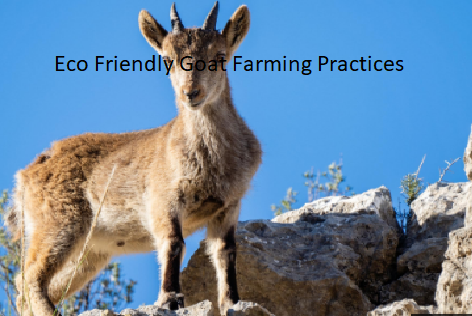
Adopting eco friendly goat farming techniques allows producers to manage land effectively while minimizing their environmental footprint. By focusing on regenerative grazing and waste management, farmers can create a closed-loop system that benefits both the soil and the herd. This approach shifts the focus from intensive industrial production toward long-term sustainability and ecological health.
Understanding the core principles
The fundamental goal of this agricultural model is to mimic natural ecosystems. Goats are natural browsers, and when managed correctly, they improve pasture health rather than depleting it. You should prioritize biodiversity to ensure that your land remains resilient against drought and pests.
Most successful producers find that an acre of land can support roughly 6 to 10 goats, depending on the forage quality and climate. This density prevents overgrazing and keeps soil compaction to a minimum. If you stock too heavily, you invite erosion and invasive weed growth.
Regenerative grazing strategies
Rotational grazing serves as the backbone of sustainable livestock management. You divide your property into smaller paddocks and move the herd frequently to allow forage recovery. This process mimics the movement of wild herds and prevents the goats from eating plants down to the root.
When goats move to a fresh paddock every 2 to 3 days, the plants have ample time to regrow. The manure left behind provides concentrated, natural fertilizer for the soil. This cycle builds organic matter, which increases the water-holding capacity of your pastures.
Managing soil health
Healthy soil is the most valuable asset on any farm. By avoiding synthetic fertilizers, you encourage beneficial microorganisms to thrive in the root zone. These microbes break down nutrients and make them available for plants, reducing the need for external inputs.
Cover cropping is another essential tool for maintaining soil integrity. During the off-season, planting diverse species like clover or rye keeps the ground protected from wind and rain. These plants also fix nitrogen, which naturally boosts the productivity of the soil for the next grazing cycle.
Water conservation and usage
Efficient water management is critical for any operation that claims to be environmentally conscious. You can minimize waste by using gravity-fed systems and high-quality troughs that prevent leaks. Collecting rainwater from barn roofs provides a clean, cost-effective source of hydration for your animals.
Goats require about 1 to 3 gallons of water daily, depending on their life stage and the temperature. Installing float valves ensures that troughs remain full without overflowing. By monitoring usage patterns, you can detect leaks early and prevent the saturation of surrounding soil.
Protecting local water sources
Runoff from livestock operations can contaminate nearby streams and ponds. You should maintain a buffer strip of native vegetation along all water bodies on your property. These buffers act as a filter, catching sediment and nutrients before they reach the water.
Fencing off riparian zones is a standard requirement for maintaining water quality. Goats should only access water through designated, hardened points or by using solar-powered pumps. This prevents the animals from trampling banks and causing unnecessary sedimentation in your local watershed.
Waste management and composting
Manure is a valuable resource rather than a waste product in a sustainable system. Composting goat bedding and manure creates a nutrient-rich amendment that can be applied to gardens or pastures. The heating process in a compost pile kills weed seeds and pathogens, ensuring a safe end product.
You should store manure on a concrete pad or a covered surface to prevent leaching into the groundwater. A well-managed compost pile needs a carbon-to-nitrogen balance, often achieved by adding straw or wood shavings. Turning the pile regularly speeds up decomposition and ensures uniform quality.
Integrating livestock and crops
Many farmers use their goats to prepare land for new plantings. Goats are excellent at clearing brush and invasive species, which reduces the need for mechanical clearing or herbicides. After the goats have browsed an area, the soil is often primed for seeding without further intervention.
This integration creates a symbiotic relationship between the animals and the farm’s vegetable or fodder crops. You can use the finished compost to enrich soil where you intend to grow hay or grain for winter feed. This internal cycle of nutrients reduces your reliance on expensive, store-bought feed and fertilizer.
Sustainable feed and nutrition
Reliance on commercial, grain-heavy feed often carries a high carbon footprint due to processing and transportation. Eco friendly goat farming emphasizes the use of on-farm forage and browse. Goats are naturally adapted to eat leaves, shrubs, and weeds, which are often overlooked by other livestock.
Silvopasture, the practice of integrating trees with grazing land, offers a high-quality food source. Goats consume the lower leaves and branches, while the trees provide shade and shelter for the herd. This system also sequesters carbon, making it a powerful tool for climate mitigation.
Comparing nutritional sources
| Feed Type | Environmental Impact | Cost Efficiency |
| :— | :— | :— |
| Native Browse | Very Low | High |
| Managed Pasture | Low | High |
| Home-grown Hay | Moderate | Medium |
| Commercial Grain | High | Low |
Purchasing local hay is a better alternative than importing feed from outside your region. By sourcing from nearby farms, you reduce the fossil fuels required for logistics. Always verify that the hay is free from broad-spectrum pesticides or synthetic fertilizers.
Natural pest and parasite control
Managing internal parasites without heavy chemical use is a hallmark of sustainable husbandry. High-intensity rotational grazing breaks the lifecycle of many worms, as larvae are left behind and die before the herd returns. Monitoring fecal egg counts allows you to treat only the animals that truly need it.
You can also use natural supplements like copper oxide wire particles to manage specific parasite loads. Herbal dewormers, such as garlic or pumpkin seeds, have been used by traditional farmers for generations. While these are not always a total replacement for medicine, they can significantly reduce your chemical dependency.
Promoting herd immunity
A healthy immune system starts with proper nutrition and low stress. Providing access to minerals, clean water, and adequate shelter prevents many common health issues. Goats that are not constantly stressed have a much higher resistance to parasites and disease.
Choose breeds that are well-suited to your specific climate and terrain. A goat native to your region will naturally require fewer interventions and thrive on local plants. Breeding for natural resistance is a long-term strategy that pays dividends in reduced veterinary costs.
Biodiversity and land management
A monoculture pasture is fragile and prone to disease outbreaks. Introducing a variety of grasses, legumes, and forbs creates a robust ecosystem that supports pollinators and wildlife. Your goal is to create a landscape where the goats are just one part of a complex, thriving food web.
Consider the role of native bees and birds on your farm. By providing habitat, such as hedgerows or flower strips, you improve the pollination of your pastures. These small additions improve the overall productivity of your land without requiring extra space.
The impact of goats on brush
Goats are uniquely capable of clearing overgrown areas that other animals ignore. By managing invasive species like buckthorn or multiflora rose, you allow native plant species to re-establish themselves. This natural form of land management is highly effective and requires no chemical inputs.
You can refer to resources from the USDA Natural Resources Conservation Service for guidance on managing invasive plant species. Using goats for this purpose is an environmentally responsible way to restore degraded land. It transforms a management problem into a productive grazing opportunity.
Economic viability of sustainable practices
Many people assume that eco friendly farming is inherently more expensive. In reality, the reduction in input costs—such as commercial fertilizer, chemical dewormers, and expensive feed—often offsets the labor requirements. By focusing on efficiency and health, you increase your profit margins over time.
Marketing your products as sustainably raised can also allow for a premium price point. Consumers are increasingly willing to pay more for meat or dairy that is produced with a light environmental touch. Transparency about your farming practices builds trust and loyalty within your customer base.
Key metrics for success
* Input costs: Keep track of your spending on feed, medicine, and fuel.
* Stocking rate: Monitor how many goats your land can support sustainably.
* Soil health: Test your soil annually to track improvements in organic matter.
* Animal longevity: Aim for a herd that remains productive for many years.
* Pasture yield: Measure the regrowth rate of your forage after grazing.
Diversifying your income streams can further stabilize your farm’s finances. You might sell breeding stock, fiber, or even rent your goats out for vegetation management services. These additional revenue streams ensure that your farm remains viable even in years where production is lower.
Frequently asked questions
How many acres do I need for 100 goats?
The amount of land depends entirely on your forage quality and climate. Generally, in a well-managed rotational system, you might need between 10 and 15 acres of high-quality pasture. In arid regions, this requirement could increase to 50 or more acres.
Are goats better for the environment than cows?
Goats are often considered more efficient because they browse a wider variety of plants. They consume woody vegetation that cows ignore, which helps prevent forest fires and invasive spread. However, both species can be environmentally beneficial if managed with regenerative grazing principles.
Can goats live off just forage?
Yes, goats are highly efficient at converting forage into energy. If the pasture is diverse and well-managed, they can thrive without grain. You must ensure they have access to appropriate minerals to balance their diet during different seasons.
Which goat farming is more profitable?
Profitability depends on your specific market and input costs. Many farmers find that niche markets, such as goat cheese or milk, offer higher margins than meat. Regardless of the product, minimizing overhead costs through sustainable practices is the most reliable way to increase profit.
Conclusion
Eco friendly goat farming offers a sustainable path for producers who want to work in harmony with their land. By prioritizing soil health, water conservation, and regenerative grazing, you create a system that remains productive for generations. The transition requires careful planning and a shift in perspective toward long-term stewardship.
Start by assessing your current land capacity and implementing simple rotations. As you observe the changes in your soil and animal health, you will likely find that nature does much of the work for you.
Reach out to local agricultural extension offices for resources specific to your region to refine your strategy. Embracing these methods ensures that your farm contributes positively to the environment while maintaining its economic viability.
