

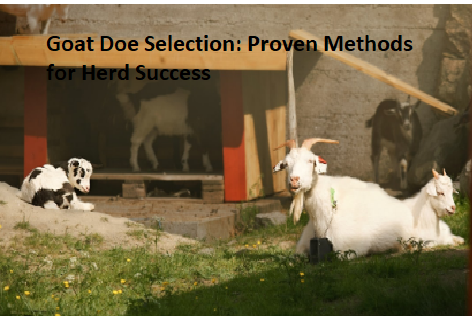
Mastering goat doe selection is the single most important factor for any producer aiming to improve herd productivity, longevity, and overall health. Whether you are raising animals for milk, meat, or fiber, the quality of your foundation females dictates the genetic trajectory of your farm for years to come. By focusing on structural soundness, reproductive history, and breed-specific standards, you can avoid costly mistakes that often plague beginners.
This article explores the precise metrics and observable traits that distinguish high-performing animals from those that will simply consume resources without delivering a return. You will gain a clear framework for evaluating potential additions to your operation.
The primary goal of goat doe selection is identifying females that possess the physical durability to produce offspring consistently over a long lifespan. A doe might look impressive in the show ring, but if she lacks the structural integrity to carry a pregnancy or the udder capacity to nurse kids, she is a liability. You must weigh functional traits—such as leg alignment, mouth structure, and body capacity—above superficial beauty.
The most successful breeders prioritize longevity, selecting animals that remain productive well into their seventh or eighth year. Consistency in production is a far better indicator of value than a single season of exceptional output.
Assessing Structural Soundness and Conformation
Structural soundness serves as the physical foundation for every other trait a doe possesses. If a goat cannot walk comfortably, she cannot forage efficiently, which directly impacts her body condition and milk production. Look closely at the feet and legs, ensuring the animal stands square with weight evenly distributed across the toes.
Avoid does with post-legs, where the rear legs are too straight, as this often leads to arthritis and mobility issues. The pasterns should be strong and upright, not sagging toward the ground, which suggests poor ligament quality.
The mouth and teeth alignment are frequently overlooked but represent a critical component of goat doe selection. A doe must be able to graze and browse effectively to maintain her weight throughout the harsh winter months. Inspect the jaw to ensure the bottom teeth meet the dental pad squarely.
An undershot or overshot jaw, commonly known as parrot mouth, prevents the animal from harvesting forage properly. This condition is often hereditary, meaning any doe with a misaligned jaw should be excluded from your breeding program to prevent passing the trait down.
Body capacity indicates how well a doe can process feed and sustain her own health during high-demand periods like lactation. A deep, wide chest floor suggests strong heart and lung capacity, which is essential for vitality. The ribs should be well-sprung, providing ample room for the rumen to function at peak efficiency.
When you observe a doe from the side, look for a long, level back that transitions smoothly into a wide rump. A steep slope from the hooks to the pins can cause issues during kidding, as it may restrict the birth canal.
Evaluating Udder Quality and Milk Production
For dairy operations, the udder is the most significant indicator of a doe’s future utility. You want to see an udder that is firmly attached, both in the front and the rear, to ensure it doesn’t drop as the animal ages. The texture should be soft and pliable after milking, rather than meaty or thick, which indicates the presence of scar tissue.
Teats should be of a moderate size, pointing downward rather than to the sides, to facilitate easy milking or nursing. Avoid does with “fish” teats or extra orifices, as these are structural defects that can lead to mastitis.
When evaluating a young doe that has not yet kidded, you must look at the dam’s record as a proxy for her potential. Examine the dam’s udder if she is available, noting her milking speed and overall ease of handling. If the dam has a history of mastitis or poor attachment, the daughter is at a significantly higher risk of developing similar problems.
You can consult the American Dairy Goat Association for standardized appraisal guidelines that help quantify these physical traits. Consistent performance across multiple lactations is the true test of a quality doe.
Udder capacity is not just about size; it is about the ability to produce milk efficiently over a long period. A massive, pendulous udder is often a sign of poor support ligaments and is prone to injury in the pasture. Prioritize a moderate-sized udder that is well-carried and high-set.
Consider how the doe moves while she is in full production; if the udder interferes with her stride, her comfort and productivity will decline. Balanced, functional udders are the hallmark of a doe that will stay in the herd for many years.
Reproductive History and Maternal Instincts
A goat doe selection process is incomplete without reviewing the reproductive history of the animal and her bloodline. You are looking for a doe that conceives easily, carries her kids to full term, and delivers without human intervention. Does that consistently require assistance during birth, or dystocia, should be culled from the herd.
Maternal instinct is equally important; a good doe accepts her kids immediately, cleans them thoroughly, and ensures they receive colostrum within the first hour of life. These behaviors are often learned and passed down, making the dam’s temperament a key factor in future success.
The frequency of twins or triplets is a desirable trait in many commercial meat operations, but it must be balanced with the doe’s ability to feed them. A doe that produces three kids but lacks the milk to support them will result in stunted, unthrifty offspring. Evaluate the weaning weights of the dam’s previous kids to determine if she is a high-volume producer.
If the kids are consistently in the top 20% of the herd, you have a strong candidate for your breeding program. Remember that nutrition plays a role, but the genetic capacity for milk production is an inherent trait.
Temperament is often ignored, but it dictates the ease of day-to-day management. A nervous, flighty doe can cause chaos in the barn, leading to increased stress for the entire herd and potential injury to herself or the handler. You want a doe that is alert and curious but calm when approached.
Docile animals are easier to milk, easier to vaccinate, and generally maintain better body condition because they waste less energy on frantic behavior. Observe the animal’s reaction to strangers and unexpected noises before committing to a purchase.
Determining Age and Health Status
Age is a critical variable in goat doe selection, particularly for buyers looking to build a herd quickly. While a young doe offers more productive years ahead, an older, proven doe provides a known track record of performance. A doe in her prime, usually between three and five years of age, is often the safest investment for a beginner.
At this stage, you can verify her udder quality, her kidding ease, and her maternal behavior. Avoid purchasing very old does unless you are specifically looking for a particular bloodline that is no longer available.
Health status requires more than just a quick look at the animal’s coat. You should insist on testing for common caprine diseases like Caseous Lymphadenitis (CL), Caprine Arthritis Encephalitis (CAE), and Johne’s disease. These conditions can devastate a herd and are often invisible in the early stages.
A reputable seller will provide documentation from a licensed veterinarian confirming the negative status of the animal. If a seller refuses to provide health records or allow independent testing, you should walk away immediately.
Look for signs of internal parasites, which remain a major cause of failure in goat operations. A pale inner eyelid, known as the FAMACHA score, is a quick way to assess the animal’s parasite load. A healthy doe should have a vibrant pink or red color in her eyelid.
If the color is white or light pink, she is likely suffering from anemia caused by a worm infestation. While some parasite load is natural, a doe that cannot maintain her own health without constant deworming is a poor candidate for your herd.
Comparing Breed-Specific Requirements
Different breeds of goats have distinct standards, and your selection criteria must align with your specific goals. For instance, Boer goats are judged primarily on meat production, emphasizing muscle development, frame size, and growth rates. In contrast, dairy goats like Saanens or Alpines are evaluated on milk volume, butterfat content, and udder structure.
Do not attempt to apply meat-goat standards to a dairy herd, as the priorities for muscle versus milk production are fundamentally different. Understanding the breed standard allows you to identify which traits are “desirable” versus “faults.”
The following table summarizes the typical focus areas for different types of goat operations:
| Operation Type | Primary Selection Focus | Secondary Focus |
|---|---|---|
| Dairy | Udder attachment and milk yield | Temperament and longevity |
| Meat | Growth rate and muscle thickness | Kidding ease and mothering |
| Fiber (Angora) | Fleece density and lock structure | Hardiness and parasite resistance |
| Pet/Companion | Temperament and size | Health and structural longevity |
When you are choosing between breeds, consider the local climate and available forage. A heavy-bodied meat goat may struggle in an area with sparse, rocky pasture, whereas a smaller, more agile breed might thrive. Match the animal’s genetic potential to the environment you can realistically provide.
If you force an animal to live in conditions that don’t suit her breed, her production will suffer regardless of her pedigree. Research the specific history of the breed in your region to understand what works best for local producers.
The Role of Pedigree and Performance Records
Pedigree records provide a window into the genetic potential of a doe, but they should be used as a guide rather than a guarantee. A doe with a long list of champions in her ancestry may still be an individual disappointment if she was raised poorly or lacks structural integrity. Use pedigree information to identify bloodlines that are known for specific traits, such as high butterfat or rapid weight gain.
Look for consistency across generations rather than just one standout ancestor. If the sire and the dam’s parents were all consistent producers, the odds of success are much higher.
Performance testing programs, such as the DHI (Dairy Herd Improvement) testing, provide objective data on a doe’s output. These records track milk yield, protein percentages, and fat content over the course of a lactation cycle. This data removes the guesswork from goat doe selection, allowing you to see exactly how much a doe contributes to the bottom line.
If a seller cannot provide objective records, you are essentially buying a pig in a poke. Reliable, long-term data is the hallmark of a professional breeder who stands behind their stock.
Be wary of “paper-chasing,” where breeders focus only on the registration papers and ignore the physical reality of the animal. A registration certificate is not a substitute for a physical inspection. Always prioritize the animal in front of you over the pedigree on the computer screen.
Use the papers to confirm lineage and check for inbreeding, but trust your eyes to evaluate the doe’s actual health and conformation. A balanced approach that combines data with physical observation is the most effective strategy.
Common Pitfalls in Doe Selection
One of the most frequent mistakes beginners make is buying too many animals at once without first testing their management skills. Start with two or three high-quality does rather than a dozen mediocre ones. This allows you to learn the individual needs of your animals and manage their health more effectively.
Expanding too quickly often leads to neglected health issues and poor record-keeping, which undermines your entire investment. Quality should always take precedence over quantity when you are first starting out.
Another pitfall is ignoring the importance of the buck, thinking the doe is the only factor in production. While the doe contributes half of the genetics, the buck can influence the entire herd’s trajectory in a single season. Do not spend your entire budget on a high-end doe and then buy the cheapest buck available.
If you cannot afford a high-quality buck, consider using artificial insemination or leasing a proven male from a neighbor. The buck’s contribution to the offspring’s growth and health is just as significant as the doe’s.
Neglecting to ask the right questions about the seller’s management practices can also lead to disaster. Ask about their vaccination schedule, their parasite management strategy, and what they feed their goats. If their management style is drastically different from yours, the transition can be stressful for the animal.
A doe that has been raised in a climate-controlled barn will struggle if moved to an open-pasture system without a transition period. Transparency about management is essential for a successful sale and a smooth transition to your farm.
Frequently Asked Questions About Selection
At what age can you breed a doe goat?
Most breeders recommend waiting until a doe is at least 8 to 10 months old or has reached 60% to 70% of her mature body weight. Breeding too early can stunt the doe’s growth and lead to complications during kidding. It is safer to prioritize physical development over chronological age.
What does baking soda do for goats?
Baking soda acts as a buffer for the rumen, helping to prevent acidosis when goats consume high amounts of grain or lush pasture. It should be provided free-choice so the goats can regulate their own intake based on their digestive needs. It is a simple, inexpensive tool for maintaining herd health.
How to tell when a doe goat is in heat?
Signs of heat include a swollen or red vulva, frequent tail wagging, increased vocalization, and riding other goats. She may also show a decrease in milk production or a change in her appetite. Monitoring these behaviors is essential for timing your breeding correctly.
Can a female goat be called a doe?
Yes, a female goat is formally referred to as a doe. In some regions, you may hear them called “nannies,” but “doe” is the standard term used by breeders and agricultural professionals. Using the correct terminology helps in clear communication with veterinarians and other producers.
How do I know if a doe is too fat for breeding?
You can assess a doe’s condition using a body condition score (BCS) on a scale of 1 to 5. A score of 3 is ideal; a score of 4 or 5 indicates she is overweight, which can lead to reproductive issues and difficult births. You should be able to feel the ribs and spine with light pressure but not see them protruding.
Closing Thoughts on Herd Improvement
Effective goat doe selection is a continuous process of refining your herd’s genetics to meet your specific production goals. By focusing on structural soundness, udder health, and reliable performance data, you build a foundation that supports long-term success.
Avoid the temptation to compromise on quality for the sake of a bargain, as the long-term costs of poor health and low productivity far outweigh any initial savings. Take your time to research bloodlines and observe animals in their home environment before making a purchase.
Remember that every animal you add to your farm represents a commitment of time, resources, and care. By choosing wisely, you set yourself up for a productive and rewarding experience in goat farming. Keep detailed records of your herd’s performance and use that information to guide your future breeding decisions.
Whether you are aiming for top-tier milk production or a robust meat herd, the principles of careful selection remain the same. Start with a solid plan, stay observant, and enjoy the process of watching your herd grow and improve under your management.
