

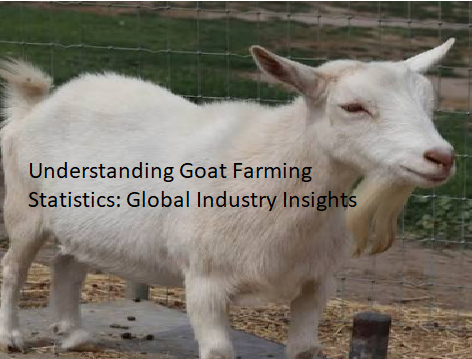
Analyzing current goat farming statistics provides a clear picture of how this resilient livestock sector supports millions of smallholder farmers and large-scale agricultural enterprises across the globe. By examining population density, market demand for goat meat, and milk production efficiency, you can better understand the economic viability of this industry.
These figures reveal that while goats are often considered secondary to cattle or sheep, they represent one of the fastest-growing segments in global animal husbandry. Whether you are investigating potential profit margins or assessing global inventory trends, these data points offer the foundation for making informed agricultural investment decisions.
The global goat population has climbed steadily over the last decade, with current estimates placing the number of goats worldwide at approximately 1.1 billion head. Asia remains the dominant region, housing over 60% of the world’s total inventory, with China, India, and Pakistan leading the production charts.
In contrast, North American goat farming statistics show a much smaller, albeit highly specialized, market focus. While the United States manages a population of roughly 2.6 million goats, the focus here is heavily weighted toward high-value dairy production and niche meat processing rather than subsistence grazing.
Global Population Trends and Regional Distribution
The distribution of goats is intrinsically linked to local climate conditions and traditional dietary habits. In arid and semi-arid regions of Africa and the Middle East, goats are the primary protein source because they thrive in environments where larger ruminants struggle to survive.
Sub-Saharan Africa accounts for approximately 35% of the total global goat population, serving as a critical asset for food security. These animals are prized for their ability to browse on scrub vegetation that would otherwise go to waste.
When looking at growth rates, the sector shows a consistent year-over-year increase of about 1.5% to 2% globally. This expansion is driven by both population growth in developing nations and an increasing appetite for goat products in Western markets.
In the United States, for example, the demand for chevon—the culinary term for goat meat—has increased as ethnic populations grow and health-conscious consumers seek out leaner protein alternatives. The United States Department of Agriculture provides detailed reports on domestic herd sizes, which highlight that Texas remains the leader in American goat production.
Economic Viability and Profitability Metrics
Determining the profitability of a goat farm requires a deep dive into specific cost-to-revenue ratios. A common benchmark for small-scale operations is the “10-goat threshold,” where operators begin to see economies of scale that justify the time spent on veterinary care and feed management.
However, professional operations typically aim for a herd size of at least 100 to 200 breeding does to achieve consistent monthly cash flow. Profit margins vary wildly based on whether you sell live animals at auction, process meat for direct-to-consumer sales, or produce specialty milk products.
Labor costs represent the largest expense for most commercial farms, often accounting for 40% to 50% of annual operating budgets. Feed costs fluctuate based on local grain prices and the availability of high-quality pasture.
Successful farms often utilize rotational grazing to reduce feed overhead, which can cut supplemental grain requirements by up to 30% during peak growing seasons. Farmers who leverage vertical integration—such as processing their own milk into cheese—often see profit margins that are 2 to 3 times higher than those who simply sell raw milk to cooperatives.
Land Requirements for Herd Management
The amount of land needed for a goat farm is one of the most frequent questions for new entrants. You can generally support 6 to 10 adult goats per acre depending on the quality of the forage and the intensity of your management system.
If you utilize intensive rotational grazing, you might push this capacity higher, but you must account for the risk of parasite buildup in the soil. For a herd of 100 goats, a minimum of 10 to 15 acres is recommended to allow for adequate pasture recovery and to prevent overgrazing.
Managing 1,000 goats requires a more industrial approach to land use and infrastructure. You would need roughly 100 to 150 acres of high-quality grazing land if you rely primarily on pasture. However, many large-scale operations in arid regions utilize a dry-lot system where goats are kept in pens and fed harvested hay or silage.
This method changes the land requirement significantly, as you are no longer dependent on the growth rate of native grasses. Proper fencing is also a massive capital expense, costing anywhere from $2,000 to $5,000 per mile depending on the materials used.
Comparison of Goat Farming Productivity
To understand the industry, it is helpful to compare the output of different goat farming models. The following table illustrates the typical yield variations between intensive dairy-focused operations and traditional meat-focused grazing systems.
| System Type | Avg. Herd Size | Primary Revenue Source | Relative Profit Margin |
|---|---|---|---|
| Smallholder Grazing | 10–25 | Live animal sales | Low (Subsistence) |
| Commercial Meat | 100–300 | Meat processing | Moderate |
| Intensive Dairy | 50–150 | Cheese/Milk products | High |
Key Factors Influencing Market Growth
Several external factors are currently reshaping the industry and influencing global goat farming statistics. The most significant shift is the increased consumer demand for goat milk, which is often marketed as being more digestible than cow milk.
This shift has led to a surge in dairy goat genetics, with breeds like the Alpine and Saanen commanding premium prices at market. Furthermore, the rise of “farm-to-table” movements has incentivized small-scale farmers to focus on high-quality, artisanal products rather than commodity production.
* Genetic Improvement: Investing in high-yield breeds can increase milk production by up to 25% per lactation period.
* Disease Management: Effective vaccination programs reduce mortality rates from an average of 15% to under 5%.
* Market Diversification: Selling value-added products like yogurt, soap, and specialty cheeses increases revenue per gallon of milk.
* Regulatory Support: Government subsidies for small-scale livestock farmers in developing regions continue to bolster inventory numbers.
Infrastructure and Operational Costs
Building the necessary infrastructure for a goat farm is a front-loaded investment that heavily impacts the first three years of operation. Shelter, fencing, and milking parlors are essential assets that require significant capital.
A basic, functional barn can cost between $15 and $30 per square foot to construct, depending on local labor rates and materials. You also need to account for veterinary equipment, such as hoof trimmers, drenching guns, and kidding supplies, which add another $2,000 to $5,000 to your initial startup list.
Technology is also playing a role in modern goat farming, with automated milking systems becoming more common in large-scale operations. While these systems can cost upwards of $50,000, they drastically reduce the daily labor hours required for a herd of 200-plus goats.
Data tracking software is another growing trend, allowing farmers to monitor individual animal health, breeding cycles, and milk yields with precision. Using these tools allows for a more analytical approach to herd management, which is essential for maintaining profitability in a competitive market.
Common Challenges in the Industry
Despite the potential for profit, goat farming is fraught with challenges that keep mortality rates higher than in cattle ranching. Internal parasites, such as Haemonchus contortus, are the single greatest threat to goat health in humid climates.
Farmers must implement a strict deworming schedule and utilize FAMACHA scoring to monitor anemia levels in their herds. Failing to manage these parasites can result in a 20% to 30% reduction in herd productivity annually.
Predation is another major issue, especially for farmers who utilize outdoor grazing systems. Coyotes, stray dogs, and bobcats can devastate a herd in a single night if adequate protection is not in place.
Many farmers invest in livestock guardian dogs (LGDs), such as Great Pyrenees or Anatolian Shepherds, which are proven to reduce predation by up to 70% to 80%. The cost of raising and training these dogs is a necessary overhead that must be factored into the total cost of farm security.
Frequently Asked Questions
Is it profitable to have a goat farm?
Profitability is achievable but requires a shift from hobby farming to professional management. Many small-scale farmers find success by focusing on high-value niches like organic meat or specialty dairy products rather than competing in the low-margin commodity market.
How many acres do you need to raise 100 goats?
You generally need between 10 and 15 acres for a herd of 100 goats, assuming you are using rotational grazing. If the land is poor or you are not using an intensive management system, you may need upwards of 30 acres to avoid overgrazing.
How many goats does it take to be profitable?
While you can make supplemental income with as few as 10 to 20 goats, most full-time operations require a herd size of at least 100 to 200 does. This size allows you to reach the volume necessary to cover fixed costs like equipment, insurance, and veterinary care.
What is the biggest cost in goat farming?
Labor and feed are consistently the largest expenses, often totaling over 60% of total operating costs. Reducing these through efficient infrastructure and high-quality pasture management is the primary way to improve profit margins.
Do I need a license to sell goat meat or milk?
Yes, regulations vary significantly by country and state. You typically need a meat handler’s license for selling cuts of meat and a Grade A dairy permit if you intend to sell raw or processed milk products to the public.
Industry Takeaways and Future Outlook
The data surrounding global goat production demonstrates that this sector is shifting toward greater efficiency and specialization. While traditional subsistence farming remains a vital component of the global landscape, the rise of commercial dairy and meat operations is driving the industry toward more sophisticated management practices. By understanding these goat farming statistics, you can see that success is increasingly tied to technology, parasite control, and the ability to find profitable niches.
If you are considering entering this space, start by conducting a local market analysis to identify the demand for goat products in your region. Focus on building a strong foundation with healthy, high-quality stock and invest in the infrastructure needed for long-term sustainability. The industry is poised for continued growth, and those who prioritize data-driven management will be best positioned to capitalize on the increasing demand for goat-based agricultural products.
