

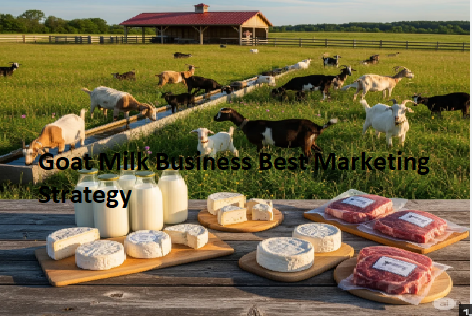
Finding the goat milk business best marketing strategy requires a shift from viewing your product as a commodity to positioning it as a premium, health-conscious lifestyle choice. Because goat milk is often purchased by niche demographics—such as parents of infants with cow milk sensitivities or adults seeking easier-to-digest dairy—your marketing must prioritize transparency and nutritional education.
By focusing on direct-to-consumer sales and local brand advocacy, you can build a loyal customer base that values quality over low-cost mass production. This approach helps you avoid the margin-crushing competition of large-scale dairy retailers while establishing your farm as a trusted source of clean, nutrient-dense nutrition for your local community.
The most effective approach for a small-to-medium producer is a hyper-local, education-first model that focuses on direct-to-consumer relationships. You should prioritize building a presence at high-traffic farmers’ markets where you can offer samples, as taste and texture are the primary barriers for new customers.
Supplement this with a “farm-to-table” subscription model, often referred to as a Herd Share program, which bypasses many of the restrictive retail regulations surrounding raw dairy sales in specific jurisdictions. By treating your customers as partners in your farm’s health journey, you create a defensive moat around your business that generic grocery store brands cannot replicate.
Defining Your Unique Value Proposition
To succeed, you must clearly articulate why your goat milk is superior to the homogenized, shelf-stable options found in supermarkets. Most consumers associate goat milk with a strong, “goaty” flavor, which is usually a result of poor herd management or improper cooling techniques.
Your marketing should explicitly address this by highlighting your specific handling processes, such as rapid chilling and diet control for your goats. When you emphasize that your milk is creamy, mild, and fresh, you dismantle the primary psychological barrier keeping potential customers away from your product.
Focusing on the Health-Conscious Niche
Many of your best customers will arrive at your door because they have specific health needs. Goat milk contains smaller fat globules and different protein structures than cow milk, making it a viable alternative for those with mild lactose intolerance.
Create educational content—whether through brochures, social media posts, or simple signage—that explains these biological differences in plain English. Avoid making medical claims that could land you in legal trouble, but do share peer-reviewed information about digestibility and nutrient density.
Building Brand Trust Through Transparency
Transparency is your most powerful asset when you are a small producer. Invite your customers to visit the farm, see the living conditions of your goats, and observe the milking process.
When people see clean, well-cared-for animals, they become lifelong brand ambassadors who will advocate for your business in their own social circles. Use high-quality photography of your herd and your facility on your website and social media channels to prove your commitment to animal welfare and hygiene.
Leveraging Local Farmers’ Markets
Farmers’ markets provide the highest return on investment for new goat milk businesses because they allow for immediate feedback. You aren’t just selling a bottle of milk; you are selling the story of your farm and the personality of your goats.
Set up a booth that is clean, professional, and inviting, and always have a small cooler with chilled samples available for hesitant shoppers. Once a customer tastes the difference between fresh, local milk and store-bought alternatives, the price point becomes secondary to the quality.
Effective Booth Presentation
* Clear Pricing: Display your prices prominently so customers don’t have to ask, which removes a point of friction.
* Educational Signage: Use a chalkboard or printed sign to highlight the benefits of goat milk, such as its high calcium content or A2 protein profile.
* Product Variety: Offer samples of goat cheese or yogurt alongside the milk to show the versatility of your dairy products.
* Contact Information: Always have business cards or a QR code that leads to your email list or subscription signup page.
Implementing a Subscription-Based Revenue Model
Consistency is the biggest challenge in the dairy business, and a subscription model is the best way to solve it. By encouraging customers to commit to a weekly or bi-weekly delivery, you gain predictable cash flow that helps you manage feed costs and herd maintenance.
This model also builds a sense of community, as subscribers feel like they are part of a private club that gets first access to your freshest batches. You can manage these subscriptions through simple software or even a well-organized spreadsheet, provided you maintain clear communication with your members.
Managing Herd Shares
In many regions, regulations prevent the direct sale of raw milk, but Herd Share programs offer a legal pathway to distribution. In this arrangement, a customer “buys” a portion of a goat, effectively becoming a part-owner of the animal.
They then pay a “boarding fee” to you for the milking and care of that goat, and they receive the milk produced by their share. This is a common and effective strategy, but you must consult with your local department of agriculture to ensure your specific legal framework is compliant with state laws.
Digital Marketing for Local Visibility
Even if your business is physical, your digital presence dictates how many new customers find you. A simple, mobile-friendly website is mandatory, as most people will search for “goat milk near me” on their phones.
Focus your search engine optimization efforts on local keywords, such as the name of your town or county, rather than trying to rank for broad, global terms. Use local directories, such as the USDA Local Food Directories, to ensure your farm is listed in official databases where your target customers are looking.
Social Media Engagement
Use platforms like Instagram or Facebook to document the daily life of your farm, focusing on the personality of your goats. People love seeing the “behind the scenes” content, such as new kids being born or the daily routine of the milking parlor.
This humanizes your business and makes your brand feel approachable and authentic. Avoid overly polished, corporate-style ads; instead, aim for raw, honest content that shows the hard work behind every bottle of milk you sell.
Analyzing Profitability by Product Line
Not all goat milk products are equally profitable, and your marketing strategy should reflect the margins of your inventory. While raw or pasteurized milk is your primary driver, high-value items like aged cheeses or specialty yogurts often carry better profit margins. Use the following table to understand how different product categories typically perform in a small-scale farm environment.
| Product Category | Shelf Life | Relative Margin | Marketing Focus |
|---|---|---|---|
| Fresh Milk | Short | Low | Volume and Routine |
| Soft Goat Cheese | Medium | High | Taste and Pairing |
| Aged Cheese | Long | Very High | Prestige and Gift Sets |
| Goat Milk Soap | Very Long | Medium | Lifestyle and Gifting |
Managing Seasonal Demand Fluctuations
Dairy production is inherently seasonal, and your marketing strategy must adapt to these natural cycles. During the peak kidding season, you will have a surplus of milk, which is the perfect time to run promotions or introduce new cheese varieties.
Conversely, when your herd is in the dry period, you should shift your marketing focus toward long-shelf-life products like aged cheeses or non-food items like goat milk soap. Being honest with your customers about these cycles builds trust; they will appreciate knowing why milk might be in shorter supply at certain times of the year.
Developing Non-Perishable Revenue Streams
When milk production dips, focus your marketing on value-added products that do not require fresh milk. Goat milk soap is a fantastic way to keep your brand in front of customers when you don’t have fresh dairy to sell.
You can market these as luxury skincare items, emphasizing the moisturizing properties of goat milk. This keeps your cash flow positive during the off-season and prevents your customers from drifting to other suppliers who might have a more consistent, albeit lower-quality, supply chain.
Networking with Local Chefs and Retailers
While your primary focus should be direct-to-consumer sales, establishing relationships with local high-end restaurants can provide a significant boost to your brand’s prestige. Chefs are often looking for unique, locally sourced ingredients that they can highlight on their menus.
A “farm-to-table” partnership with a respected local restaurant serves as a powerful endorsement of your quality. If a chef uses your goat cheese in an appetizer, that dish becomes a marketing vehicle for your entire business.
Selecting the Right Partners
* High-End Restaurants: Focus on establishments that prioritize locally sourced ingredients and farm-to-table menus.
* Boutique Grocers: Seek out independent markets that focus on organic or artisanal goods, as their customers are already primed for your price point.
* Coffee Shops: Some high-end coffee shops are willing to feature local goat milk as a premium alternative for lattes, which puts your product in front of a wide audience.
* Wellness Centers: Partner with local yoga studios or health clinics to distribute samples or host tasting events for their members.
Scaling Responsibly Without Losing Quality
As your business grows, the temptation to scale too quickly can threaten the very quality that made you successful. Marketing for a larger operation requires more focus on consistent branding and streamlined logistics rather than just the “local farm” charm.
If you decide to expand your herd, do so in manageable increments that allow you to maintain your standards for animal care and milk quality. Communicate these changes to your existing customers, as they will be interested in the growth of the farm they have supported from the beginning.
Maintaining the Personal Touch
Even as you scale, ensure your marketing retains a personal element that keeps customers connected to the farm. Continue to share stories about your herd, your challenges, and your successes.
If you move from a small farm to a larger facility, use that as a narrative point—explain how the expansion allows you to serve more families with the same high-quality product. Growth should be framed as a benefit to the customer, ensuring they feel they are part of a successful, thriving local business.
Conclusion
Developing a successful goat milk business best marketing strategy is about finding the balance between product quality and community engagement. By focusing on the unique health benefits of your dairy, maintaining radical transparency, and building a loyal base through subscription models and local farmers’ markets, you create a sustainable business that thrives on relationships rather than just transactions. Use the seasonal nature of your herd to your advantage by diversifying into value-added products, and never underestimate the power of a personal story in a world dominated by anonymous grocery store goods.
Start by identifying your local niche, perfecting your product presentation, and building genuine trust with your neighbors. Once that foundation is solid, you can scale your operations with confidence, knowing you have a loyal customer base that values exactly what you provide.
