

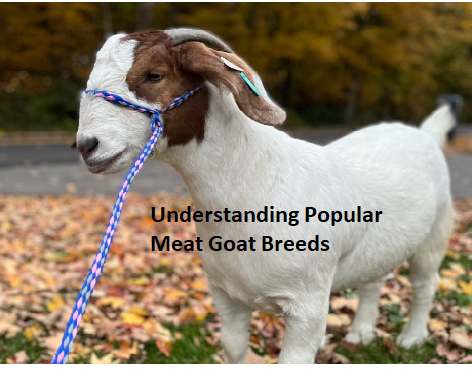
Selecting the right meat goat breeds is a foundational step for any producer aiming to improve carcass quality, growth rates, and overall herd profitability. Whether you are managing a small homestead operation or a large-scale commercial ranch, understanding the distinct physiological traits of various goat types allows you to align your livestock with specific market demands.
By focusing on genetics known for efficiency and muscling, you can optimize feed conversion ratios and shorten the time to market. This article explores the most effective breeds for meat production, providing insights into their performance metrics, environmental adaptability, and the specific characteristics that define their value in the current agricultural economy.
The Boer goat is widely considered the gold standard for meat production due to its rapid growth and superior muscling. Originating in South Africa, this breed was specifically selected for its ability to gain weight efficiently on various forage types. A mature Boer buck typically weighs between 240 and 300 pounds, while does generally reach 190 to 230 pounds.
Their high carcass-to-bone ratio makes them a preferred choice for producers looking to maximize meat yield per animal. Because they are highly fertile and often produce twins or triplets, they offer a consistent return on investment for commercial operations.
Comparing Meat Goat Performance
Choosing between different goat varieties requires a clear understanding of how they perform under standard management conditions. While some breeds are dual-purpose, others are bred exclusively for their meat quality and frame size. The following table illustrates the key differences in weight and growth potential among common meat-focused breeds.
| Breed | Avg Mature Buck Weight | Primary Market Use |
|---|---|---|
| Boer | 250–300 lbs | Commercial meat production |
| Kiko | 180–250 lbs | Hardy, low-input production |
| Spanish | 150–200 lbs | Brush management and meat |
| Myotonic | 150–200 lbs | Niche meat market |
The Kiko breed offers a compelling alternative for producers who prioritize hardiness and parasite resistance over sheer frame size. Developed in New Zealand, these goats were bred to thrive in rugged, high-rainfall environments with minimal human intervention. Their ability to maintain body condition on poor-quality browse makes them an ideal choice for operations that cannot afford intensive supplemental feeding.
While their individual carcass weight may be lower than a Boer, their lower veterinary costs and higher survivability often result in better net profitability. Many producers choose to crossbreed Kikos with Boers to achieve a balance between rapid growth and operational durability.
Spanish goats are often described as the “survivalists” of the meat goat world. These animals descended from livestock brought to North America by early Spanish explorers and have been naturally selected for centuries to survive in harsh, arid climates. They are exceptionally resistant to parasites and are frequently utilized for land clearing because they prefer woody browse over grass.
While they are smaller than commercial Boer lines, their hardiness ensures that fewer kids are lost to disease or environmental stress. Producers often value them for their ability to thrive in regions where more refined breeds might struggle to maintain weight.
Myotonic goats, often referred to as “fainting goats,” possess unique muscular characteristics that have gained them attention in niche meat markets. The breed’s genetic condition causes their muscles to stiffen when startled, which leads to a higher muscle-to-fat ratio in specific cuts. They are known for being docile and easy to handle, which reduces the stress levels in the herd during transport or processing.
While they have a smaller frame than many commercial meat goat breeds, their calm temperament and excellent maternal instincts make them a manageable option for small-scale breeders. Their distinct meat quality is frequently sought after by chefs looking for specific flavor profiles.
For those interested in the official standards and genetic registries, the Oklahoma State University Department of Animal and Food Sciences provides extensive documentation on breed characteristics and history. Reviewing these profiles can help you determine which genetics will best suit your specific geographical location and forage availability.
It is essential to look for breeders who performance-test their animals, as this ensures that the growth and health data provided are accurate and repeatable. Always prioritize animals that demonstrate strong structural integrity, as this influences long-term productivity and longevity within the herd.
Managing a successful meat goat operation involves several key considerations beyond just the breed selection. You must establish a routine that supports optimal health and growth, particularly during the weaning and finishing stages. Consider the following factors for building a sustainable herd:
- Implement a strict deworming schedule based on FAMACHA scoring to combat internal parasites.
- Ensure access to high-quality mineral supplements specifically formulated for goats to prevent deficiencies.
- Maintain a controlled breeding season to ensure that kidding occurs during favorable weather conditions.
- Invest in secure fencing to protect the herd from predators like coyotes and stray dogs.
- Monitor the body condition score of your breeding does to ensure they maintain sufficient energy for lactation.
Crossbreeding is a common strategy used to capture “hybrid vigor” in meat production. By crossing a Boer buck with a Kiko or Spanish doe, a producer can combine the rapid growth rates of the Boer with the superior parasite resistance of the other breeds. This practice often results in offspring that grow faster than their purebred counterparts while remaining easier to keep in the pasture.
However, it is vital to maintain accurate records so you do not lose track of the genetic traits being introduced into your herd. Over-breeding for extreme size can sometimes lead to issues with kidding difficulty, so balance is essential.
Common Questions About Goat Production
Which breeds are the most profitable for beginners?
Beginners often find success with Kiko or Spanish goats because these breeds are more resilient to common health issues and require less intense management. Starting with a hardier breed allows you to learn the fundamentals of goat husbandry without the high costs associated with maintaining sensitive, high-performance animals.
Do meat goat breeds taste different from one another?
While the taste of goat meat is primarily influenced by the animal’s diet, age, and processing methods, some breeds do offer subtle differences in texture and fat marbling. Younger animals generally produce a more tender, milder meat, regardless of the breed, while older goats have a stronger, more robust flavor profile.
How many common breeds of meat goats are there?
There are four primary breeds that dominate the meat industry in North America: Boer, Kiko, Spanish, and Myotonic. While other breeds like the Nubian or Savanna are sometimes used for meat production, the four listed are the ones most consistently selected for their carcass traits and growth efficiency.
What is the ideal age to process a meat goat?
Most commercial producers aim to process meat goats between 6 and 10 months of age. At this stage, the animal has reached an ideal market weight while still retaining the tenderness that consumers expect. Waiting longer than a year often results in tougher meat and higher feed costs that rarely translate into a higher market price.
Can I raise meat goats on pasture alone?
Yes, many meat goat breeds can thrive on pasture or brush, but their growth rates will be slower compared to those receiving grain supplements. If your goal is rapid weight gain for a specific market date, supplemental feeding is usually required to ensure the animals reach their full potential. If you are prioritizing low-input costs, pasture-raised systems are entirely viable but require more time for the goats to reach finished weight.
Successful production requires a long-term perspective on genetics and animal welfare. When you focus on selecting meat goat breeds that are well-suited to your local environment, you reduce the likelihood of health issues and increase the overall consistency of your product. Whether you choose the rapid growth of the Boer or the rugged durability of the Kiko, your commitment to proper nutrition and parasite management will ultimately dictate your success.
By staying informed on current market trends and maintaining accurate records of your herd’s performance, you can build a sustainable and profitable agricultural business. Take the time to visit local breeders and observe their operations firsthand to see how different animals perform under real-world conditions. Engaging with your local agricultural extension office is another excellent way to find resources tailored to your specific region and climate.
