

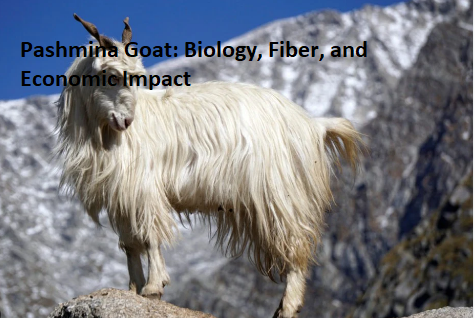
The Pashmina goat, scientifically known as Capra hircus laniger, is the source of the world’s most coveted natural fiber. Found primarily in the high-altitude regions of the Himalayas, these animals have adapted to some of the harshest climates on Earth.
Understanding the biology and economic role of the Pashmina goat is essential for anyone interested in the luxury textile industry or high-altitude pastoralism. This article explores how these animals survive extreme conditions and why their unique undercoat remains a benchmark for quality in global markets.
The primary question regarding these animals is their identity: a Pashmina goat is a specific breed of cashmere goat native to the Changthang plateau in Ladakh and surrounding regions. They are not a separate species from the common goat, but rather a distinct subspecies bred and selected over centuries for their extraordinary fleece.
These goats are typically raised by nomadic herders, such as the Changpa people, who move their flocks across high mountain passes to find sparse grazing land. The extreme cold of these regions, where temperatures frequently drop below -30 degrees Celsius, triggers the growth of the fine, insulating undercoat that becomes the raw material for luxury pashmina products.
Biological Adaptations to Extreme Environments
The survival of the Pashmina goat in the Himalayas is a result of specialized physiological adaptations. Their bodies are designed to conserve energy and heat during the brutally long winter months. The most critical feature is the dual-layer coat.
The outer layer consists of coarse, long guard hairs that protect the animal from snow and rain, while the inner layer is composed of ultra-fine, soft fibers that provide essential insulation. This undercoat is what we identify as cashmere or pashmina fiber.
During the spring, as temperatures begin to rise, the goats naturally shed this thick undercoat. Herders carefully collect this fiber through a process of combing rather than shearing. Because the goats live at altitudes often exceeding 4,000 meters, their metabolism is uniquely tuned to low-oxygen environments.
This high-altitude existence is not merely a geographic detail; it is the fundamental driver of fiber quality. Lower-altitude goats do not produce the same density or fine diameter of fiber, which is why authentic pashmina remains geographically tied to the Himalayan region.
Fiber Characteristics and Quality Standards
Pashmina fiber is defined by its incredibly small diameter, typically measuring between 12 and 15 microns. For comparison, human hair usually ranges from 50 to 100 microns.
This extreme fineness is what gives finished pashmina garments their legendary softness and lightweight warmth. The length of the fibers is also a critical metric; longer fibers are generally more durable and less prone to pilling when spun into yarn.
Quality control in the industry relies on measuring these physical attributes with precision. Traders and manufacturers often use laboratory testing to verify the composition of raw fiber lots. A high-quality batch will be free of the coarser guard hairs, which must be painstakingly separated from the fine down.
This manual sorting process is labor-intensive, often requiring days of work for a single kilogram of finished, clean fiber. The purity of the fiber is the primary factor determining the final market price for the raw material.
Nomadic Herding Practices
The lifecycle of the Pashmina goat is deeply intertwined with the nomadic lifestyle of the Changpa tribe. These herders manage flocks that range from a few dozen to several hundred animals, depending on the availability of grazing territory.
The goats graze on hardy, low-lying shrubs and grasses that grow in the arid, windswept landscape of the Tibetan plateau and Ladakh. Because the vegetation is sparse, the herds must be constantly mobile to prevent overgrazing.
This nomadic system is a sustainable model that has persisted for centuries. The herders act as stewards of the land, moving in seasonal cycles that allow the fragile alpine pastures to recover.
However, this way of life is increasingly under pressure from climate change and shifting economic policies. As weather patterns become more erratic, the availability of winter forage is less predictable, putting both the health of the herds and the livelihoods of the herders at risk.
Economic Significance and Market Valuation
The economic value generated by the Pashmina goat supports entire communities in Northern India, Nepal, and Tibet. The raw fiber is sold to collectors and traders, who then transport it to processing centers in places like Srinagar, Kashmir.
Here, the fiber is cleaned, spun, and woven into high-end textiles. The transition from raw material to a finished shawl involves many specialized artisans, including spinners and master weavers who use traditional handlooms.
The price of raw pashmina fiber fluctuates based on global demand and the total annual output. Because the production is limited by the number of goats and the harsh conditions of the high-altitude environment, the supply is inherently constrained.
This scarcity helps maintain the premium price point of the finished goods. In many cases, the value added during the weaving process far exceeds the initial cost of the raw fiber, as the skill of the artisan is a primary component of the final price.
Comparative Analysis of Fiber Sources
While many people associate the name “Pashmina” strictly with the Himalayan goat, similar fibers are produced by other breeds in different parts of the world. However, the specific environmental stresses of the Himalayas produce a unique fiber profile that is difficult to replicate. The following table provides a comparison of how different goat fibers are classified in the global textile market.
| Fiber Type | Typical Diameter (Microns) | Primary Region | Relative Scarcity |
|---|---|---|---|
| Pashmina (Changthangi) | 12–15 | Himalayas | Very High |
| Inner Mongolian Cashmere | 15–17 | China/Mongolia | Moderate |
| Mohair (Angora Goat) | 25–40 | South Africa/USA | Low |
| Standard Goat Wool | 40+ | Global | Very Low |
This table illustrates why the Pashmina goat is held in such high regard. The lower the micron count, the softer and more valuable the fiber becomes.
While other regions produce high-quality cashmere, the specific climate-driven fineness of the Himalayan-bred goat remains the gold standard. You can learn more about the technical classification of these fibers through the Food and Agriculture Organization of the United Nations, which tracks global pastoral trends.
Challenges Facing Modern Producers
Despite the high value of the finished products, the producers themselves often face significant economic hurdles. The market for raw fiber is often controlled by middlemen, which can lead to low profit margins for the nomadic herders at the start of the supply chain. Additionally, climate change is altering the timing of the spring shedding season, making it harder for herders to time their collection efforts effectively.
Another challenge is the proliferation of synthetic imitations in the global market. Many products labeled as “pashmina” are actually blends of sheep wool and synthetic fibers like viscose or nylon. These products dilute the brand value of authentic pashmina and confuse consumers.
Authentic pashmina is a natural, sustainable, and biodegradable fiber. Protecting the authenticity of these goods is essential for ensuring that the nomadic herders receive a fair price for their labor.
Common Questions About Pashmina Goats
Which specific goat breed produces pashmina?
The breed is known as the Changthangi goat, found in the Ladakh region of India. They are specifically adapted to the high-altitude, cold-desert environment of the Himalayas.
Is pashmina the same as cashmere?
Technically, all pashmina is a form of cashmere, but not all cashmere is pashmina. The term “pashmina” refers specifically to the highest-quality, finest-diameter cashmere sourced from the Himalayan Changthangi goat.
How is the fiber collected from the goats?
The fiber is collected by hand-combing the goat during the natural spring molting season. This process is gentle and does not harm the animal, as it simply removes the loose undercoat that the goat would otherwise shed.
Why is pashmina so expensive?
The cost is driven by the extreme rarity of the fiber and the labor-intensive process required to harvest and refine it. Each goat produces only a tiny amount of high-quality undercoat per year, and the subsequent weaving process is almost entirely manual.
Do these goats live in captivity?
They are primarily raised in semi-nomadic conditions rather than industrial factory farms. The animals require vast areas of open land for grazing, which makes intensive captive farming impractical and detrimental to the quality of the fiber.
Sustainability and the Future
The future of the Pashmina goat relies on balancing traditional knowledge with modern sustainability practices. Supporting fair trade initiatives that connect nomadic herders directly to ethical retailers is one of the most effective ways to preserve this industry.
These initiatives ensure that the people who work in the most difficult conditions receive a greater share of the profit. Furthermore, maintaining the health of the high-altitude grasslands is critical for the long-term survival of the flocks.
Consumers play a significant role by choosing to purchase authentic, ethically sourced products. By understanding the effort required to produce even a single pashmina scarf, buyers can develop a deeper appreciation for the craft.
The Pashmina goat is more than just a source of fiber; it is a symbol of a resilient culture and a unique biological miracle. As we look toward the future, the goal should be to maintain this delicate balance between human tradition and the natural world, ensuring that the legacy of the Pashmina goat continues for generations to come.
