

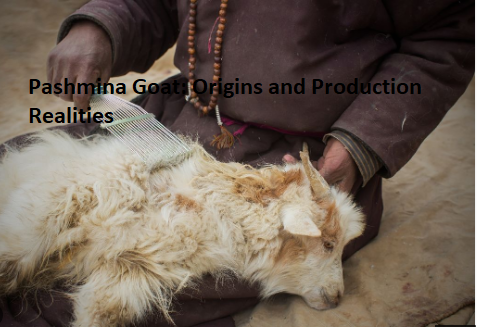
The Pashmina goat is a unique breed of caprine found primarily in the high-altitude regions of the Himalayas. These animals are celebrated globally for producing the ultra-fine undercoat fiber that eventually becomes the world’s most coveted luxury textiles.
Understanding the life of the Pashmina goat requires looking beyond the finished scarf to the harsh, cold environments where these resilient creatures thrive. By examining their biology, habitat, and the specific harvesting methods used by nomadic herders, we can better appreciate the rarity and true cost of authentic pashmina products.
The primary question regarding the Pashmina goat is which specific breed produces the fiber, and the answer is the Changthangi goat. These goats are indigenous to the Changthang plateau of Ladakh, a high-altitude desert region in India. While other goat breeds produce cashmere, the specific environmental stresses of the Himalayas cause the Changthangi to grow an exceptionally soft and dense undercoat.
This undercoat, known as pashm, is harvested once a year during the spring molting season. The fiber diameter is typically between 12 and 15 microns, which is significantly finer than standard sheep wool.
The Biological Adaptations of the Changthangi
The harsh climate of the Tibetan plateau and Ladakh acts as the primary driver for the development of the animal’s coat. At altitudes exceeding 14,000 feet, temperatures often plummet to minus 40 degrees Celsius during the winter months.
To survive, the goat grows a two-layered coat consisting of a coarse outer hair and a dense, insulating under-layer. This inner layer is the source of the raw material used for high-end textiles.
Genetic studies confirm that the Changthangi is distinct from lowland breeds due to its specialized metabolism and hair follicle density. The goats have evolved to store energy efficiently, allowing them to maintain their health despite the sparse vegetation available in their mountainous habitat.
Their ability to thrive on minimal grazing is a direct consequence of this evolutionary pressure. Without these extreme conditions, the goats would not produce the fine down that gives pashmina its characteristic warmth and softness.
Geography and Habitat Requirements
The geography of the Changthang region is defined by its arid, rocky terrain and extreme temperature fluctuations. These goats are primarily managed by the Changpa, a semi-nomadic community that has herded these animals for centuries.
The migration patterns of the herds are dictated by the availability of water and seasonal grasses. Because the region is so remote, the livestock are constantly exposed to environmental volatility.
This geography is not merely a backdrop; it is a fundamental component of the production cycle. If these goats were moved to lower, warmer altitudes, the quality of their undercoat would degrade rapidly.
The animals would no longer need the fine, insulating down to survive, leading to a coarser fiber. This is why attempts to replicate true pashmina production in other parts of the world have historically struggled to match the quality of the original Himalayan fiber.
Harvesting and Processing Methods
Harvesting the fiber is a labor-intensive process that occurs naturally during the spring. As the weather warms, the goats begin to shed their winter undercoat, often rubbing against rocks and shrubs.
Herders use specialized combs to gently remove the loose fibers by hand. This manual process ensures that the fine down is separated from the coarser guard hairs.
After the raw material is collected, it must undergo a rigorous cleaning and sorting process. The fiber is washed to remove dust, vegetable matter, and natural oils before it is hand-sorted.
Because the fibers are so delicate, most of the secondary processing is still performed using traditional wooden looms. You can find more detail on the classification of these fibers through the Food and Agriculture Organization of the United Nations, which monitors agricultural practices in mountain regions.
Economic Impact on Nomadic Communities
The economy of the Changpa herders is almost entirely dependent on the sale of raw pashm. A single goat produces only about 150 to 200 grams of usable fiber per year, which is a tiny amount compared to other wool-bearing animals.
Because the yield per animal is so low, large herds are necessary to sustain a family’s livelihood. The price of the raw fiber fluctuates based on global demand and the severity of the previous winter.
The following table outlines the approximate yields and typical market factors for producers:
| Category | Average Metric |
|---|---|
| Annual Yield per Goat | 150–200 Grams |
| Fiber Diameter | 12–15 Microns |
| Harvest Season | Spring (March–May) |
| Primary Producer Region | Ladakh, India |
Distinguishing Pashmina from Mass-Market Cashmere
A common point of confusion is the difference between generic cashmere and authentic pashmina. While both come from goats, the term pashmina is traditionally reserved for the finest grade of cashmere sourced from the Changthangi breed.
Mass-market cashmere often comes from larger, commercial farms in China or Mongolia where the animals are bred for higher volume. The resulting fiber is usually thicker and processed using high-speed industrial machines.
True pashmina is characterized by its hand-spun nature and its origin in the high Himalayas. The industrial processing of mass-market cashmere often involves bleaching and heavy chemical treatment to achieve a uniform texture.
Authentic pashmina retains a more organic feel and is often left in its natural shades of white, grey, or brown. If a garment is labeled as “100% pashmina” but is priced at a mass-market level, it is likely a lower-grade cashmere blend.
Challenges Facing the Industry
The industry faces significant threats from climate change and changing land-use policies. As the Himalayan glaciers retreat, the availability of water for seasonal pastures has become increasingly unpredictable.
This forces the Changpa to alter their traditional migration routes, sometimes leading to conflict over grazing rights. Furthermore, younger generations of the nomadic communities are increasingly seeking work in urban centers.
The loss of traditional knowledge regarding the care and grooming of the animals is a growing concern for conservationists. Without the expertise of the herders, the quality of the fiber could decline, and the genetic distinctiveness of the breed could be compromised.
There is also the issue of market saturation with lower-quality imitations that dilute the value of the genuine product. Ensuring a fair price for the herders is essential for maintaining the long-term viability of this ancient practice.
Common Misconceptions About the Breed
Many people mistakenly believe that all cashmere goats are the same. In reality, there are dozens of breeds of cashmere-producing goats, each adapted to their local climate.
The Changthangi is unique because of the specific intensity of the Himalayan cold, which forces the growth of the finest down. Another misconception is that the goats are killed to harvest the wool, which is false.
The animals are highly valued by their owners and are treated with significant care. Their health directly correlates to the quality and quantity of the fiber produced.
Because the goats are not killed, they remain a productive asset for the herder for many years. This sustainable, renewable nature of the fiber is one of its most enduring qualities, provided that the environment remains stable.
Frequently Asked Questions
Is a Pashmina goat the same as a sheep?
No, a Pashmina goat is a distinct species of caprine, whereas sheep produce wool that is fundamentally different in structure. The fiber produced by these goats is technically a form of hair, not wool, which gives it its signature softness and lack of “itchiness” often associated with sheep’s wool.
How many goats are needed to make one scarf?
It typically requires the annual yield of three to four healthy goats to produce enough raw fiber for a single high-quality pashmina shawl. This reflects the incredible rarity of the material and explains why authentic, hand-woven pieces command premium prices in the global market.
Where do these goats live year-round?
These animals spend their entire lives in the high-altitude regions of the Himalayas, primarily in the Ladakh region of India and parts of Tibet. They are physiologically adapted to survive in thin air and extreme cold, which is exactly why they produce such high-quality undercoats.
What is the difference between pashmina and cashmere?
Technically, all pashmina is a type of cashmere, but not all cashmere is pashmina. Pashmina is the term used for the finest, hand-processed fiber from the Changthangi goat, while “cashmere” is a broader term used for any fine goat hair, often processed on industrial looms.
Can these goats be raised in other climates?
While you can physically keep these goats in other climates, they will not produce the same quality of fiber. The extreme cold of the Himalayas is the essential trigger for the growth of the ultra-fine undercoat; in warmer environments, the goats naturally shed or fail to grow the fine layer.
Future Outlook for the Trade
The future of the Pashmina goat and the communities that rely on them depends on balancing tradition with modern economic realities. As consumers become more interested in the provenance of their clothing, there is a growing opportunity to highlight the artisanal methods of the Changpa.
Direct trade models that bypass unnecessary middlemen can help ensure that more profit reaches the actual herders. This shift is vital for incentivizing the preservation of both the breed and the traditional way of life.
Supporting authentic production is not just about buying a luxury item; it is about sustaining an ancient ecological relationship. By choosing products that are traceable to the high-altitude regions of the Himalayas, you support the families who have lived in harmony with these animals for generations.
As long as the environment remains protected, the legacy of the Pashmina goat will continue to represent the pinnacle of natural textile production. If you are interested in the heritage of these animals, consider looking for brands that prioritize transparent supply chains and direct relationships with Himalayan cooperatives.
